Silent Gardens: Using Plants to Reduce Outdoor Noise
Everyone desires tranquility in outdoor spaces. Traffic hum, neighbor conversations, or air conditioner drones often intrude upon garden calm. Plants offer a natural solution to dampen these disturbances. This method, known as acoustic landscaping, fosters a softer, more serene environment without artificial structures. The approach focuses on absorbing and diffusing sound while enhancing aesthetic appeal.
Why Plants Serve as Effective Sound Barriers
Sound waves propagate by rebounding off rigid surfaces such as walls, pavement, and fences. Plants disrupt these waves through leaves, branches, and soil. Thick, layered vegetation captures high-frequency noises like voices and bird calls, while dense shrubs and trees mitigate lower frequencies from traffic or machinery.
The Science of Green Sound Absorption
Sound energy dissipates upon encountering materials that alter its trajectory. Soft, irregular surfaces scatter waves rather than reflect them. A dense hedge outperforms a concrete wall because each leaf vibrates upon impact, transforming acoustic energy into minimal heat. This process gradually weakens the sound as it advances.
Soil plays a role as well. Mulched or densely planted ground prevents upward reflection of sound. Lush gardens thus appear quieter than barren ones of equivalent size, regardless of dimensions.
Selecting Plants for Optimal Noise Reduction
Effective acoustic plants feature density, evergreen foliage, and textured or broad leaves. These characteristics enable year-round sound buffering and thick growth for barriers. Consider the following options:
Evergreen Trees and Shrubs
Evergreens retain leaves throughout seasons, ensuring consistent noise reduction. Arborvitae, holly, and viburnum provide robust buffering alongside structure and privacy.
Bamboo (Clumping Varieties)
Clumping bamboo forms dense screens with tall canes and rustling foliage that block and mask sounds. Avoid running types to prevent unwanted spread.
Tall Ornamental Grasses
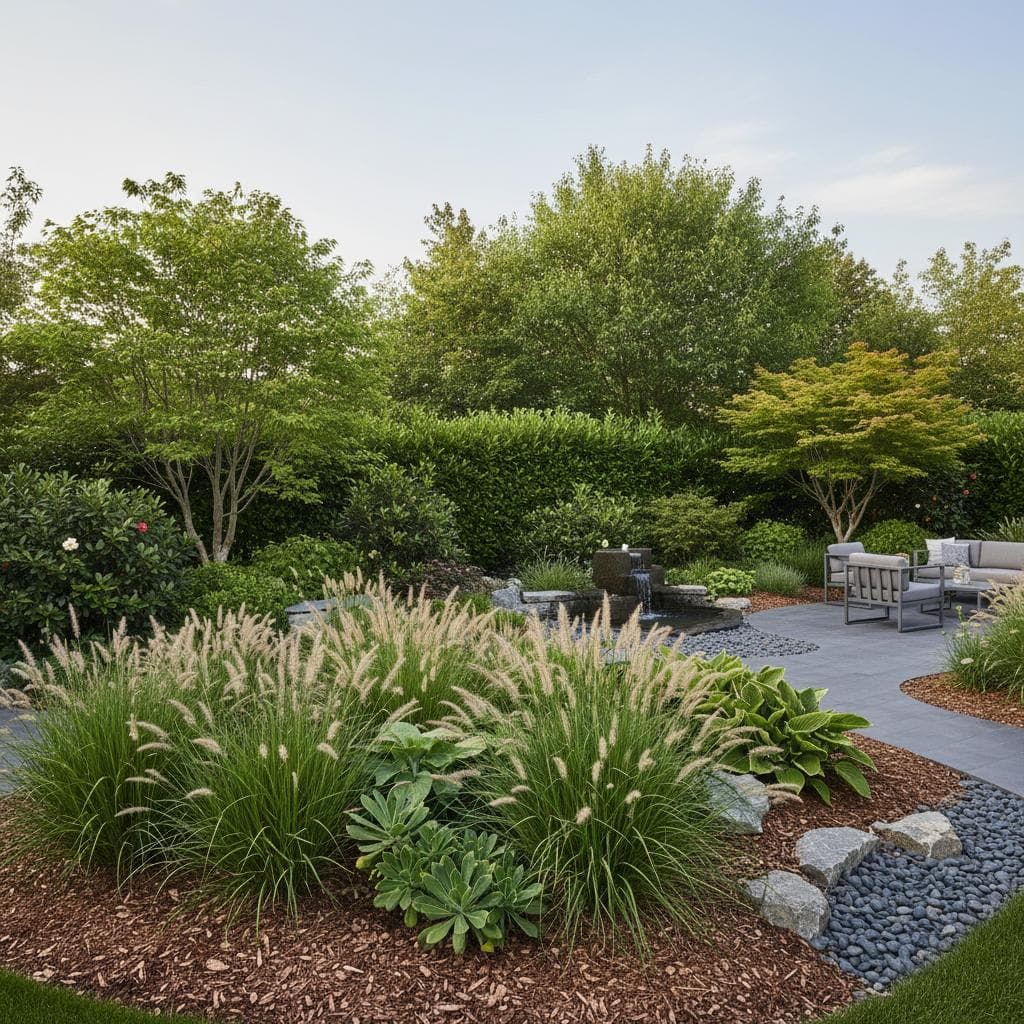
Miscanthus, pampas, or feather reed grass introduce movement and rustling to obscure background noise. Layer them before shrubs for added texture and natural sound camouflage.
Broadleaf Plants
Magnolia or elephant ear plants with large, thick leaves effectively capture sound waves. They suit lush, tropical garden designs.
Vines and Climbers
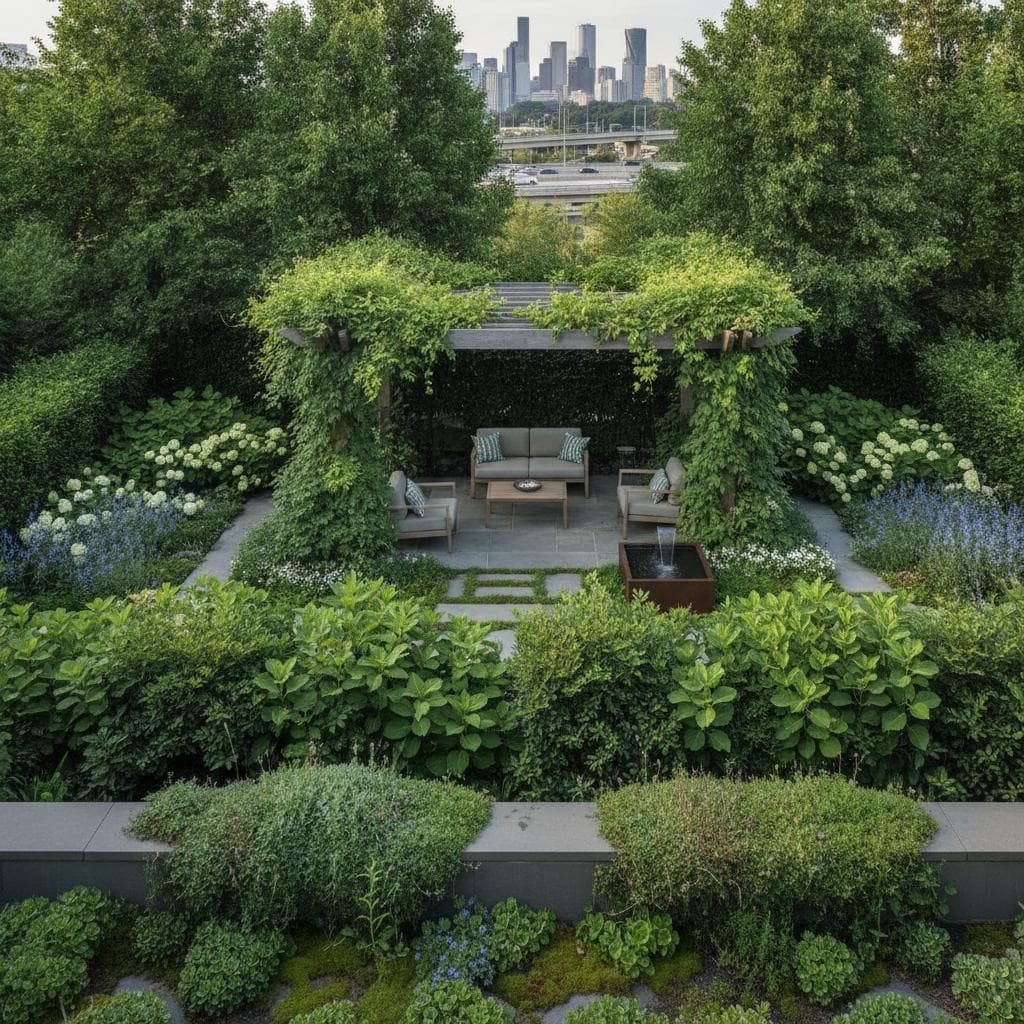
Vertical elements like ivy, jasmine, or climbing hydrangea soften fences and walls, converting hard surfaces into absorbers.
Designing an Acoustic Garden Layout
Strategic placement maximizes plant efficacy. View the yard as acoustic zones, intercepting noise before it reaches living areas.
Employ layering: Position tallest trees and shrubs nearest the noise source, followed by medium and low plants. This arrangement compels sound through successive barriers. For enhanced absorption, install double hedges with gaps between rows to trap air.
Incorporate surface variety: Blend leaf shapes, densities, and heights. Uniform plantings appear neat but diffuse sound less effectively than diverse, textured combinations.
Address angles and materials: Hard patios or paths reflect sound toward seating zones. Opt for gravel, decomposed granite, or bark mulch to absorb vibrations and mellow acoustics.
Integrating Water and Structural Elements
Plants alone do not suffice for a quiet garden. Sound masking complements blocking. A subtle fountain or bubbling urn overlays unwanted noise with soothing water sounds. Maintain subtlety to harmonize with the environment.
Incorporate walls, fences, and pergolas clad in climbers. A vine-covered wooden fence absorbs more than bare wood. Foliage-draped trellises or lattice panels offer semi-transparent, natural barriers.
Practical Solutions for Limited Spaces and Budgets
Compact areas like courtyards or balconies accommodate noise reduction through targeted planting. Tall planters with dense bamboo or shrubs erect vertical screens. Trailing vines in hanging pots mitigate echoes.
Near busy streets, a modest hedge paired with water features yields significant improvements. For renters, container gardens provide flexibility: Arrange pots with a central tall grass, mid-level bloomer, and trailing cover to foster lush privacy without alterations.
Ensuring Long-Term Effectiveness Through Maintenance
Regular care sustains acoustic performance. Prune to preserve density, avoiding excessive cuts that create sound pathways. Enrich soil with compost and mulch for robust growth.
For grasses or bamboo, divide and thin periodically to curb overcrowding. Prioritize watering, fertilization, and pest control, as vigorous plants absorb sound more efficiently. A healthy garden delivers superior aesthetics and acoustics.
Experiencing the Transformation
As the garden matures, tranquility emerges swiftly. The atmosphere calms, surroundings soothe, and daily hums integrate softly. Nature provides a dynamic barrier that unites beauty and utility, surpassing static concrete or expensive walls.
Complete silence remains elusive, yet the soundscape evolves from abrasive mechanics to gentle naturals. Distant cars merge with leaf rustles and water flows.
Implementing Your Acoustic Garden
Begin modestly: Target one noisy zone with a layered screen, incorporating grasses or water for masking. Monitor sound shifts over weeks.
Follow intuition: Select calming plants and appealing textures. Personalized designs achieve the greatest success.
This garden pulses with nature's symphony, redefining noise through botanical partnership.