Key Points
- Gravel gardens provide a sustainable substitute for conventional lawns, conserving water and minimizing ongoing expenses.
- Effective site preparation and drainage systems ensure enduring performance.
- These designs suit property owners desiring resilient, visually appealing exteriors.
- Individuals with fundamental landscaping knowledge can complete the project independently using essential equipment.
Project Overview
Working Time: 2 to 3 weekends
Total Time: Approximately 2 to 4 weeks, accounting for plant rooting
Skill Level: Intermediate DIY
Estimated Cost: Moderate range, adjustable based on plant choices and gravel varieties
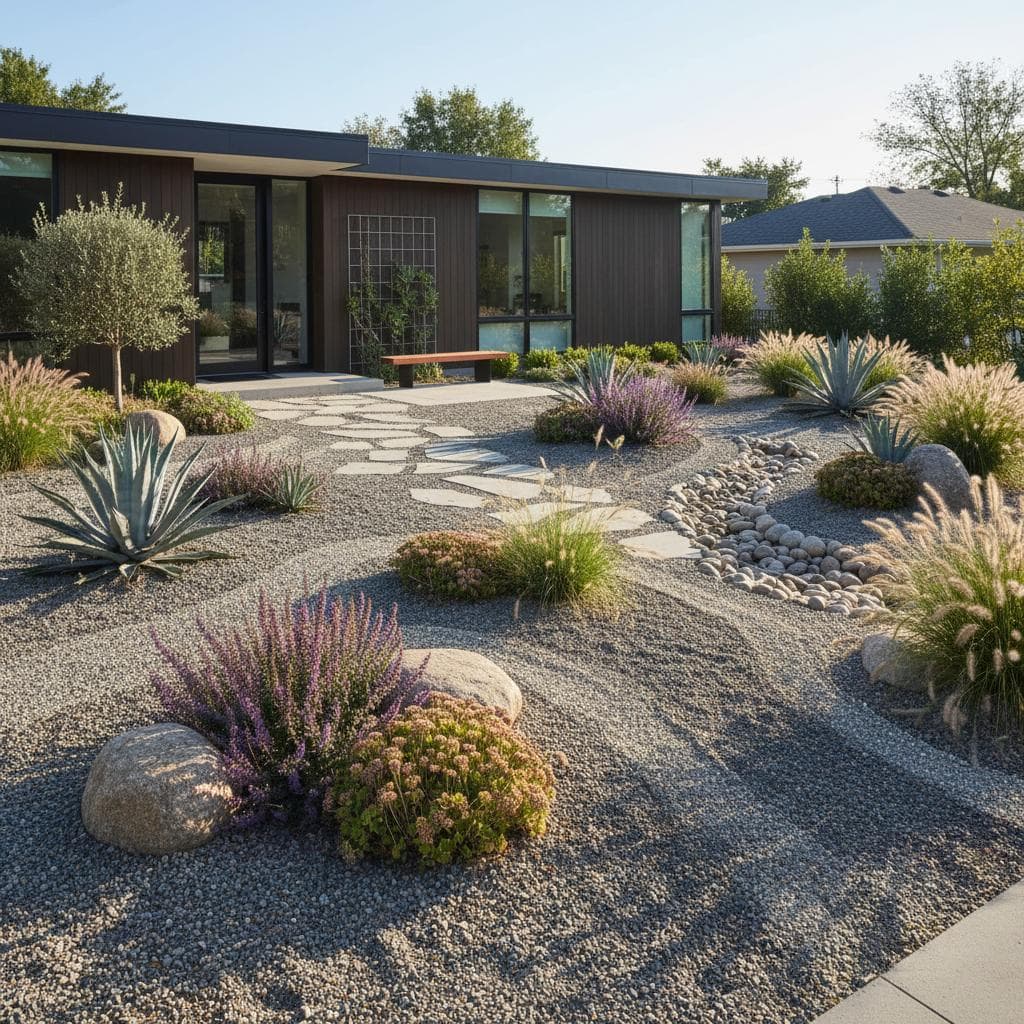
A gravel garden substitutes demanding turf with a blend of ornamental stones, robust vegetation, and optimized soil foundations. This approach yields a sophisticated exterior that requires scant irrigation or trimming and endures with limited intervention. Property owners gain a refined setting that aligns with modern sustainability goals.
Decide Between DIY and Professional Assistance
Essential Materials and Tools
Materials:
- Permeable landscape fabric or weed-suppressing membrane
- Crushed stone or ornamental gravel, including pea gravel, river rock, or decomposed granite
- Border restraints made from steel, composite materials, or natural stone
- Resilient plants such as lavender, ornamental grasses, and sedums
- Enriched topsoil and compost for targeted planting areas
Tools:
- Shovel and rake
- Wheelbarrow
- Garden hose or drip irrigation lines
- Tamper or plate compactor
- Utility knife and landscape staples
Thrifty individuals lower expenses by procuring regional gravel supplies or repurposing available border elements.
Detailed Installation Steps
1. Design the Layout
Sketch the property layout and designate zones for gravel coverage, vegetation clusters, and walkways. Consider the natural flow of precipitation across the area. These gardens perform best in locations with excellent drainage, so identify and adjust any depressions that retain moisture.
2. Condition the Soil Base
Clear away current turf, unwanted growth, and refuse. Aerate dense soil to a depth of at least six inches to facilitate water percolation. In areas dominated by clay, incorporate coarse sand and organic compost to enhance permeability. This foundational work prevents plant loss and gravel displacement over time.
3. Position the Weed Barrier
Unroll a permeable barrier over the cleared ground. Ensure overlaps of several inches at joints and fasten with staples. Select breathable fabrics rather than impermeable plastics, which hinder moisture movement. The barrier suppresses invasive growth while permitting essential drainage.
4. Form Planting Zones
Slice precise openings in the barrier for plant placement. Excavate holes marginally wider than the root systems and amend the surrounding soil with compost. Position specimens to accommodate future expansion. Established resilient varieties gradually occupy space with reduced hydration needs.
5. Distribute the Gravel Layer
Disperse gravel uniformly to achieve a depth of two to three inches. Employ a rake for even coverage and apply light compaction with a tamper. This method averts depressions and preserves a tidy aesthetic. Combining gravel particle sizes introduces visual interest and optimizes water flow.
6. Incorporate Final Elements
Secure borders to contain the gravel and delineate boundaries. Integrate stepping stones or pavers to create accessible routes. Opt for solar-powered lights if illumination is desired, as they eliminate wiring requirements. Irrigate new plants generously initially, then reduce frequency as roots develop.
Ensuring Professional Standards
Achieve a polished gravel garden through uniform terrain leveling, steady gravel thickness, and vigorous plantings. Inspect for pooling after rainfall and replenish gravel in deficient areas. Preserve the barrier's integrity by refraining from deep disturbances or heavy surface traffic. Substitute any underperforming plants with comparable drought-resistant options to sustain visual harmony.
Ongoing Upkeep Strategies
Gravel gardens demand far less attention than traditional setups, yet periodic care sustains their appeal.
- Weed Management: Extract stray growth from borders or planting zones as it appears.
- Irrigation Practices: After rooting, apply water solely during prolonged arid spells.
- Surface Maintenance: Rake gravel annually to restore smoothness.
- Material Renewal: Supplement a slim layer periodically to offset erosion from settling or activity.
Such measures preserve functionality and elegance across multiple years.
Expert Recommendations
Select indigenous or Mediterranean flora adapted to arid environments for optimal results. Employ finer gravel for pathways and rougher grades for focal beds. Maintain spacious arrangements to emphasize the open, ventilated character of the design. In regions prone to gusts, opt for heftier stones to minimize shifting. Achieve unity by echoing gravel hues and plant selections throughout the property.
Advance Your Landscaping Capabilities
Assembling a gravel garden imparts transferable methods in earthwork, elevation control, and hydrology. These proficiencies support endeavors like terrace construction, pathway development, or elevated planters. The completed garden exemplifies the rewards of meticulous execution paired with functional aesthetics, yielding long-term efficiencies in effort and resources.