Edible Yards Revolutionize American Front Lawns
Key Takeaways
- Edible landscaping substitutes decorative lawns with fruits, vegetables, and herbs that serve both ornamental and productive purposes.
- Homeowners rethink curb appeal by selecting raised beds and pollinator-attracting plants in place of neatly trimmed grass.
- Family-oriented gardens provide interactive education for children alongside fresh ingredients for everyday cooking.
- Global influences from European potagers and compact Asian urban gardens fuel this expanding trend in America.
- Compact and low-effort designs enable food production for apartment dwellers and time-strapped families.
The Lawn That Feeds You
The first encounter with a London front yard brimming with kale, leeks, and strawberries rather than roses remains vivid. Such a sight halts passersby in appreciation. In the suburbs of New York during childhood, lawns appeared as inviolable green expanses requiring endless mowing and irrigation yet yielding no tangible benefits.
Why the Movement Matters
Conventional lawns require intensive upkeep, including frequent mowing and substantial irrigation. Synthetic fertilizers and herbicides further degrade soil quality over time. Landscape designer Julia Martin, an expert in sustainable outdoor spaces, observes, "When you replace part of your lawn with edible beds, you cut down on waste and create something that gives back to you."
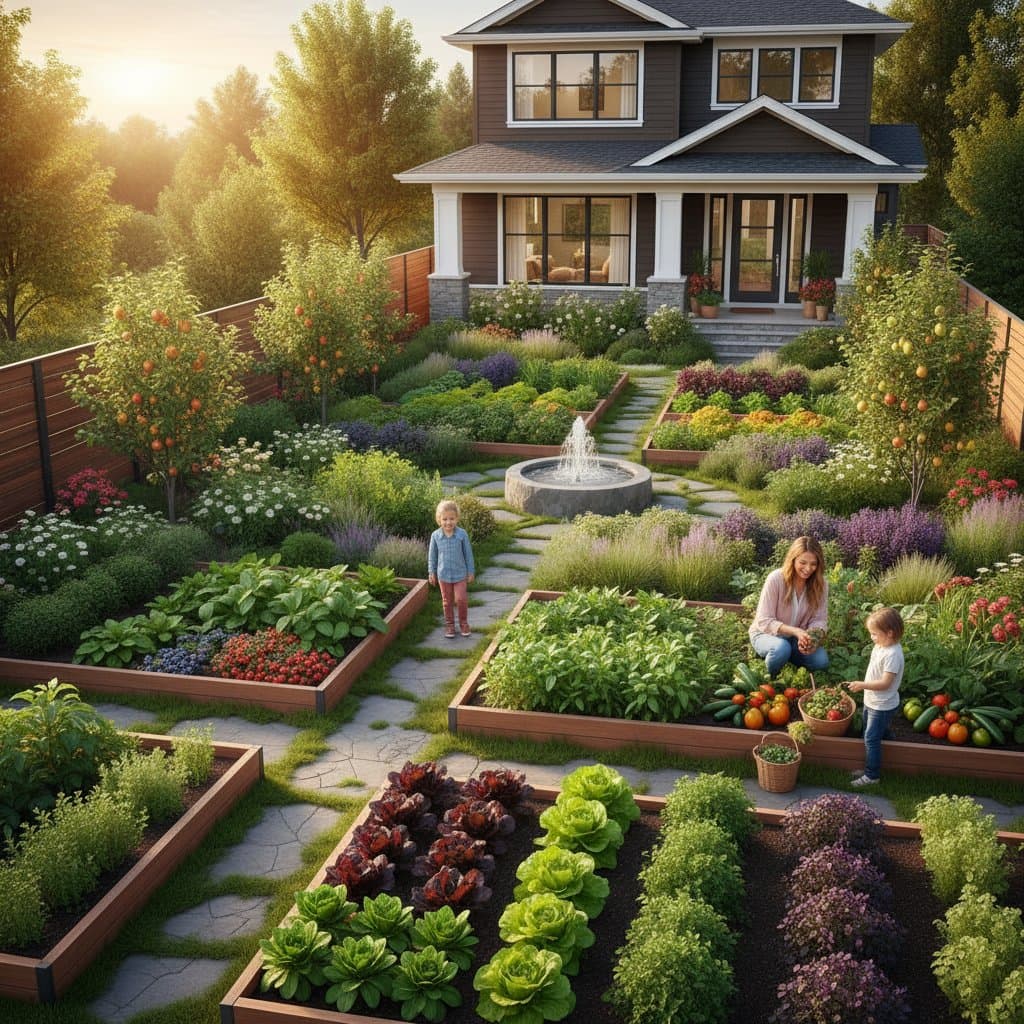
The movement surpasses environmental concerns. Numerous families reclaim the fulfillment derived from cultivating personal food supplies. Children delight in selecting tomatoes each morning, which alters their perceptions of meal components. The front yard evolves from mere decoration into a hub for bonding, education, and sustenance.
Designing for Beauty and Function
An effective edible yard avoids resembling a utilitarian farm. Successful examples harmonize productivity with visual elegance. Frame raised beds with stone or cedar materials to complement architectural lines. Position herbs like rosemary, thyme, and chives along edges for natural boundaries.
Incorporate fruit trees such as dwarf apple varieties or figs to supplant decorative options, offering shade alongside evolving seasonal displays. Landscape architect Brian Cook emphasizes, "The key is layering. Start with structure, then texture, then color. Edible plants can do all three." He frequently employs rainbow chard and purple basil for their striking colors, demonstrating the compatibility of form and function.
In confined areas, vertical techniques prove ingenious. Install wall-mounted planters, support trellised beans on structures, and suspend strawberry containers to render even townhouse thresholds fruitful. Container setups suit renters seeking adaptability without permanent alterations.
Lessons from Abroad
Residence in France revealed the sophistication of the potager, a classic kitchen garden uniting order with abundance. Pathways, beds, and borders exhibit deliberate design. In French villages, these gardens grace cottage fronts, honoring the connection between dwelling and yield.
Japanese balcony gardens, where space optimization reigns, provided further inspiration. Compact citrus trees, ascending cucumbers, and shallow lettuce trays flourish in restricted confines. These observations illustrate that elegance stems not from plot dimensions but from intentional planning.
American gardeners now fuse these foreign concepts with regional adaptations. California designs feature citrus elements and water-efficient herbs. Midwestern setups utilize raised beds stocked with root crops and resilient greens to withstand variable weather. This synthesis yields a distinctive American approach emphasizing utility and innovation.
Making It Work for Family Life
Balancing professional demands, spousal commitments, and children's extracurriculars underscores the value of minimal-effort strategies. Begin modestly by dedicating one front yard section to a trial bed. Select resilient options such as cherry tomatoes, lettuce varieties, or perennial herbs. Apply mulch layers to conserve moisture, and consider drip irrigation for efficiency.
Children engage eagerly through seed planting or carrot extraction. Assigning personal garden plots cultivates accountability and stewardship. The tactile act of handling earth, inhaling basil aromas, and sampling ripe berries ignites inquisitiveness beyond formal instruction.
Expert Tips for Success
- Assess sunlight patterns. Vegetables typically require six hours of direct exposure daily. Monitor light movement in your front yard to select optimal spots.
- Integrate decorative and productive plants. Pair marigolds with tomatoes or lavender alongside rosemary to draw beneficial insects and maintain visual harmony.
- Prioritize superior soil. Amend with compost or organic boosters to foster robust development. Fertile ground underpins a prosperous edible yard.
- Maintain curb appeal. Employ neat edging, clear pathways, and uniform containers to convey purpose rather than disorder.
- Practice crop rotation. Shift planting positions annually to preserve soil fertility and deter infestations.
- Harvest consistently. Frequent collection stimulates renewed production and sustains garden tidiness.
Integrating Edible Yards into Daily Routines
With an established edible yard, interactions with home and surroundings transform. Neighbors inquire about cultivated strains during walks. Children invite peers to admire burgeoning strawberry areas. Culinary decisions increasingly center on seasonal availability.
This movement reclaims the front lawn as a domain nourishing physical and emotional well-being. It affirms that eco-consciousness and allure occupy shared space. Regardless of setting, from suburban streets to urban dwellings or countryside homes, converting lawn to garden embodies ingenuity and stewardship.
A food-filled front yard embodies not only pragmatism but also optimism, sharing, and profound humanity.