Japandi Gardens: Zen-Scandi Fusion Redefining Tranquility
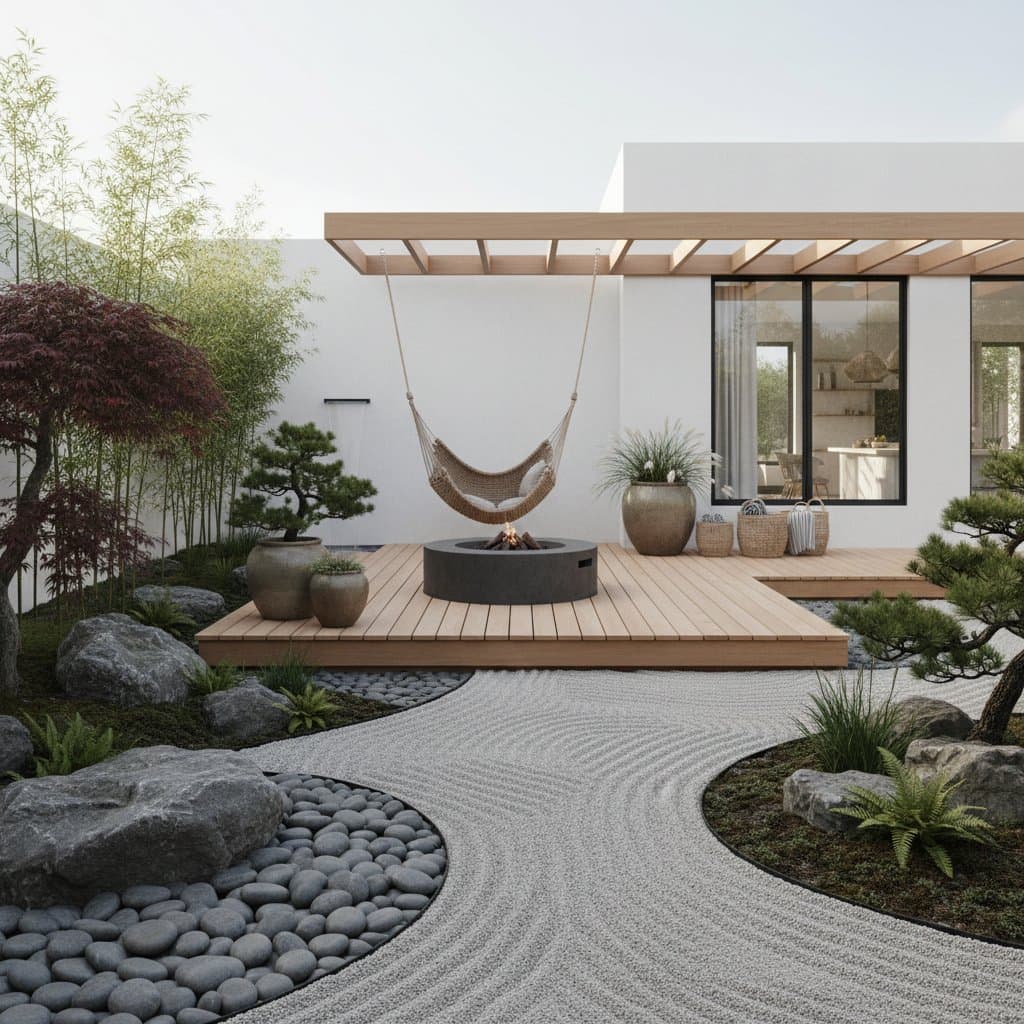
Many homeowners view their backyards as chaotic rather than calming. Cluttered patios, overgrown shrubs, and mismatched furniture often undermine the dream of a peaceful outdoor space. The core issue lies in attempting too much within the design. Japandi gardens address this by combining Japanese minimalism with Scandinavian simplicity to foster serenity without sterility.
From experience renovating numerous outdoor areas, the Japandi approach emphasizes restraint, balance, and appreciation for natural elements. This philosophy transforms modest backyards into sanctuaries through deliberate planning and patience.
What a Japandi Garden Entails
Creating a Japandi garden demands more than a single weekend of effort. True balance emerges from thoughtful consideration of texture, proportion, and the interplay of natural features.
- Selective plant selections featuring restricted color schemes
- Natural materials such as wood, stone, and gravel
- Intentional asymmetry that appears organic
- Uncomplicated functionality in furniture and lighting
- Designated areas for quiet reflection over active use
Individuals who favor vibrant blooms, abundant containers, or elaborate accents must embrace subtraction. This shift proves challenging yet yields profound rewards.
Designing the Layout
The layout of a Japandi garden appears effortless, yet it results from precise planning. Begin with foundational structure before incorporating decorative elements.
- Establish purposeful zones. Determine inclusions like seating areas, meandering paths, or central focal points, ensuring each serves a clear role while maintaining visual cohesion.
- Employ asymmetry strategically. Symmetrical arrangements often seem contrived; offset substantial features such as boulders or seats with ample open areas.
- Integrate varied textures. Pair polished pebbles with rugged stones, velvety moss with gritty gravel, and raw timber with foliage to achieve subtle contrast free of excess.
- Incorporate ample negative space. Such voids prevent overcrowding, allowing the gaze to settle and the overall composition to evoke tranquility.
Practical installations reveal that precise spacing proves essential. Even minor adjustments in the positioning of stones or vegetation can alter the visual rhythm. Proceed methodically with temporary placements prior to final commitments.
Building Hardscape Features
With layout and vegetation outlined, turn attention to hardscape components. These elements supply enduring form and tactile interest.
Pathways
Opt for gravel surfaces or irregularly spaced stepping stones. Design paths with modest width and subtle bends to encourage leisurely traversal rather than haste. Select regionally sourced stone to align the aesthetic with local character.
Seating Areas
Select low-profile furnishings crafted from timber or rock. Steer clear of cumbersome padding or intricate metal designs. Position a solitary wooden bench beside a modest tree to create an appealing nook more effectively than an elaborate ensemble. For added comfort, incorporate a subdued blanket or cushion woven from organic fibers.
Water Features
Incorporate a simple basin or compact recirculating fountain to introduce gentle audio and movement. Maintain subtlety in scale and operation, targeting a soft murmur over dramatic display. Equip installations with suitable waterproof liners and pumps calibrated to the reservoir's dimensions.
Lighting That Supports Serenity
Effective illumination elevates the ambiance without dominating it. Prioritize solutions that illuminate pathways and highlights while preserving natural shadows.
- Install warm-toned, subdued LED fixtures.
- Eliminate harsh overhead beams that erase depth.
- Mount pathway illuminators close to ground level.
- Integrate solar-powered lanterns featuring diffused glows.
For wired systems, utilize fixtures and protective tubing rated for exterior conditions. Engage a certified electrician for intricate configurations to mitigate risks and costs associated with errors.
Maintenance That Matches the Mindset
Japandi gardens thrive under steady, mindful upkeep rather than intensive periodic interventions. Routine tasks sustain equilibrium and prevent deterioration.
- Gently rake gravel to refresh surface patterns.
- Prune foliage to uphold form and scale.
- Flush water elements monthly to avert residue accumulation.
- Renew protective sealants on exposed wood yearly.
Attentiveness surpasses the pursuit of flawlessness. Unchecked expansion or oversight swiftly erodes the serene quality. View these practices as integral to the garden's ongoing narrative.
Common Mistakes and How to Avoid Them
Observations from assisting numerous clients highlight recurring pitfalls. Awareness of these issues streamlines the process and minimizes setbacks.
- Excessive planting. Introducing diverse varieties disrupts harmony; limit to a few recurring motifs.
- Neglecting scale. Large-scale items dominate confined areas; proportion all components appropriately.
- Relying on artificial substitutes. Simulated stones or polymer containers jar against organic textures; prioritize genuine substances, accepting reduced quantity if necessary.
- Overlooking water management. Ensure sloped grading beneath gravel routes and basins; pooled moisture harms both appearance and integrity.
- Accumulating accessories. Withhold ornamental additions; permit raw materials and growth to convey essence.
Such errors stem from enthusiasm, yet Japandi principles demand disciplined curation. Intentional reduction amplifies impact.
When to Bring in a Professional
Capable enthusiasts can manage much of the work independently. However, expertise benefits scenarios involving terrain stabilization, advanced watering systems, or electrical integrations. Consult a landscape specialist versed in Japanese and Scandinavian traditions to optimize spatial dynamics and botanical choices while preserving genuineness.
Professional involvement in technical aspects complements personal creativity. A robust base allows focus on intuitive and contemplative elements.
Pro Tips for Success
Decades of outdoor design yield insights that enhance feasibility and longevity.
- Initiate modestly. Develop a single cohesive section to gauge proportions and gain momentum.
- Repurpose available resources. Adapt preexisting rocks, lumber, or vessels to infuse authenticity through subtle flaws.
- Select evergreen options. Prioritize vegetation offering interest across seasons beyond peak bloom.
- Build in tiers. Employ low-lying covers, intermediate shrubs, and upright accents for dimension absent overload.
- Exercise forbearance. Allow gradual development rather than imposing rapid completion.
Restraint and time serve as primary instruments alongside physical tools.
Embracing the Everyday Rhythm
Approach the Japandi garden as an evolving companion rather than a static achievement. This perspective fosters tranquility, aesthetic pleasure, and stronger ties to the environment. Regardless of scale, from expansive lots to compact terraces, the integration of Zen and Scandi elements invites simplification and renewal.