Key Points
- Budget: Achieve a layered, timeless garden appearance without high costs through heirloom plants, thrifted containers, and basic hardscaping materials.
- Safety: This project suits most DIY participants, but use appropriate tools for heavy stone elements or tall installations, or consult professionals.
- Skill Level: Suitable for beginners to intermediate gardeners based on project scale.
- Time Commitment: Plan for multiple weekends to set up planting areas and features.
- Outcome: Develop an enchanting outdoor area that fuses vintage appeal with functional design, ideal for enthusiasts of cottage-core aesthetics and traditional techniques.
Project Overview
Working Time: 2 to 3 weekends
Total Time: Several weeks for plants to establish roots
Skill Level: Beginner to Intermediate
Estimated Cost: Low to moderate, varying with plant choices and sourced materials
When to DIY and When to Hire
Homeowners typically manage planting, bed arrangement, and container placement independently. For projects involving retaining walls, electrical installations, or automated watering systems, engage a specialist to guarantee safety and durability. Substantial stone features or robust timber borders demand stable foundations and effective drainage, challenges that may exceed novice capabilities.
Materials and Tools
- Sturdy garden spade and hand trowel for digging
- Sharp pruning shears and protective gloves
- Bubble level and retractable measuring tape for alignment
- Organic compost, soil conditioner, and organic mulch
- Coarse gravel or salvaged bricks for borders
- Aged containers or repurposed planters with drainage holes
- Assortment of blooming perennials, aromatic herbs, and compact shrubs
Thrifty gardeners reduce expenses by acquiring recycled items. Salvaged bricks, faded fence panels, and pre-owned garden benches impart personality at minimal cost. Refrain from placing untreated recycled lumber directly against soil, as it deteriorates rapidly.
Step-by-Step Process
-
Plan Your Layout: Draw a rough diagram of the garden layout prior to excavation. Incorporate winding pathways and tiered planting zones to create a gentle, flowing appearance.
-
Prepare the Soil: Incorporate compost thoroughly into the current soil to a depth of 12 inches. Nutrient-rich soil supports vigorous growth from economical plant varieties.
-
Install Hardscaping: Position borders, support structures like trellises, and fixed elements at the outset. Check levels frequently to prevent adjustments during later stages.
-
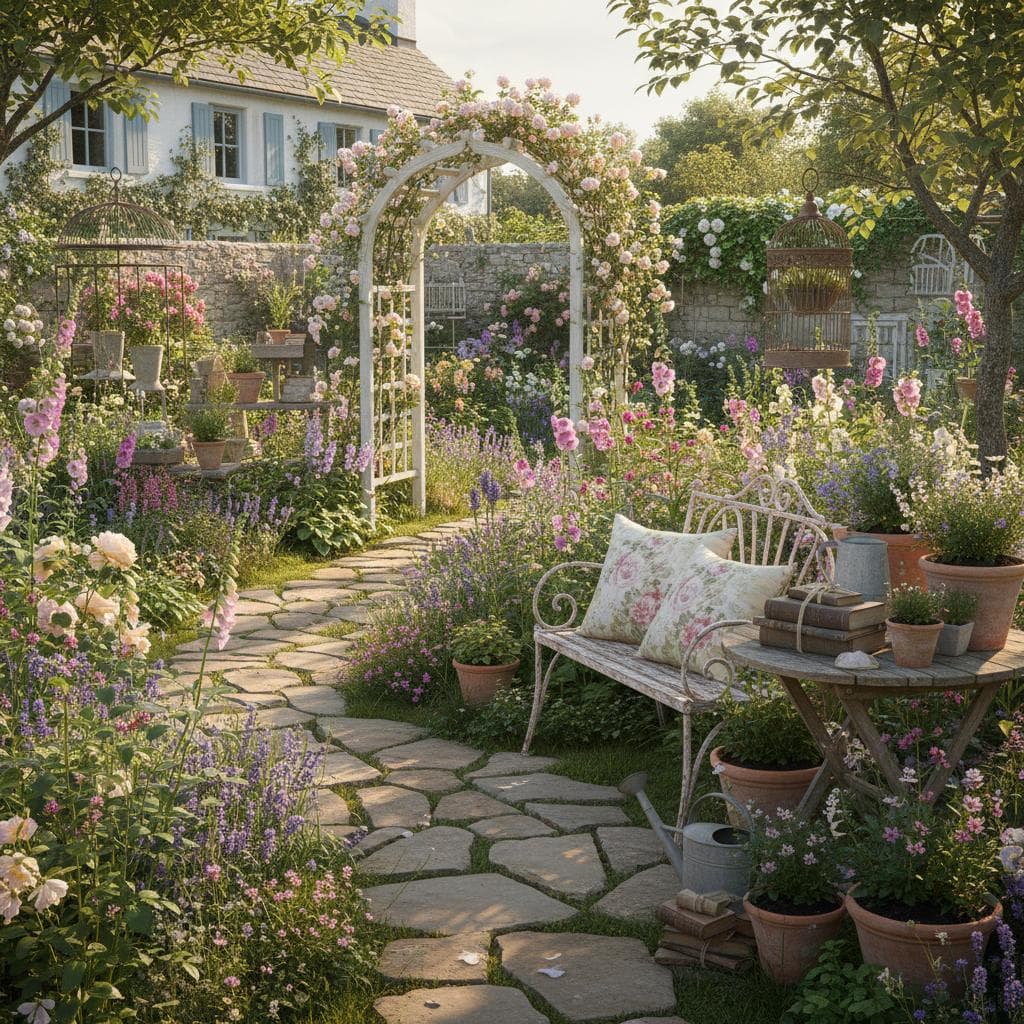
Plant in Layers: Select tall backdrop plants such as mophead hydrangeas or towering hollyhocks, pair them with medium-height options like David Austin roses or English lavender, and finish with low-lying spreads including woolly thyme or sweet alyssum.
-
Add Vintage Touches: Repurpose antique watering cans as elevated planters, suspend rustic iron lanterns from curved shepherd hooks, or arrange a set of mismatched porcelain teacups to hold succulents amid the foliage.
-
Mulch and Water: Spread a 3-inch layer of mulch to conserve water and stabilize soil conditions. Water deeply immediately after planting to encourage root development.
Quality Control
Monitor plant spacing and overall scale closely. Dense planting invites pests and restricts development. Gardens in vintage style thrive with a sense of fullness yet remain orderly. Repeat hues like soft pinks and lavenders or species such as salvia and foxgloves to unify the composition.
Seasonal Maintenance
Trim faded flowers weekly to promote continuous blooming. Renew the mulch layer annually in spring and introduce fresh annuals for seasonal vibrancy. Apply rust-inhibiting paint to metal fixtures every two years to preserve their appearance.
Growing Your Grandmillennial Haven
A grandmillennial garden encourages a deliberate rhythm and ties to heritage. It values consistent nurturing over instant transformation. As vegetation fills out and accents age gracefully, the area acquires the authentic patina central to this aesthetic.
Continue to explore combinations of foliage textures and bloom shades. Blend heritage pieces with subtle modern accents freely. Persistent dedication to soil health, light exposure, and harmony yields a garden that endures, reflects individuality, and celebrates hands-on creation.