Gravel Gardens: 2025's Intelligent Low-Maintenance Lawn Alternative
Homeowners often face the challenges of traditional lawns, including regular watering, mowing, and weed management. These spaces can shift from enjoyable features to time-consuming obligations. Gravel gardens provide an elegant, environmentally sound alternative that fits modern routines and sustainability goals.
Gravel gardens use natural materials to form robust, attractive landscapes. They work well in dry climates or anywhere simplicity is key. This method delivers lasting outdoor improvements with little ongoing effort.
Establishing the Base: Principles of Gravel Garden Construction
Successful gravel gardens start with thorough subsurface preparation for durability and performance. Grasping these basics avoids typical errors and ensures positive results.
- Prioritize drainage. Choose locations with naturally permeable soil. In areas that hold water, mix coarse sand or crushed stone into the top 6 to 12 inches of soil to speed up water flow.
- Apply layered construction. Start with 4 to 6 inches of compacted aggregate base, like crushed limestone or gravel, for a solid foundation. Add 2 to 4 inches of decorative gravel on top to block weeds and keep surfaces level.
- Select appropriate gravel dimensions. Choose particles 10 to 20 millimeters across. Smaller sizes can pack down and drain poorly, while bigger ones might move too much underfoot.
- Install defined borders. Employ materials such as corten steel, reclaimed brick, or pressure-treated timber to hold the gravel in place. Position these borders 1 to 2 inches below the surface to stop gravel from spreading into nearby areas.
Once the base is ready, add plants by forming pockets or planting straight through the gravel into prepared soil underneath. Hardy varieties thrive in these setups and need few resources.
Infusing Character: Color, Texture, and Composition Strategies
Gravel gardens allow for customization without added hassle. Careful choices turn a simple layout into a unique design.
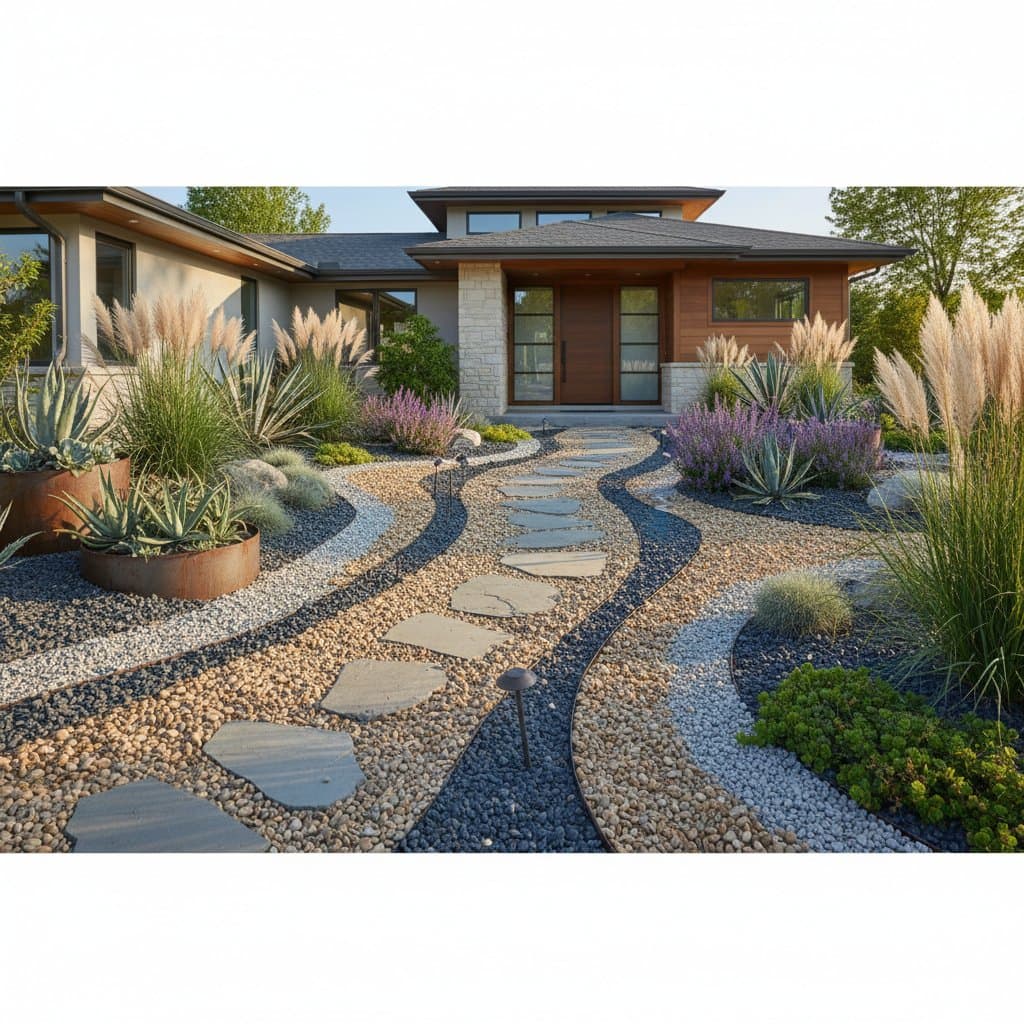
- Gravel varieties: Consider colors from neutral beiges and earthy umbers to slate grays and soft pinks. Match them to home features, like warm shades with terracotta walls or cool tones for sleek buildings.
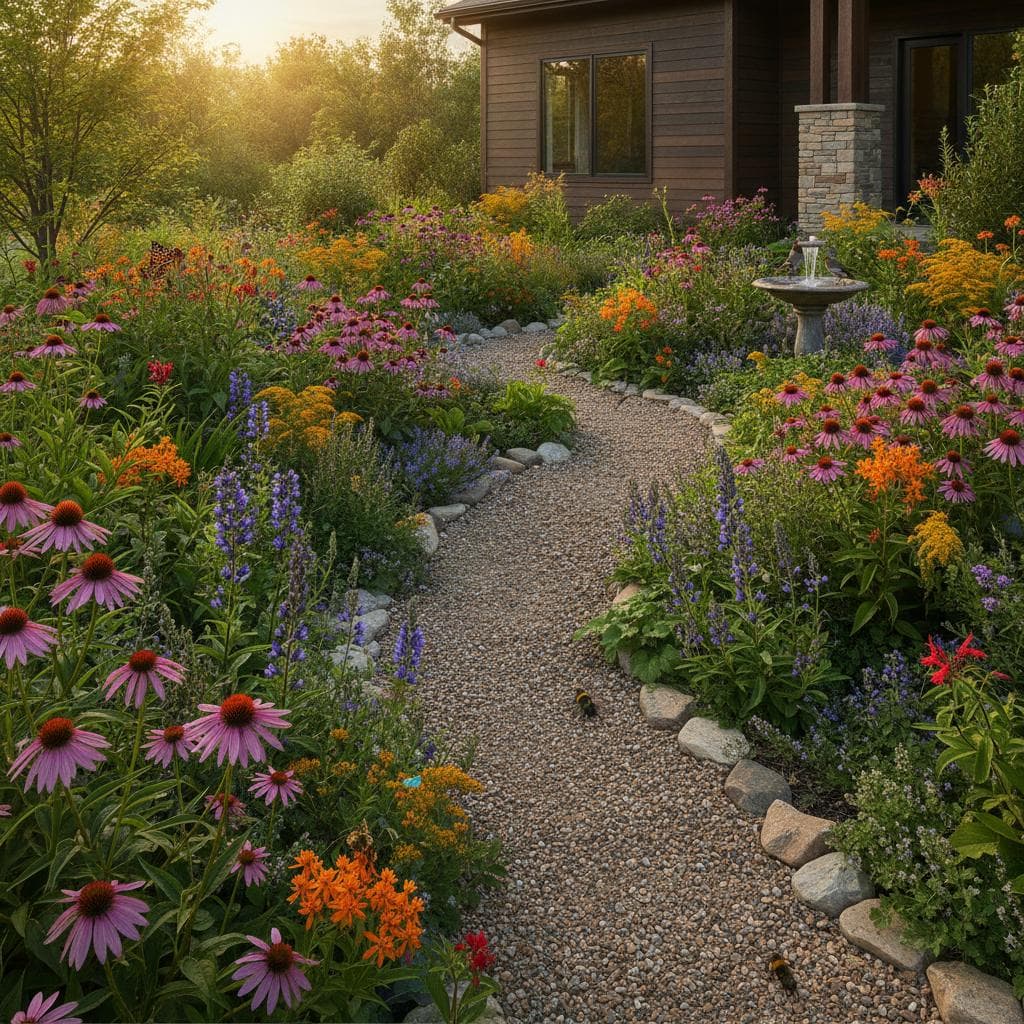
- Plant selections: Choose drought-tolerant plants such as lavender, sedum, or ornamental grasses for form. Build a unified look with silvers and greens, highlighted by purple lavender flowers or reddish echinacea seed heads.
- Structural elements: Add flagstone paths, rusted metal spheres, or placed boulders for interest. Arrange them to direct foot traffic and highlight key spots, without cluttering the area.
- Illumination techniques: Use solar stake lights along borders or low LED uplights under taller plants. The gravel reflects light well, creating a calm evening atmosphere.
Such decisions create an intentional style that mixes simplicity with energy. The outcome encourages quiet reflection and active enjoyment, while merging with the broader landscape.
Environmental Advantages and Practical Gains
Switching to a gravel garden goes further than convenience; it aids environmental care. Standard lawns use large amounts of water, sometimes over 30 percent of home consumption in arid areas, plus fertilizers that harm streams.
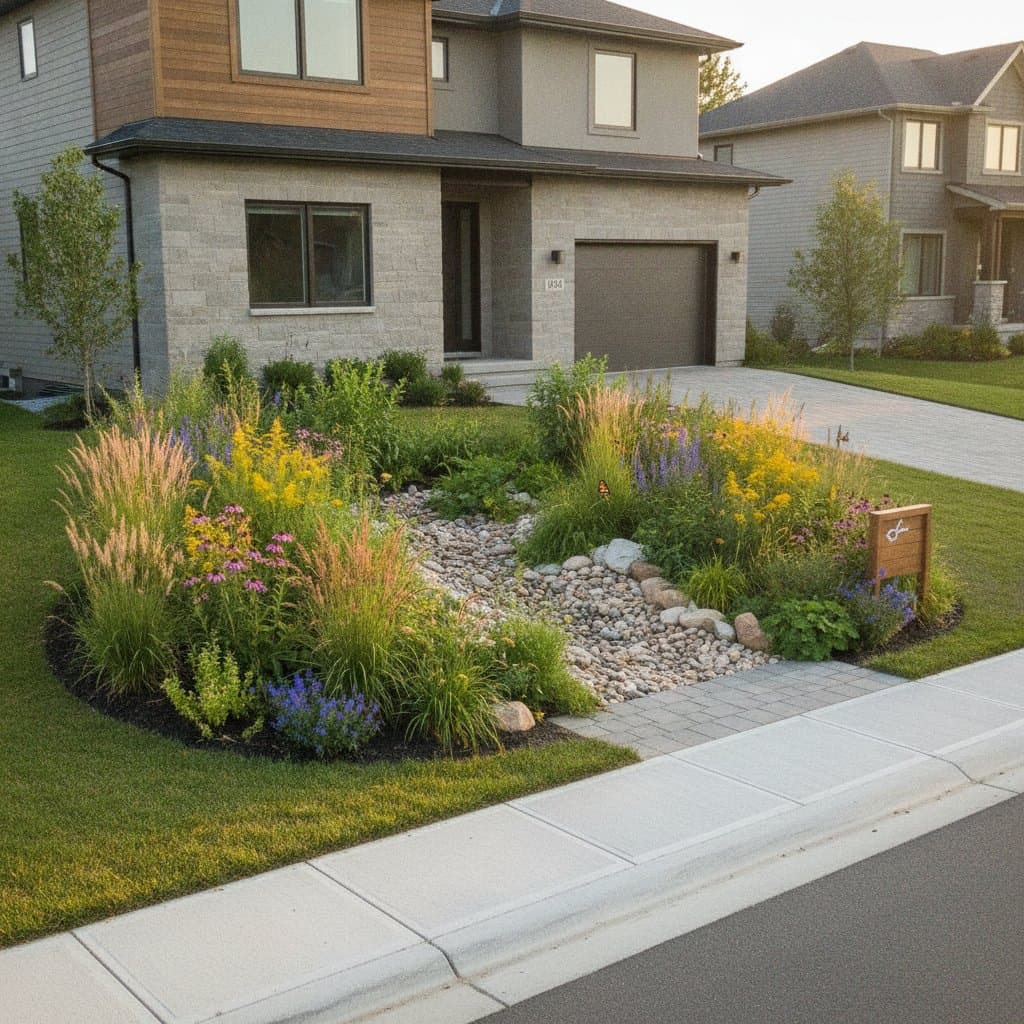
Gravel gardens save water by needing it mainly at the start. Native plants like California fuchsia or blackfoot daisy support bees, butterflies, and birds. The porous surface reduces runoff, capturing up to 90 percent more rain than solid lawns and aiding aquifer recharge.
On the practical side, these gardens free up hours once devoted to care. Yearly tasks may take only a few hours, versus weekly lawn work. Setup costs $5 to $15 per square foot, but savings on water and tools often cover it in three years. The textures, from gravel's crunch to plant scents, build a peaceful haven that boosts everyday well-being.
Nurturing and Evolving Your Gravel Garden
Over time, a gravel garden gains a genuine weathered look. Perennials send roots deeper and spread seeds to cover bare spots. The gravel mellows, blending with fallen leaves for an authentic feel.
Check for changes regularly: Split aggressive growers like yarrow every two years to maintain balance. Rake and add gravel to worn areas each year. Bring in seasonal touches with potted bulbs for spring or conifers for winter.
These updates keep the garden lively. Gradually, it mirrors your preferences, maybe with a spot for a hammock or edging herbs for cooking.
Implementing Your Vision: Practical Steps Forward
Start by assessing your space in different lights. Picture the vibe, from a calm coastal style with light stones and sea thrift to a striking modern one with black basalt and agave.
Sketch a basic plan with paths, plant groups, and open zones. Get gravel samples from nearby sources to check real colors. Plan for equipment like a plate compactor and weed barrier fabric.
Review local advice on plants to fit your USDA zone. These steps launch the change, resulting in a tough, satisfying yard suited to you.