Key Points
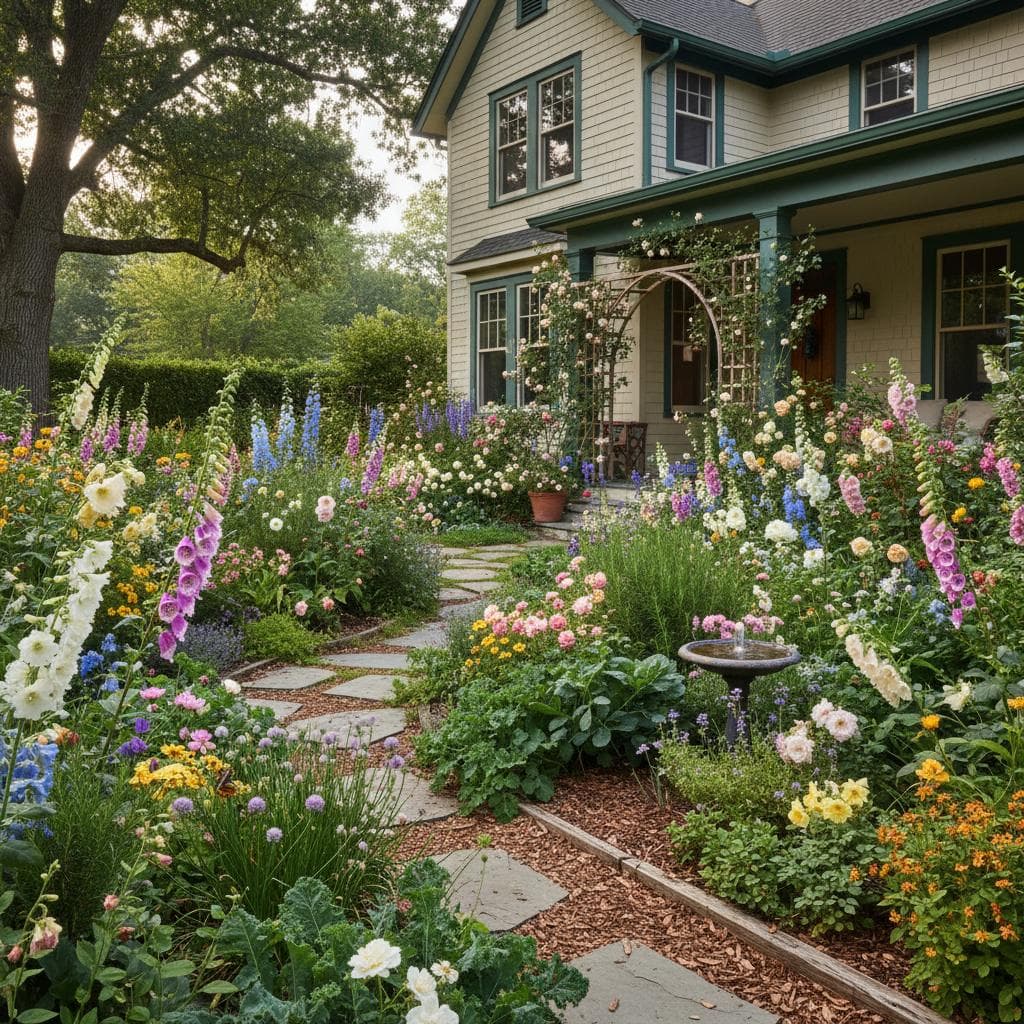
- Grandmillennial gardens merge nostalgic elements with contemporary sustainability to produce vibrant front yards featuring layered plantings, classic designs, and multisensory appeal.
- This style highlights dense cottage-inspired landscapes, heirloom plant selections, and artisanal outdoor features that evoke traditional English and Southern garden traditions.
- Effective planning balances profuse vegetation with practical pathways, irrigation systems, and seasonal upkeep.
- Achieve cost savings through material repurposing, plant propagation, and perennial choices that regrow annually.
- Attain expert-level outcomes by staging the project, adhering to proven horticultural methods, and establishing steady maintenance protocols.
Assessment: Evaluating Your Current Front Yard
Before transforming a conventional lawn into a grandmillennial garden, conduct a thorough evaluation of site conditions. This initial step establishes the groundwork for all subsequent actions.
Soil Composition Testing
Gather samples from multiple locations and analyze pH levels, organic content, and drainage capabilities. Cottage-style plants typically thrive in soil that ranges from slightly acidic to neutral, with reliable moisture retention.
Existing Vegetation
Catalog trees, shrubs, and perennials suitable for retention. Established trees contribute essential structure and help regulate shade distribution.
Drainage and Slope
Inspect for water accumulation near building foundations or walkways. Implement gentle regrading or install French drains to manage excess runoff effectively.
Hardscape and Access
Map existing paths, driveways, and utility placements. These elements guide the expansion of planting areas while preserving necessary access and infrastructure integrity.
This evaluation process aligns with project management fundamentals by clarifying boundaries and limitations upfront. Such preparation minimizes future adjustments and resource inefficiencies.
Implementation: Building the Grandmillennial Garden Step by Step
Step 1: Site Preparation
Clear away turf or unwanted vegetation. Employ sheet mulching by placing cardboard over the grass, topping it with compost, and finishing with a mulch layer to suppress growth organically. This technique enhances soil quality and reduces waste from removal efforts.
Step 2: Soil Conditioning
Blend organic amendments evenly to a depth of 8 to 10 inches. Assess drainage by digging a 1-foot-deep hole, filling it with water, and measuring absorption time. If water lingers beyond one hour, mix in coarse compost or sand to refine soil texture.
Step 3: Pathway and Hardscape Installation
Outline paths with stakes and string lines. Firmly pack a gravel base, then set bricks or pavers with a subtle upward curve to facilitate water shedding. For a gentler aesthetic, position stepping stones amid crushed stone paths edged with creeping thyme.
Step 4: Structural Planting
Place trees and shrubs according to their projected mature dimensions and spread. Ensure sufficient spacing to promote air circulation. This strategy curbs disease risks and lessens the need for ongoing pruning.
Step 5: Mid-Layer Planting
Group perennials in casual clusters of three to five for an organic look. Stagger bloom periods to prolong the display season. Select harmonious colors, such as pale pinks, lavenders, and creams, to create an enduring scheme.
Step 6: Groundcovers and Edging
Plant low-stature species along edges and borders. These selections unify the layout and suppress weeds naturally. Maintain a one-inch gap between mulch and plant stems to avoid moisture-related decay.
Step 7: Watering and Mulching
Position soaker hoses prior to applying mulch. Spread a 2-inch layer of shredded bark or leaf mold. This coverage retains soil moisture and moderates temperature fluctuations.
Step 8: Finishing Touches
Incorporate accents like antique urns, wrought-iron seating, or porcelain birdbaths. These additions amplify the vintage essence and establish visual anchors within the space.
Maintenance: Keeping the Garden Thriving
Grandmillennial gardens develop gradually and require ongoing attention to preserve their vitality. Integrate these practices to manage demands efficiently.
-
Watering Routine
Deliver deep irrigation once or twice per week, adjusted for precipitation levels. Frequent light watering fosters shallow root systems that prove less resilient.
-
Pruning and Deadheading
Clip faded flowers to encourage prolonged blooming. Shape shrubs post-bloom, taking care to safeguard buds for the following year.
-
Fertilization
Distribute a balanced organic fertilizer at the start of the growth period. Excess applications promote fragile growth vulnerable to infestations.
-
Weed Control
Sustain mulch layers and manually extract weeds before seed formation.
-
Seasonal Tasks
Divide dense perennials periodically to restore energy. Renew mulch each year and trim back non-woody plants after frost concludes their cycle.
Schedule these activities monthly to distribute effort evenly and support reliable flowering sequences.
Safety and Environmental Considerations
Outdoor transformations involve physical and ecological factors that demand proactive management.
- Protective Gear: Don gloves, protective eyewear, and sturdy footwear during excavation or material handling.
- Tool Maintenance: Sharpen cutting edges and inspect handles regularly to avert mishaps.
- Chemical Use: Steer clear of synthetic pesticides; opt for natural alternatives like companion planting, neem oil, or insecticidal soaps.
- Wildlife Balance: Incorporate features that attract pollinators and birds, prioritizing native plants to bolster regional biodiversity.
- Permit Awareness: Consult local regulations regarding yard modifications or structural changes before proceeding.
Prioritizing safety and sustainability enhances the garden's enduring advantages for both residents and the broader ecosystem.
Living with Your Grandmillennial Garden
An established grandmillennial garden transcends mere ornamentation to serve as a dynamic habitat and serene haven. Daily rituals, such as strolling through mist-kissed roses or relaxing under cascading wisteria, elevate the front yard into an intimate refuge.
These spaces often spark social bonds. Neighbors pause to admire the flora, exchange propagation tips, or discuss care strategies. Thus, the garden emerges as a communal touchstone and neighborhood highlight.