Key Points
- AI lawn robots redefine yard maintenance by automating mowing, navigating obstacles adaptively, and scheduling cuts predictively based on growth patterns.
- Sensors, mapping algorithms, and connectivity features maintain even grass height while minimizing manual effort from homeowners.
- Effective setup involves boundary calibration and blade care to achieve reliable operation over varied terrains.
- Energy-efficient designs and quiet performance suit residential settings without disturbing neighbors.
- Smart home integration enables real-time monitoring and app-based adjustments for customized control.
Technical Background
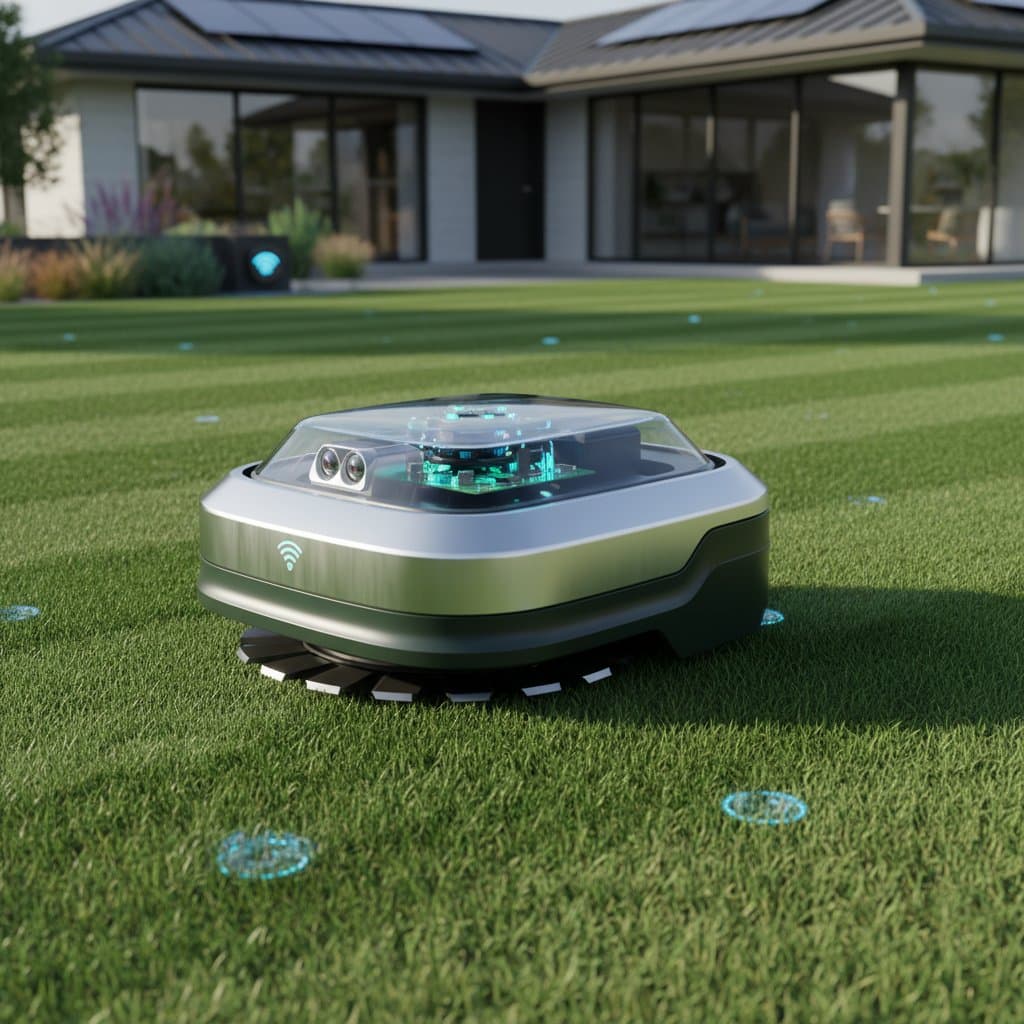
Advancements in machine learning, sensor accuracy, and battery technology have propelled automated lawn care forward. Contemporary AI lawn robots employ multi-sensor systems that integrate ultrasonic sensors for proximity detection, gyroscopes for orientation, and GPS for positioning. These components create detailed yard maps, detect barriers, and optimize mowing routes in real time.
Assessment
Homeowners considering a robotic lawn system must review key yard characteristics for compatibility.
- Terrain features: Slopes exceeding 20 degrees or irregular ground demand models with superior traction, such as those with all-wheel drive.
- Grass varieties: Thick or wiry types require robust motors and durable blades to handle resistance without stalling.
- Fixed elements: Trees, flower beds, and rocks affect path planning; clear these areas to enhance sensor reliability.
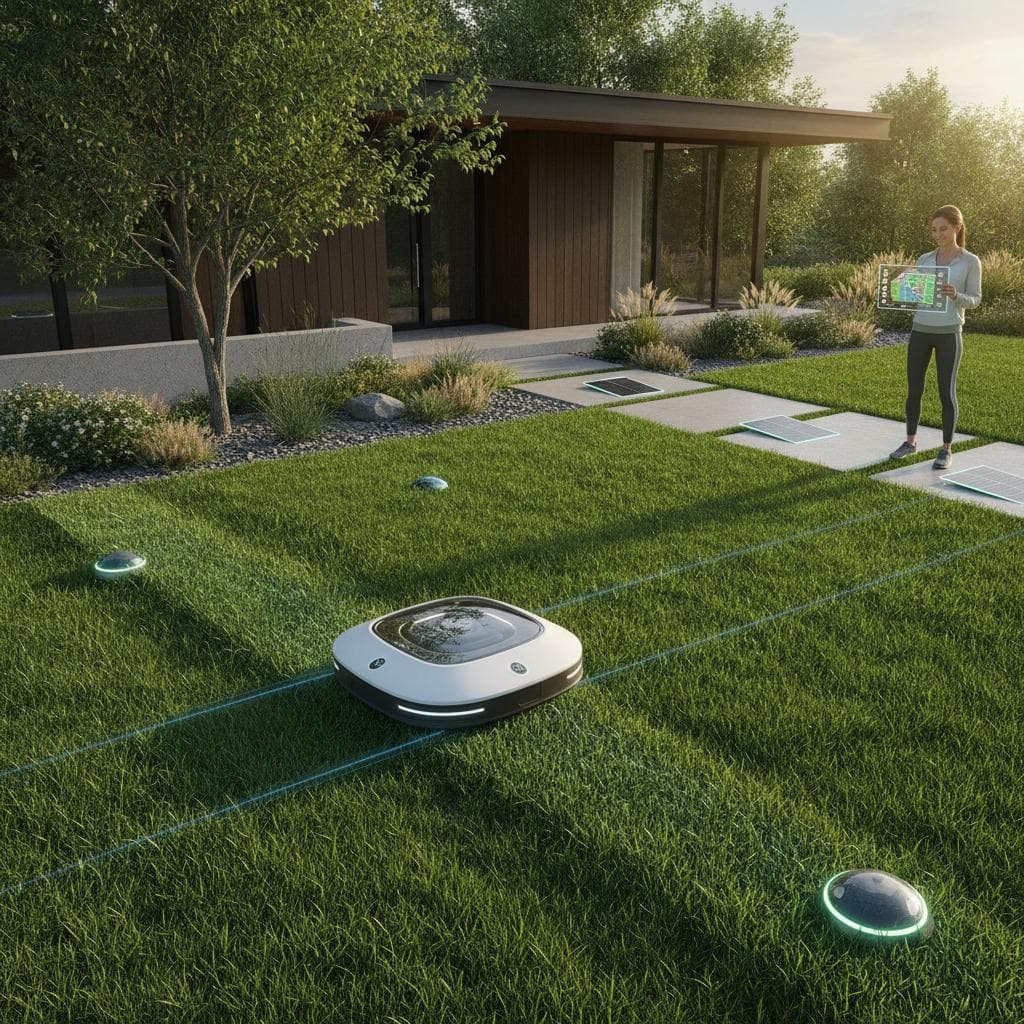
- Zone boundaries: Perimeter wires or digital mapping define operational limits and prevent wandering into non-mowing spaces.
Conduct a thorough yard survey to align conditions with the robot's specifications. Focus on details like maximum incline ratings and cutting swath to select an appropriate unit.
Planning Phase
Tools and Materials
- AI lawn robot unit including charging base
- Perimeter wire kit or boundary beacons as specified by the model
- Stakes or anchors for securing wires
- Measuring tape and marking flags for layout
- Waterproof wire connectors and splices
- Hand tools including a trowel and mallet for installation
Preparation Steps
- Outline the area: Draw a diagram of the lawn, noting obstacles and edges.
- Select dock placement: Position the charging station on stable, shaded ground close to an electrical source.
- Set boundaries: Install wire along the perimeter or configure virtual limits to guide the robot.
- Verify signals: Confirm strong Wi-Fi or Bluetooth coverage for remote features.
- Address safety: Clear the area of people and animals during preparation and testing.
Timing and Safety
Allocate three to four hours for setup and initial tuning. Choose a dry day to avoid mud when embedding wires. Power down the unit before accessing blades or sensors, and follow the manual's guidelines on electrical standards.
Implementation
- Position the dock: Mount it firmly on flat terrain and plug into a protected outlet.
- Deploy boundary wire: Lay it one foot inward from edges, securing with stakes at intervals of two to three feet.
- Link the loop: Connect wire ends to the dock's designated ports.
- Start mapping: Energize the robot and engage boundary-follow mode for a full perimeter scan.
- Execute trial run: Supervise the initial mowing to verify avoidance of no-go zones.
- Configure routine: Input mowing frequencies adjusted for growth rates and forecasts.
- Track operations: Monitor via app for coverage maps and power levels.
In the initial days, inspect daily for deviations in path or incomplete areas. Fine-tune wires or app parameters to refine performance.
Quality Assurance
Signs of success include steady patterns, level cuts, and fluid movement. Frequent stops or uneven spots signal needs like blade honing or alignment checks. Clean sensors weekly with a damp cloth to sustain detection accuracy.
Examine blades monthly; sharpen or replace if edges dull to cut resistance and boost efficiency. Inspect dock contacts for buildup and brush clean to ensure consistent charging.
Maintenance
Regular upkeep sustains performance and longevity. Clear debris around the station and prune encroaching plants. During off-seasons, store indoors away from dampness and frost to safeguard components. While some units self-clean, hands-on checks catch issues like loose parts early.
Pro Tips for Success
- Opt for brief, regular sessions to foster uniform growth and ease grass strain.
- Time cuts for morning or evening to cool components and avoid midday heat.
- Pair automation with annual practices like core aeration and seed spreading for superior lawn vitality.
- Update software routinely to access refined pathfinding and enhanced integrations.
- Link to weather APIs that halt mowing in wet conditions to protect turf and machinery.
Achieving Lasting Lawn Excellence
AI lawn robots shift yard care from chore to convenience, freeing time for creative pursuits like landscaping or leisure. Through meticulous installation, vigilant oversight, and steady care, they yield expert-level outcomes. The result stands as vibrant, robust turf that thrives under precise, consistent attention.