Why Acoustic Panels Dominate Home Decor Trends in 2025
Homeowners often struggle to unwind in living rooms where echoes from footsteps, voices, and appliances bounce endlessly. Open-plan layouts with hard floors and minimal wall coverings turn these spaces into unintended echo chambers, much like vacant halls. Acoustic panels emerge as a preferred solution, tackling this issue with sophistication and style.
Past associations limited acoustic panels to recording studios or offices. Today's versions combine sound absorption with striking visuals, reducing reverberation, softening background noise, and acting as focal points that enhance overall atmosphere. Their adoption in luxury homes, restaurants, and home offices reflects both performance and design versatility.
The Root Causes of Echo in Contemporary Homes
Key Materials and Installation Basics for Acoustic Panels
Acoustic panels provide an accessible upgrade when installed correctly. They feature lightweight builds, such as foam cores, fabric-wrapped fiberglass, or wood slats backed by absorptive layers. Placement matters more than complexity.
Gather a tape measure, spirit level, screws or wall-safe adhesives, and a drill for anchors. Avoid positioning panels purely for looks; target reflection points like areas behind speakers, above seating, or opposite hard surfaces. For ceiling hangs or custom fits, consult an acoustics professional, but wall mounts work well for DIY projects over a weekend.
Integrating Acoustic Panels into Modern Design
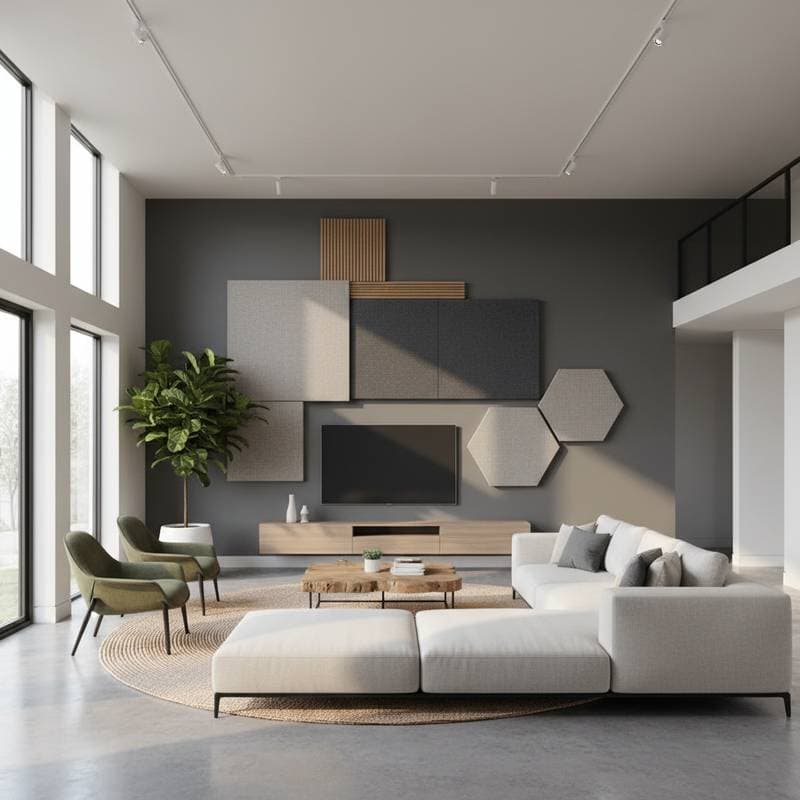
A decade ago, acoustic panels appeared as plain, functional blocks in technical spaces. Now, they come in varied colors, shapes, and textures, from fabric panels mimicking art to wood-accented absorbers. Designers value how they add texture and improve sound, a rare combination for home goods.
Open layouts and minimalist styles amplify noise issues, yet homeowners avoid clutter for acoustics alone. Panels that double as decor fit perfectly in living areas, bedrooms, media rooms, and home offices, where echoes disrupt calls. Growing awareness highlights how quiet spaces support mental health and focus.
Preparing for Installation: Tools, Materials, and Planning
Start with a room assessment to measure dimensions and spot reflective zones. A typical living room needs six to eight panels for noticeable improvement, depending on ceiling height and existing soft furnishings. Smaller rooms like offices or bedrooms often see benefits from four panels.
Essential Tools:
- Tape measure
- Spirit level
- Pencil or chalk line
- Power drill and wall anchors (for non-adhesive installs)
- Stud finder (optional but helpful)
Required Materials:
- Acoustic panels in fabric, wood, or composite
- Mounting hardware or adhesive strips
- Safety glasses and work gloves
Follow manufacturer instructions, especially for foam types needing specific glues. Keep panels from damp areas, steering clear of kitchens or basements.
Step-by-Step Installation Guide
- Mark Locations. Use the spirit level and tape measure to plot positions, ensuring symmetry for both acoustics and aesthetics.
- Check Wall Type. Attach to studs for stability; adhesives suit lighter panels, while heavier wood requires anchors.
- Install the First Panel. Begin at ear height near main seating or work areas to catch early reflections.
- Test Sound Quality. After a few panels, speak or play audio to check echo reduction; adjust as needed before full setup.
- Spread Evenly. Distribute across walls to avoid over-focusing on one area, achieving balanced control.
This method builds confidence through testing, refining until the room sounds right.
Overcoming Common Installation Hurdles
If panels loosen post-install, confirm adhesive matches the wall and panel weight; switch to screws for security. Lingering echoes indicate sparse coverage; add more layers, much like building paint depth. Pair with rugs or blinds for greater impact.
Panels manage room-internal sound, not noise bleeding between rooms, which demands full soundproofing like insulation or isolation techniques. Focus them on enhancing clarity inside spaces.
When to Call in Professionals
Seek experts for complex rooms with sloped ceilings or large glass walls, where calculations ensure peak efficiency. They handle custom integrations during remodels or fit odd sizes. For routine setups, DIY works fine, though a quick consult avoids rework.
Pro Tips for Maximum Effectiveness
- Mix styles: Combine fabric and slatted wood for broad absorption and visual interest.
- Match colors: Select tones that complement room palettes for seamless flow.
- Use height wisely: In tall rooms, add hanging baffles or clouds for overhead control.
- Test layouts: Tape panels in place first to hear changes before committing.
- Build gradually: Add in phases, evaluating sound to prevent excess muffling.
Achieving Lasting Calm Through Better Acoustics
Installed panels sharpen conversations and ease relaxation by cutting distractions. They refine both hearing and sight, fostering spaces for work and rest. As homes become versatile retreats, these panels make every area purposeful and peaceful.