Key Advantages of Gravel Gardens
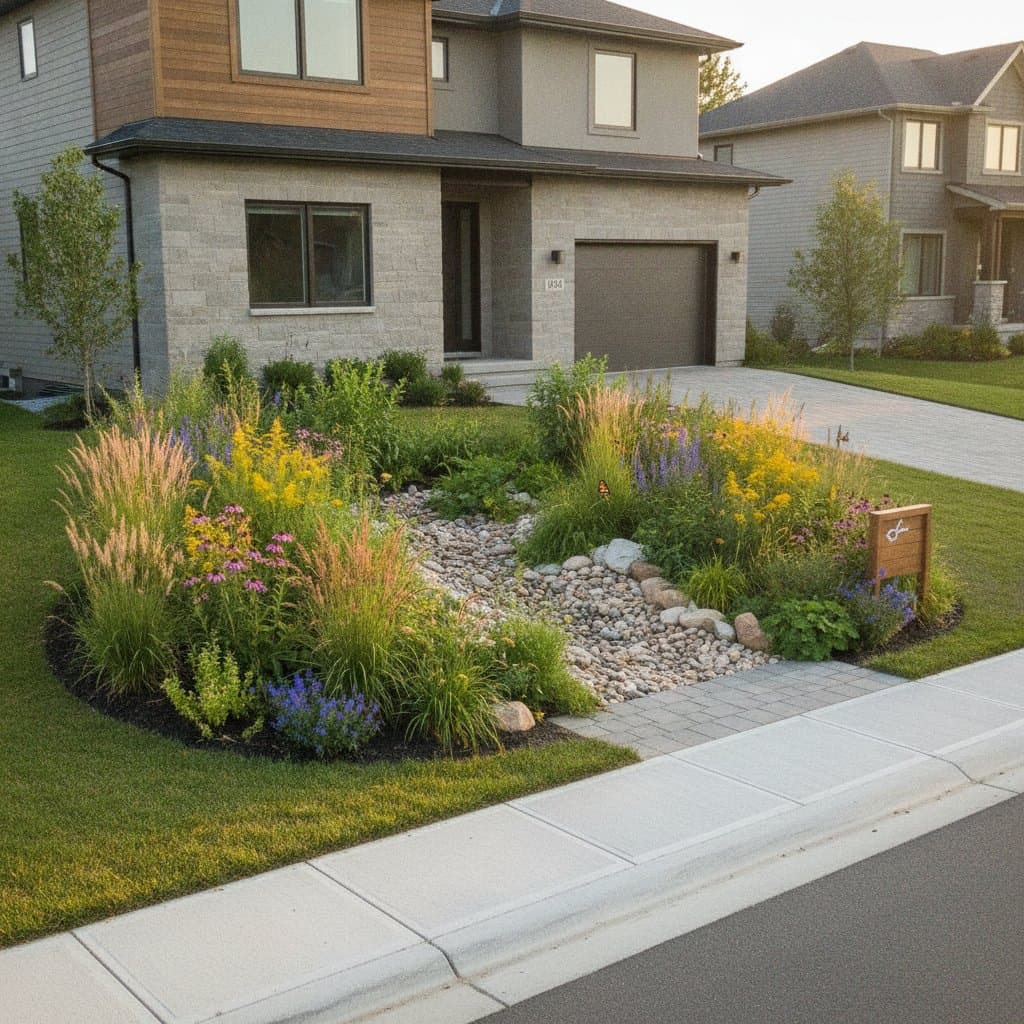
Gravel gardens rise as the premier lawn substitute because they demand little water, no regular mowing, and scant fertilizing. These designs preserve moisture, cut down on upkeep hours, and foster pollinators alongside native flora. Effective setups rely on thorough soil work, solid drainage, and plants matched to regional climates. With deliberate planning, they deliver enduring cost reductions and a robust, appealing yard aligned with today's eco priorities.
Understanding the Fundamentals
Traditional lawns earn praise for their even look, yet they call for endless mowing, watering, and feeding. Such turf setups create monocultures that curb biodiversity and ramp up resource use. Gravel gardens echo arid natural zones, where flora adjusts to lean soils and sporadic rains. The gravel serves as mulch to shield roots, curb moisture loss, and block weeds.
Evaluating Your Site
Start by gauging soil type, sunlight levels, and drainage before swapping lawn for gravel. Dense clay soils hold water, so consider regrading or elevated beds to dodge standing pools. Loose sands drain fast but gain from added organic matter for root setup.
Review the terrain's pitch; sharp inclines call for terracing or bigger stones to hold the ground steady. Watch water movement in storms. Puddles signal the need for a crushed rock underlayer below the gravel. Locate any buried sprinklers or lines prior to digging.
Spot yard microclimates to guide planting. Spots by walls or concrete hold warmth, ideal for drought-hardy herbs like rosemary or succulents such as agave. Cooler shade zones fit grasses like fescue or ferns that favor milder settings.
Developing Your Plan
Kick off a gravel garden with a clear blueprint covering design, supplies, and timeline. Assemble these essentials:
Essential Materials
- Crushed or pea gravel in 3/8- to 1/2-inch sizes
- Thick landscape fabric as a weed block
- Crushed stone or decomposed granite for the sub-base
- Borders like steel strips, rocks, or preserved lumber
- Hardy, dry-adapted plants
- Organic compost for soil boosts if required
Required Tools
- Shovel and metal rake
- Wheelbarrow for hauling
- Tamper or vibrating compactor
- Pruning shears
- Tape measure and spray paint for lines
- Hose for startup watering
Best Timing and Precautions
Tackle the build in temperate conditions with friable, dryish soil. Don gloves, safety glasses, and firm footwear. Keep good form when slicing fabric or shifting stones to avoid injury.
Building Step by Step
Step 1: Clear the Turf
Employ a sod cutter or spade to strip grass and roots. Compost the sod or haul it to local waste programs. This clears weeds and lets base layers adhere to earth.
Step 2: Level and Build the Foundation
Till the upper soil inches, then slope the ground mildly for runoff. Lay 2-3 inches of crushed rock or granite base. Pack it firm with a compactor for a solid start.
Step 3: Set Borders
Fix edging around edges to contain gravel. Steel offers sharp modern edges; rocks blend into wilder looks. Level and secure them tight before gravel goes in.
Step 4: Lay the Weed Block
Unroll fabric across the base, shingling overlaps by 6 inches minimum. Snip X-cuts for plant spots. It curbs weeds while permitting water passage.
Step 5: Spread the Gravel
Distribute gravel to 2-3 inches deep. Smooth with a rake for even coverage. Keep it from mounding at plant bases to prevent root rot.
Step 6: Choose and Position Plants
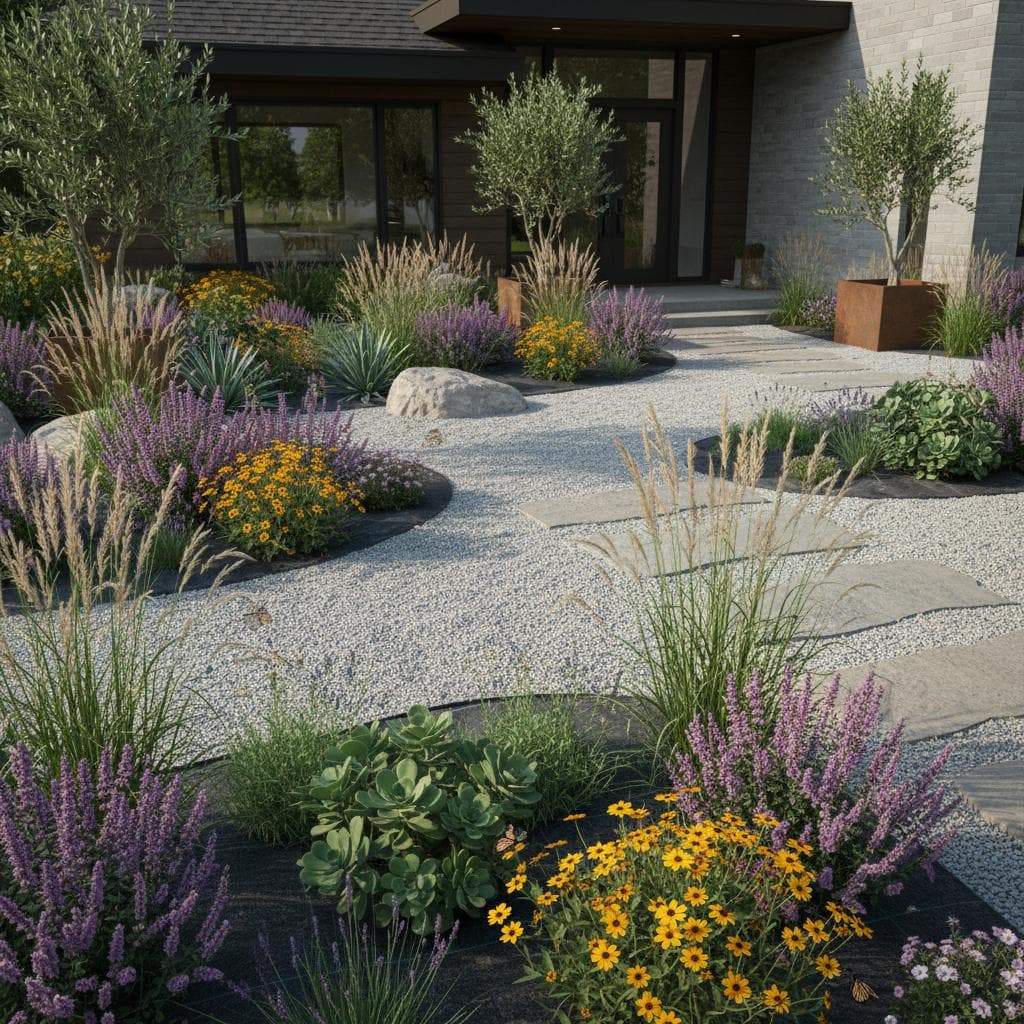
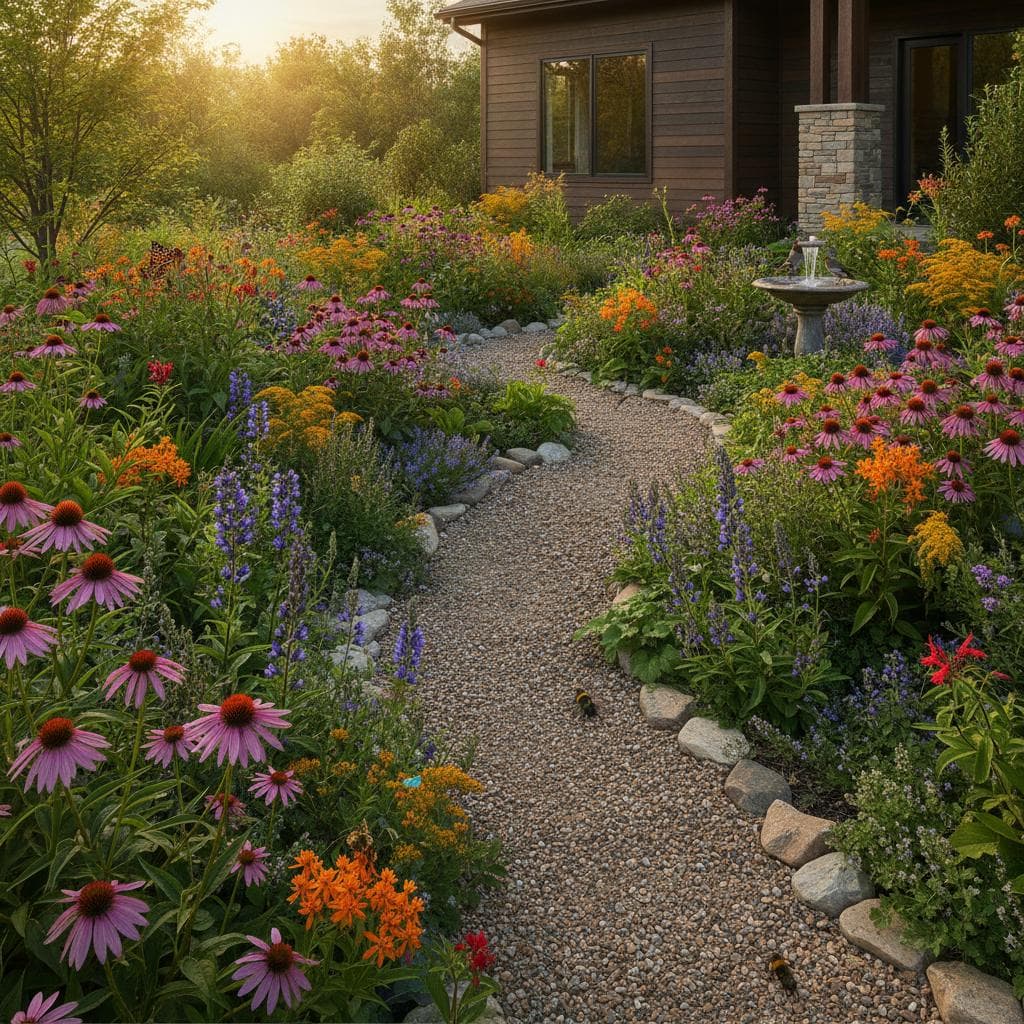
Pick varieties for drained, nutrient-poor ground, such as lavender, sedum, creeping thyme, yarrow, coneflower, and feathery grasses. Cluster by stature and hydration demands for easy care.
Excavate holes a bit wider than roots. Place the plant, refill with soil or compost-native mix, and soak well to anchor. Ease gravel back around bases post-planting.
Step 7: Water and Establish
Saturate once deeply to settle dirt near roots. For weeks after, water lightly to spur deep rooting. Taper to just prolonged droughts once settled.
Ensuring Durability and Upkeep
Check the setup often for even gravel and no gaps. Top off dips with fresh gravel. Test rain drainage; pools mean reworking the base or slope by excavating and resetting.
Weeds stay low with solid fabric; pull strays by hand pre-seed. Skip herbicides to protect soil life and insects.
Inspect borders yearly against shifts from frost or settling. Reset and pack as needed. Track plants; swap those that crowd or weaken.
Ongoing Care and Seasonal Tweaks
These gardens need far less work than turf, but steady attention preserves appeal. Rake gravel now and then to aerate and renew looks, fighting pack-down.
Trim perennials post-bloom for form and regrowth. Deadhead flowers to prolong shows. In leaf-heavy areas, sweep regularly to halt decay and weed invites.
Financial and Eco Impacts
Upfront costs cover supplies and effort, but savings mount from no mowing, feeds, or heavy watering, easing bills and planet load.
On the green side, they nurture variety with insect and bee homes. Natives flourish, aiding neighborhood ecology.
Expert Strategies
- Mix gravel sizes and hues for texture and path cues.
- Embed flat stones or tiles for walkways amid plants.
- Add upright grasses or rocks as standout features against flats.
- Plant sparingly at first; many spread on their own.
- Watch seasonal changes to tweak spacing and coverage.
Realizing Lasting Value
A solid gravel garden rewards with slim upkeep, budget wins, and timeless charm. Follow a precise blueprint, prioritize drainage, and select plants wisely to craft a yard that withstands harsh weather and scarcity.