Japandi Gardens: Blending Zen Mindfulness and Scandinavian Simplicity
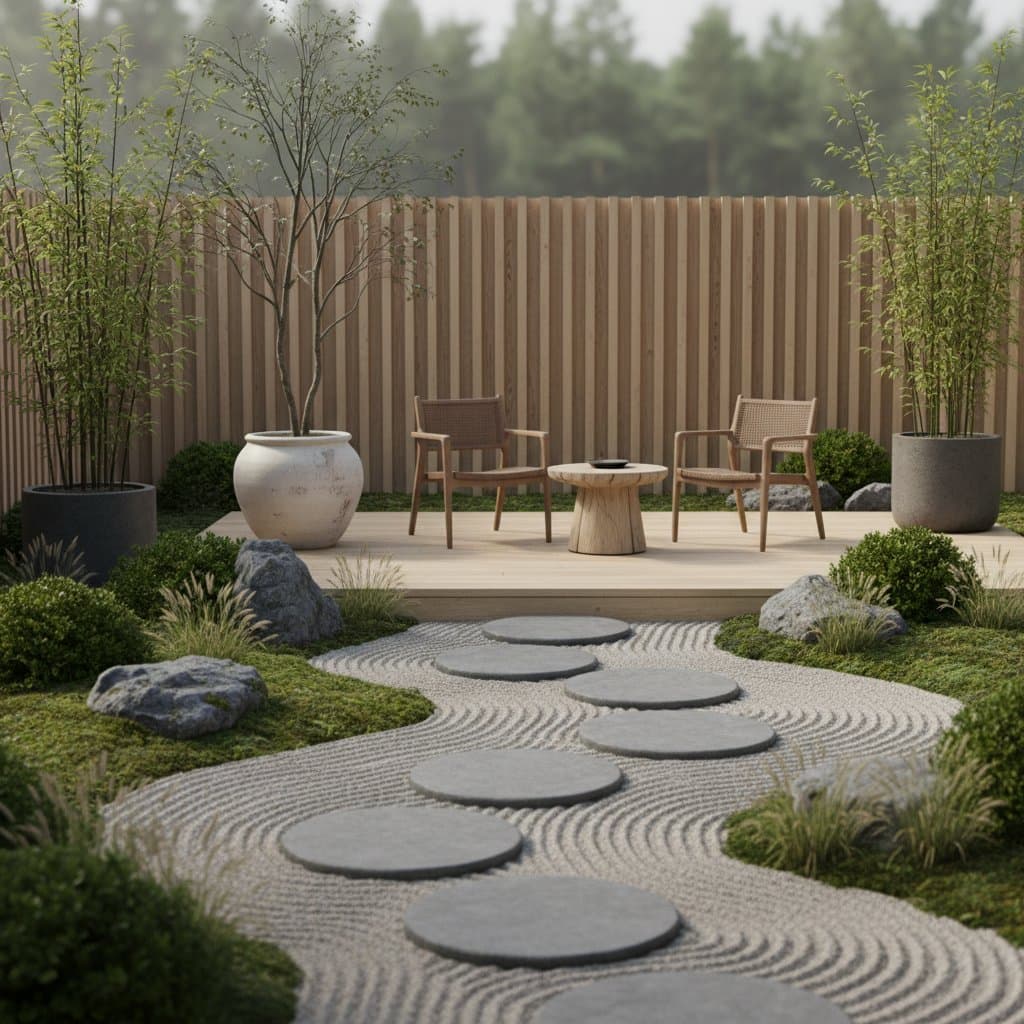
Imagine a serene dawn where soft light passes through slender bamboo stalks, illuminating smooth pebbles and light-toned wooden platforms. Hold a warm cup of tea as the fresh aroma of moss and cedar fills the air. This scene captures the essence of a Japandi garden, a fusion of Japanese Zen mindfulness and Scandinavian simplicity. The design philosophy emphasizes minimalism infused with warmth, offering a refuge that engages the senses and honors the inherent beauty of nature.
Core Principles of Japandi Design
Japandi emerges from the intersection of two cultural aesthetics. Japanese influences draw from Zen and wabi-sabi, which celebrate imperfection and the transient beauty in elements like stones, foliage, and water surfaces. Scandinavian contributions include hygge, focused on coziness, functionality, and subtle refinement. The combination yields environments that feel anchored yet open, straightforward yet textured.
Selecting Natural Materials for Subtle Harmony
Foundational to a Japandi garden are materials that evoke quietude. Opt for light-colored woods, rounded stones, and tactile surfaces that reward close inspection. The color scheme draws from earth's palette: sandy beiges, clay earth tones, faded grays, and pale greens that integrate seamlessly with the terrain.
Essential materials to consider:
- Pale woods like pine, ash, or beech for platforms and benches
- Polished river rocks and fine gravel for walkways
- Bamboo poles or rattan weaves for privacy screens
- Natural fibers such as linen or cotton for seating pads
These selections prioritize genuineness and ease. Over time, the materials develop patina, enhancing the garden's narrative without demanding excessive upkeep.
Achieving Equilibrium Between Form and Fluidity
Japandi gardens master the interplay of defined structure and organic movement. Japanese traditions favor irregular patterns and natural contours, whereas Scandinavian styles prefer straight edges and measured proportions. Harmonizing these demands precise planning and moderation.
Begin with a structured framework. Outline pathways, rest zones, and accents using organic dividers like clipped shrubs, flat stones, or timber bases. Introduce fluidity through plants that cascade softly. Ornamental grasses, ground moss, and ferns extend beyond borders, merging constructed areas with wild growth.
Contrast elevates the design. Position a streamlined wooden seat near untamed lavender clusters, lay a straight gravel path amid billowing ferns, or place a plain stone basin amid irregular boulders. This dynamic tension produces cohesive visuals and inner repose.
Incorporating Greenery for Tranquil Depth
Vegetation forms the core of Japandi landscapes, selected for form, texture, and understated coloration rather than vibrant displays. The emphasis falls on layered greens, silvery accents, and neutral shades that mirror natural serenity.
Recommended plants for Japandi settings:
- Japanese maples, offering graceful, branching forms
- Hostas and ferns, providing dense, verdant layers
- Bamboo varieties, adding height and rustling sounds
- Sphagnum moss, creating plush, meditative surfaces
- Flowing grasses like miscanthus, swaying with wind
In temperate zones or confined areas, utilize containerized conifers and compact bushes to sustain the style. Prioritize purposeful placement over profusion. Each specimen integrates into the whole, evolving gently across seasons to maintain equilibrium.
Integrating Water for Reflective Calm
Water elements hold reverence in Japanese and Scandinavian traditions, representing renewal, introspection, and peace. In Japandi designs, water appears sparingly and meaningfully, amplifying quietude without ostentation.
Consider a stone basin capturing sky views, a compact pump-driven fountain emitting a low trickle, or a slim channel directing runoff. The subtle audio of water promotes contemplation, while its gleam expands perceived depth.
For installations without plumbing, employ mirroring surfaces such as buffed granite or clear panels to simulate effects. The priority remains the duality of motion and pause, echoing life's rhythms.
Choosing Furniture Aligned with Nature
Furnishings in a Japandi garden extend the site's organic character. Select low-profile wooden chairs, unadorned benches, and interlaced seats that blend into the environment. Steer clear of elaborate carvings or vivid synthetics; favor pieces showcasing wood's inherent patterns.
Enhance usability with cushions in subdued hues, crafted from airy linens or cottons. Limit adornments to essentials. A crafted pottery vessel or solitary paper lantern provides subtle interest, infusing coziness amid restraint.
Illuminating Spaces with Gentle Light
As dusk falls, illumination activates the garden's subtle pulse. Aim for diffused glows that direct attention and invite ease, rather than stark floods. Approach lighting as shadow sculpting.
Deploy lanterns along borders, embedded path guides, or flame sources in protected nooks. Select soft warm hues over clinical whites. Allow beams to accentuate surfaces, projecting mild gleams on liquid or timber. The outcome feels innate, as if the landscape dims naturally.
Practicing Attentive Care and Seasonal Adaptation
Japandi gardens flourish through gradual change. Moss accumulates, timber grays, and rocks embed further. This progression embodies the style's charm. Care involves nurturing rather than domination.
Maintain gravel designs with a rake, trim plants to retain organic silhouettes, and refresh wood using natural solutions like diluted soap. Welcome evolving marks. Fungal growth on rocks or surface oxidation enriches character.
Align with seasons by modifying accents thoughtfully. Transition to heavier wool fabrics in winter, or add flame pits for heat. Such adjustments reaffirm the garden's vitality and temporal awareness.
Adapting Japandi to Compact Areas
Expansive grounds prove unnecessary; Japandi principles scale to patios or verandas. Focus on deliberate choices and scale. Restrict to few materials and shades for sustained poise.
Incorporate one bamboo specimen, a pebble-filled tray with moss accents, and a petite seat to form a full haven. Employ wall planters or trellises to elevate foliage without floor intrusion. A modest basin or sheen element imparts dimension, unified by plain fabrics. Minimalism ensures even modest realms exude peace.
Embracing Sustainability for Enduring Serenity
Ecological responsibility permeates Japandi ethos, rooted in Japanese and Nordic respect for nature. This mindset informs contemporary applications effectively.
Sustainable practices to implement:
- Source salvaged timber and local stone over manufactured alternatives
- Plant indigenous species needing minimal irrigation
- Set up low-flow watering or harvest systems
- Use sun-driven lamps for illumination
- Recycle garden refuse to fertilize earth
These measures lessen impact while strengthening ties to natural processes. A garden in sync with its locale amplifies authenticity and calm.
Cultivating Daily Mindful Engagement
The deepest facet of a Japandi garden lies in the perspective it cultivates. Such environments prompt deceleration, detail appreciation, and solace in essentials. They offer a subtle call to escape haste, realigning with innate cadences often overlooked.
Engage in acts like raking patterns mindfully or observing sunlight on fronds over tea. These practices elevate the garden beyond aesthetics into a discipline of composure and gratitude.
Steps to Create Your Japandi Retreat
Building a Japandi garden centers on equilibrium, authenticity, and present awareness. Apply these tenets regardless of scale: from vast plots to intimate corners.
Substitute synthetic items with tactile organics, embrace irregular forms to spark interest, and permit seasons to imprint surfaces. Through stewardship, you nurture not only flora but also poise, elegance, and purposeful existence.