Key Points
- Transform your front yard into a productive edible landscape that maintains visual appeal while yielding fresh produce.
- Initiate the project on a budget by selecting scalable layouts and cost-effective plants.
- Employ moderate gardening knowledge, supported by detailed planning and consistent maintenance.
- Address safety through soil testing, secure tool use, and compliance with local regulations for front-yard gardening.
- Realize enduring advantages such as decreased food expenses, enhanced self-reliance, and a distinctive design merging aesthetics with utility.
The Rise of Functional Front Yards
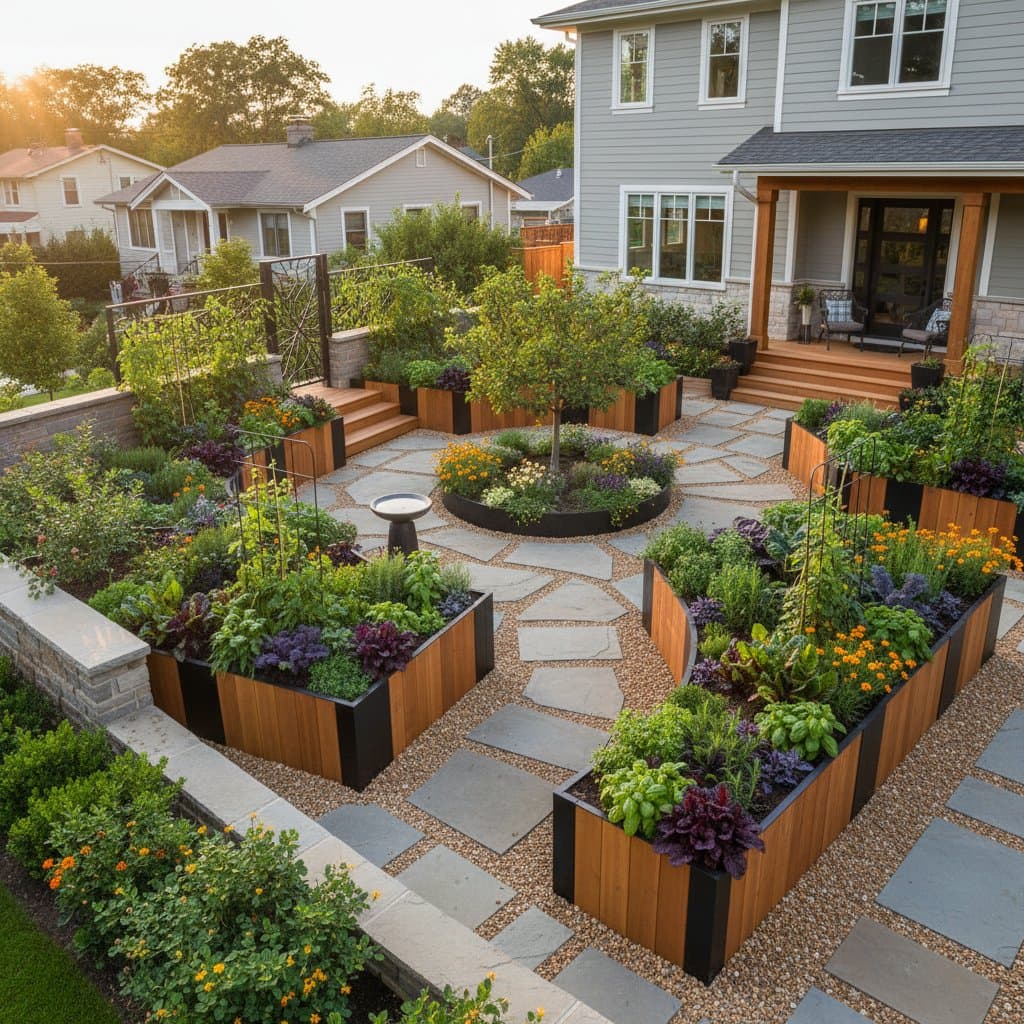
Front yards traditionally served ornamental purposes, featuring manicured lawns, vibrant flower beds, and sculpted shrubs to enhance a home's facade. Contemporary homeowners increasingly integrate functionality into these spaces. Edible landscaping, or foodscaping, incorporates fruit-bearing trees, nutrient-rich herbs, versatile vegetables, and colorful edible flowers, adhering to established landscape design elements.
Essential Materials and Tools
Materials
- Organic compost or soil enhancers to enrich the ground.
- Organic mulch or wood chips to suppress weeds and retain moisture.
- Permeable landscape fabric, if desired, to minimize weed intrusion.
- Materials for raised beds, such as untreated cedar lumber or natural stone for durability.
- Diverse edible selections including perennial herbs like rosemary and thyme, annual vegetables such as tomatoes and lettuce, compact berry shrubs, and dwarf fruit trees.
- Ornamental edging stones or low borders to define planting zones.
- Efficient drip irrigation lines or soaker hoses for precise watering.
Tools
- Sturdy shovel and spade for soil preparation.
- Wide garden rake to level surfaces.
- Durable wheelbarrow for transporting materials.
- Sharp pruning shears for precise trimming.
- Compact hand trowel for detailed planting.
- Measuring tape and wooden stakes to outline designs accurately.
- Automated hose timer or traditional watering can for controlled hydration.
Cost-Saving Options
- Repurpose salvaged lumber or recycled bricks to construct raised beds without new purchases.
- Compost household organic waste, including vegetable peels and coffee grounds, to avoid commercial products.
- Exchange seeds, cuttings, or young plants with local gardeners to reduce acquisition expenses.
Ensuring Quality and Sustainability
Establishing an edible front yard demands attention to an enduring ecosystem that yields consistently across seasons. Prioritize ongoing assessments to uphold standards.
Regular Quality Checks
- Soil vitality: Incorporate fresh compost each year and alternate crop positions to sustain nutrient levels.
- Plant resilience: Promptly eliminate any infested or declining specimens to curb potential outbreaks.
- Aesthetic harmony: Update walkways and boundaries as foliage expands to preserve visual coherence.
- **Yield ** Harvest crops at peak ripeness to stimulate further production and prevent overripening.
Should the initial growing period prove intensive, concentrate efforts on a single raised bed or herb strip. Mastery in this domain develops through deliberate practice and incremental adjustments, mirroring skilled workmanship in any craft.
Prioritizing Safety and Community Harmony
Prior to excavation, contact your utility locator service to map underground lines for gas, water, and electricity, preventing hazardous disruptions. Equip yourself with protective gloves, reinforced footwear, and safety goggles during soil work or material handling.
Local regulations or homeowners' association guidelines may limit front-yard gardening aspects like plant heights, enclosure types, or species selections. Consult these rules at the outset to align your vision. A tidy, visually pleasing arrangement not only mitigates potential objections but also encourages adjacent residents to adopt similar practices.
Year-Round Care Schedule
Sustain an edible front yard through targeted maintenance aligned with seasonal shifts, mirroring care for conventional landscapes.
Spring Preparation
- Amend soil with compost and replenish mulch layers for nutrient infusion.
- Inspect irrigation setups for clogs or damage to ensure reliable flow.
- Sow cool-season varieties like snap peas, spinach, and arugula for early harvests.
Summer Vigilance
- Assess soil dampness each morning, adjusting watering to combat evaporation.
- Collect ripe produce every few days to promote vigorous regrowth.
- Trim back herb foliage and deadhead flowers to sustain vitality.
Autumn Renewal
- Clear away dropped fruits and leaves to deter pests.
- Introduce cover crops such as crimson clover to naturally fertilize the soil.
- Preserve bulbs or dry seeds for spring replanting.
Winter Protection
- Insulate hardy perennials with thick mulch coverings against frost.
- Maintain tools by sharpening blades and cleaning surfaces.
- Sketch forthcoming season designs, incorporating lessons from prior cycles.
Consistent attention across seasons guarantees a garden that delivers both nourishment and elegance perpetually.
Advancing Your Gardening Expertise
With a foundational edible front yard in place, explore sophisticated methods to amplify output and resilience. Techniques like grafting compatible fruit varieties onto existing trees, collecting and storing seeds for propagation, or preparing nutrient-dense compost teas elevate efficiency. Integrate subtle enhancements, such as a modest rainwater collection basin or textured stone accents, to refine both practicality and allure.
Edible landscaping adapts alongside your proficiency. Successive seasons yield insights into optimal pairings of flavors, refined cultivation strategies, and profound respect for the artistry inherent in a flourishing outdoor space.
Harvesting Rewards from Your Edible Haven
An edible front yard redefines daily home interactions. Rather than tending a barren lawn, gather crisp lettuces, aromatic basil, and juicy strawberries mere paces from your entryway. This setup instills a sense of accomplishment through self-provisioning, celebrates meticulous care, and facilitates generous sharing with loved ones and passersby.
The space transcends mere separation between dwelling and roadway. It functions as an interactive learning environment for younger family members, a platform for experimentation, and a persistent affirmation that purposeful endeavors often originate in one's immediate surroundings. Diligent nurturing ensures this landscape nourishes physical well-being and enriches emotional fulfillment indefinitely.