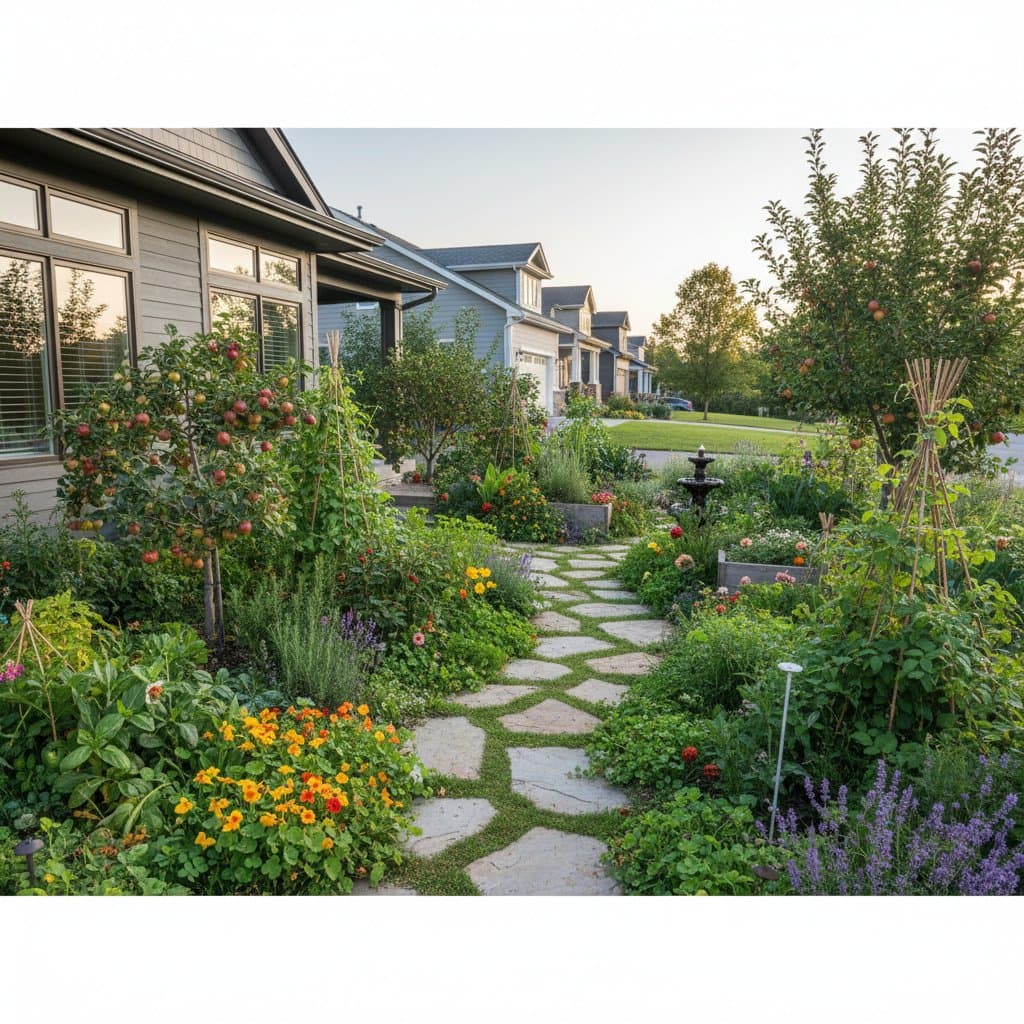
Essential Principles of Edible Front Yards
- Front yards function as aesthetic landscapes and reliable food producers through intentional edible garden designs.
- Integrating visual appeal with utility enables cultivation of fruits, herbs, and vegetables without sacrificing neighborhood standards.
- Food forest principles employ layered planting strategies to replicate natural woodland ecosystems, fostering self-sufficiency.
- Strategic planning aligns urban or suburban regulations with environmental advantages.
- Seasoned horticulturists highlight soil vitality, species diversity, and precise plant choices as pillars of effective edible landscapes.
The Evolving Role of Front Yards in Sustainable Living
Conventional front yards historically signified prosperity and uniformity, with manicured lawns embodying societal ideals. These expanses require substantial water, chemical fertilizers, and ongoing upkeep, prompting reevaluation amid rising concerns over sustainability, escalating food prices, and ecological consequences.
Insights from Landscape Experts on Blending Form and Yield
Landscape architect Mira Chen characterizes edible landscaping as an art form where plants serve dual roles as ornament and sustenance. Her methodology merges structured composition with ecological dynamics. She recommends initiating projects modestly, selecting species suited to regional conditions such as temperature ranges and soil types.
Chen explains, "When you design an edible yard, you are not just choosing plants, you are curating an experience. The goal is to make it so inviting that people forget it is functional."
Professionals underscore the primacy of soil vitality. Fertile soil teeming with organic material and beneficial microorganisms underpins thriving edible setups. Incorporate compost to enrich nutrient levels, apply mulch layers to conserve moisture and deter weeds, and practice companion planting to enhance plant resilience against pests.
Biodiversity emerges as a vital component. Interspersing bloom-rich ornamentals with food crops draws in pollinators and predatory insects, minimizing reliance on synthetic interventions. Picture a front yard alive with honeybees amid lavender blooms and ladybugs patrolling aphid-prone kale, yielding both bountiful produce and a tapestry of vibrant hues.
Tangible Advantages for Environment and Community
Edible front yards transcend mere visual allure, delivering measurable gains for individuals and surroundings alike.
- Water Conservation: Substitute thirsty turf with resilient herbs like rosemary and perennials such as echinacea, slashing irrigation demands by up to 50 percent in arid climates.
- Soil Restoration: Employ organic techniques to revive microbial communities and stabilize earth against runoff, fostering long-term fertility.
- Emission Reductions: Homegrown staples like basil or blueberries cut transport-related carbon outputs, equivalent to avoiding several grocery runs weekly.
- Social Connections: Distribute surplus yields such as cherry tomatoes or mint to spark interactions, bolstering local food resilience.
- Ecosystem Enhancement: Integrate natives like milkweed and serviceberry to sustain bees, butterflies, and birds, amplifying regional biodiversity.
Advocates for city-based farming note that such landscapes convert barren urban zones into productive havens. Compact spaces often produce ample quantities, including robust yields of heirloom lettuces, dwarf apple varieties, or perennial kale, sufficient for family meals throughout seasons.
Step-by-Step Guide to Creating Your Food Forest
Converting a front yard into a food forest demands deliberate steps, yet yields rewarding outcomes through gradual implementation.
1. Conduct Site Analysis. Observe sunlight patterns over a full day, identifying full-sun zones for tomatoes and partial-shade areas for ferns. Map drainage to position water-loving plants like currants in low spots and drought-resistant ones like sage on slopes.
2. Select Anchor Species. Establish structure with sturdy elements such as dwarf citrus trees for overhead canopy or nitrogen-fixing shrubs like goumi for mid-level support. These choices provide shade, windbreaks, and foundational yields like lemons or berries.
3. Incorporate Mid- and Ground-Level Layers. Surround anchors with mid-tier perennials such as rhubarb or artichokes, then underplant with ground covers including alpine strawberries or oregano. This stratification maximizes vertical space and suppresses bare soil.
4. Build Soil Quality. Amend existing earth with homemade compost from kitchen scraps, layered to a depth of three inches annually. Mulch with wood chips or straw to maintain even moisture and nurture worm populations.
5. Enhance Visual Structure. Define borders with natural stone edging or gravel paths to guide visitor flow. Install trellises for vining peas or espaliered pears, adding architectural interest without clutter.
6. Optimize for Accessibility. Space rows at least two feet apart for comfortable navigation with baskets. Cluster harvest companions, like peppers near basil, to streamline collection during peak seasons.
7. Engage Your Neighborhood. Offer samples of fresh-picked raspberries or host informal tours to demystify the approach. Collaborative efforts, such as seed swaps, amplify collective motivation and shared knowledge.
Harvesting Ongoing Rewards from Your Edible Landscape
As your food forest establishes, it integrates seamlessly into everyday life. Daily routines incorporate spontaneous gatherings of rosemary for roasting or plucking figs for desserts. Children discover nutrition through direct engagement, while passersby exchange stories over traded eggplants.
This design philosophy demonstrates that aesthetic elegance and practical productivity reinforce one another. Each tended plot cultivates not only sustenance but also a narrative of resilience, inviting all to partake in a landscape of plenty.