Key Points
- Budget: Climate-adaptive yards lower ongoing expenses through reduced needs for water, fertilizers, and mowing.
- Safety: These designs eliminate reliance on chemical fertilizers and excessive irrigation, providing safer environments for families and pets.
- Time and Skill: Installation requires moderate skills over several weekends, followed by minimal ongoing maintenance.
- Outcome: The result is a durable, self-sustaining landscape that adapts to local conditions and elevates property value.
Rethinking the Traditional Lawn
Homeowners often view a vibrant green lawn as a mark of diligent care. However, maintaining that ideal expanse involves substantial demands. Constant watering, frequent mowing, regular fertilizing, and occasional pest treatments strain finances and environmental resources. Traditional lawns prove particularly vulnerable in areas with drought risks or variable precipitation.
Project Overview
- Working Time: Expect moderate labor across two to four weekends, scaled to yard dimensions.
- Total Time: Allow several weeks for planting establishment and initial growth.
- Skill Level: Intermediate, suitable for those with foundational gardening knowledge.
- Estimated Cost: Involves a moderate initial outlay, offset by substantial long-term savings.
This undertaking emphasizes thoughtful planning, soil conditioning, and strategic plant choices. After setup, routine tasks shift from weekly mowing to occasional pruning, mulching, and minor seasonal tweaks, freeing up significant time.
When to DIY or Hire a Professional
Individuals with experience in basic landscaping tasks, such as digging, leveling ground, and planting, can manage this project independently. The process resembles expanding a garden bed, though on a broader scale. Consider engaging a specialist for challenges like steep inclines, poor drainage, or complex irrigation setups.
A landscaper experienced in native species can optimize the design for efficiency and verify that soil supports sustained plant health. Professionals also handle permitting or regulatory aspects in restricted zones, ensuring compliance and longevity.
Materials and Tools
Materials:
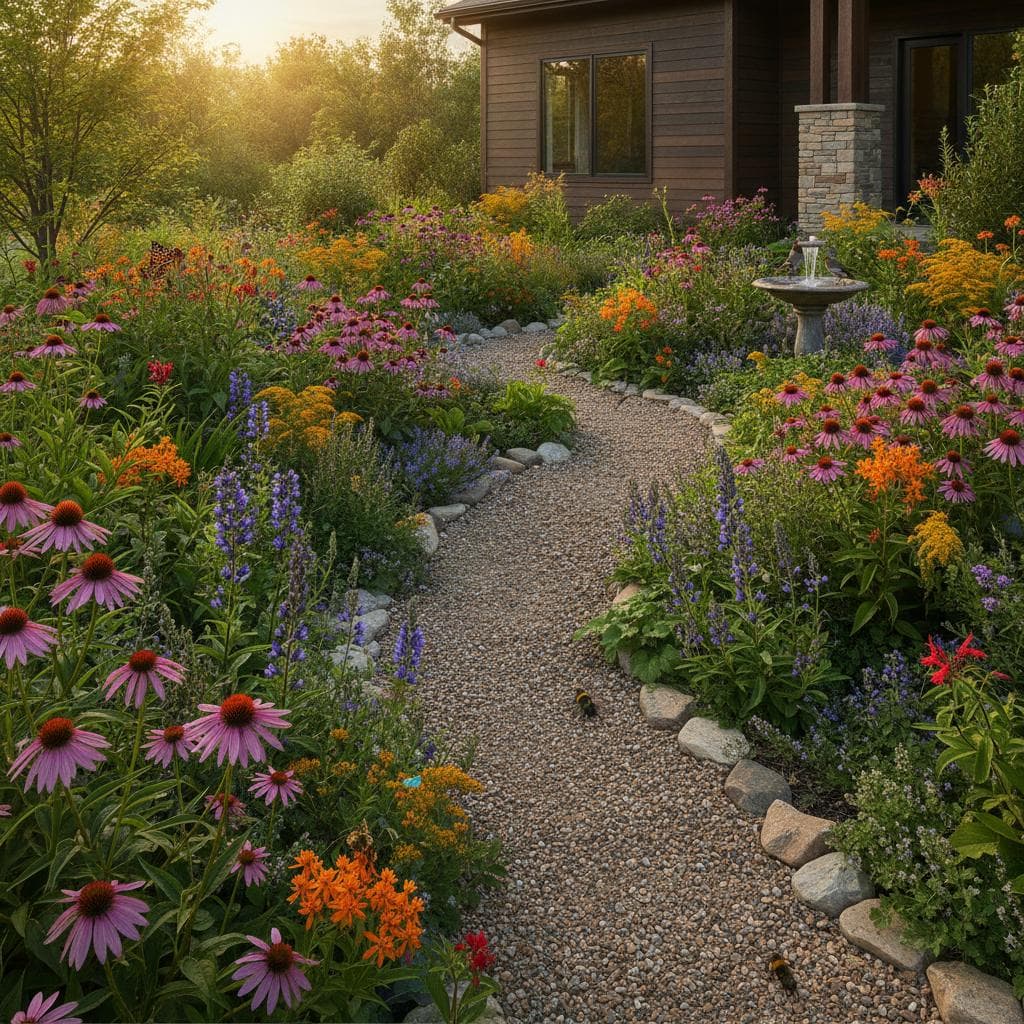
- Native, drought-resistant plants including switchgrass for texture, coneflower for pollinator appeal, and yarrow for ground cover.
- Organic mulch or gravel to retain soil moisture and deter weeds.
- Compost or natural amendments to enrich soil structure.
- Drip irrigation kits or soaker hoses for targeted watering.
- Permeable weed barrier fabric, if desired for initial weed suppression.
Tools:
- Sturdy shovel, rake, and hoe for soil work.
- Garden hose equipped with a timer for controlled watering.
- Wheelbarrow to transport soil and materials efficiently.
- Sharp pruning shears for precise trimming during maintenance.
Step-by-Step Process
1. Assess and Plan
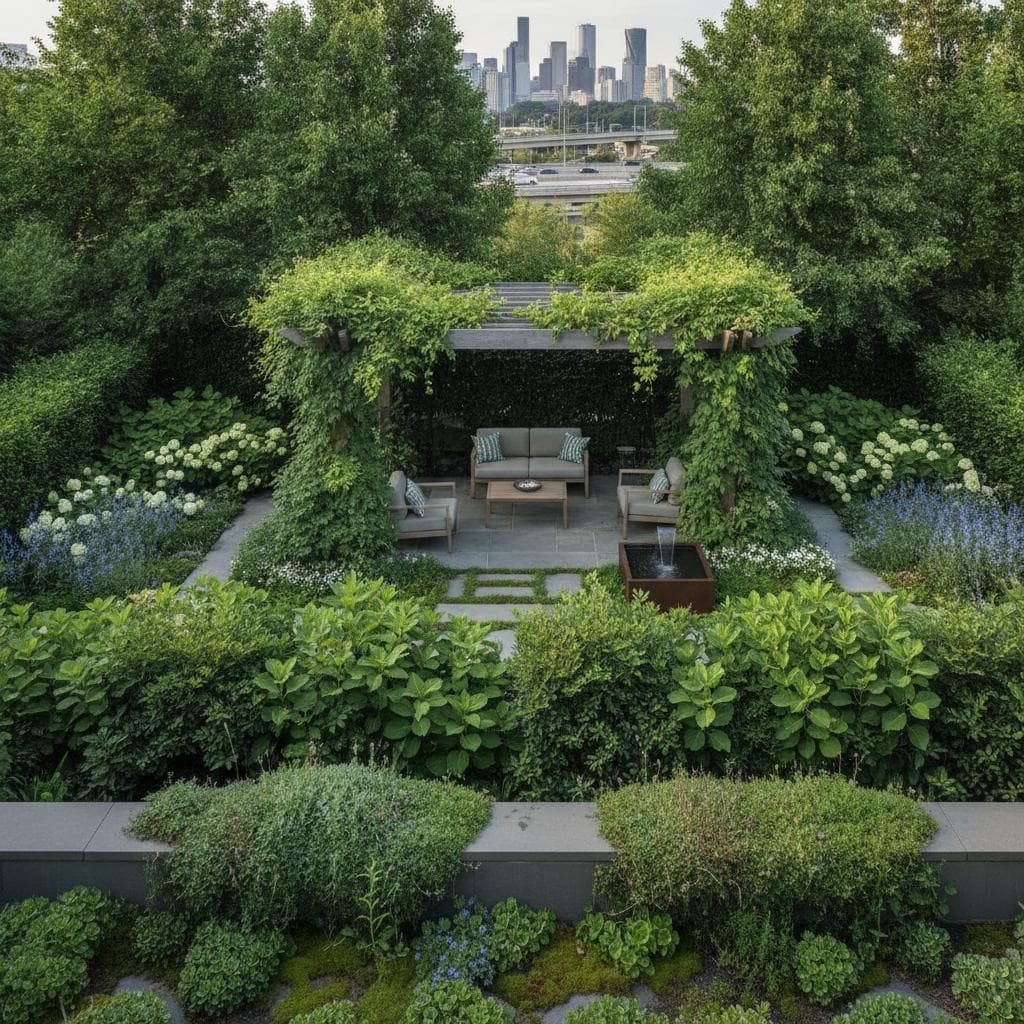
Examine your yard for sunlight exposure throughout the day, soil composition via simple tests, and existing drainage patterns. Pinpoint zones where current grass fails to thrive, such as shaded or waterlogged spots. Draft a site map that clusters plants by shared requirements for water and light, while incorporating pathways for easy access and focal points for visual appeal, like a central shrub cluster or shaded seating area.
2. Prepare the Soil
Strong soil forms the foundation of any climate-adaptive yard. Aerate compacted sections to a depth of six to eight inches, extract persistent weeds by root, and incorporate two to three inches of compost evenly. These steps enhance water retention and nutrient availability without synthetic additives, as native plants thrive in unaltered local soils.
3. Choose the Right Plants
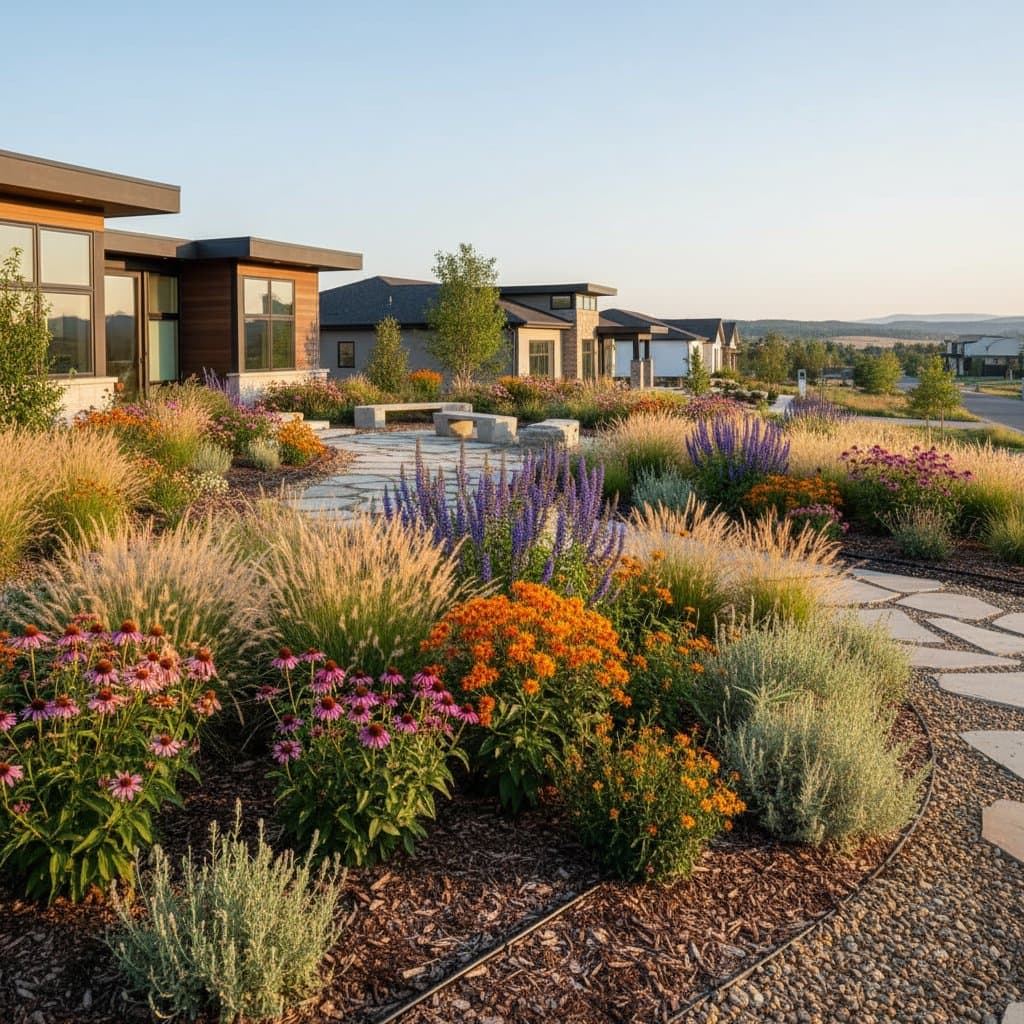
Select native species proven to endure regional climates, demanding less irrigation and showing greater pest resistance. Combine structural evergreens like serviceberry shrubs for year-round form, vibrant perennials such as black-eyed Susan for seasonal color, and swaying grasses like little bluestem for dynamic texture. In arid climates, incorporate succulents like agave or drought-hardy shrubs such as sagebrush to maximize adaptation.
4. Set Up Efficient Irrigation
Install a drip system or soaker hoses to direct water precisely to plant roots, minimizing waste. Program automated timers to activate during early morning hours, when evaporation rates remain low. As roots develop over the first year, gradually extend intervals between waterings to encourage deep growth and independence from frequent inputs.
5. Mulch and Finish
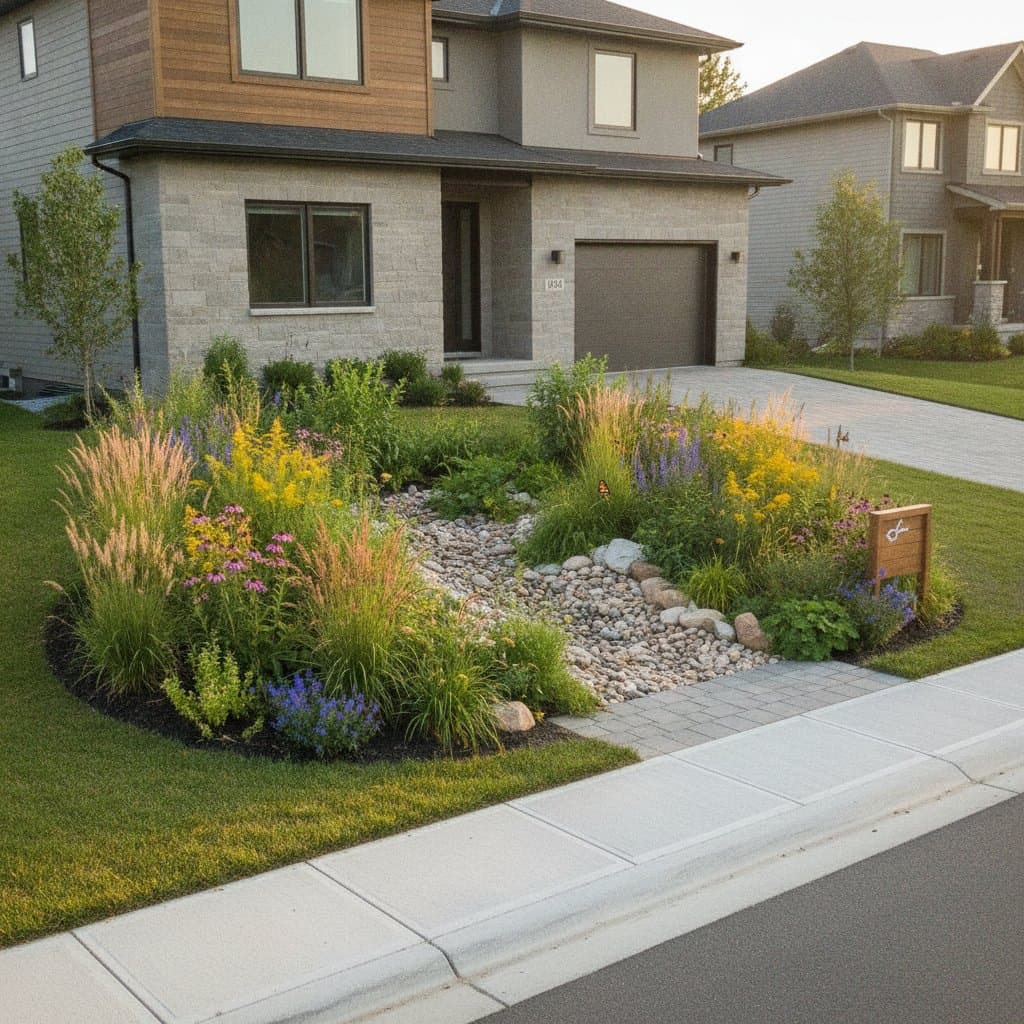
Spread a two- to four-inch layer of mulch or gravel around plants to conserve moisture, moderate soil temperatures, and block weed emergence. Outline paths with flat stones, permeable pavers, or bark chips to guide foot traffic and prevent erosion. These elements create a polished appearance while supporting the yard's ecological balance.
6. Monitor and Adjust
In the initial season, inspect soil moisture weekly using a simple probe or finger test to avoid overwatering. Remove faded leaves promptly, eliminate emerging weeds by hand, and replenish mulch layers where gaps appear. With consistent observation, plants integrate fully, demanding progressively less intervention as they mature.
Quality Control and Long-Term Value
Success in a climate-adaptive yard hinges on harmony rather than uniformity. Observe the organic rhythms of growth, dormancy, and renewal that mirror the surrounding ecosystem. Maintain quality by testing soil pH annually, ensuring adequate spacing to prevent overcrowding, and servicing irrigation components to avoid inefficiencies.
The rewards extend far beyond aesthetics. Expect reductions in utility bills from lower water use, decreased fuel consumption from reduced mowing, and elimination of chemical runoff. Additionally, these yards foster biodiversity by attracting pollinators, birds, and beneficial insects, cultivating a vibrant habitat that endures seasons without exhaustive care.
Maintenance and Seasonal Care
Low-maintenance designs still benefit from periodic oversight. Schedule light pruning in early spring and late fall to shape growth and remove debris. Refresh mulch annually in spring to sustain its protective role, and address weeds manually in thinned areas to preserve plant dominance.
In regions with harsh winters, trim perennials to ground level after frost and allow fallen leaves to provide natural mulch. Routinely check irrigation lines for blockages or wear, adjusting schedules as plants establish deeper roots. These targeted actions preserve vitality and curb appeal with far less effort than lawn upkeep.
Advancing Sustainability Through Skill Building
Shifting to a climate-adaptive yard represents a commitment to enduring environmental practices. Participants gain expertise in assessing soil vitality, curating plant palettes, and optimizing water resources, skills applicable to endeavors like edible gardens or resilient patios. This knowledge empowers broader applications in home stewardship.
Ultimately, such a yard embodies timeless principles of collaboration with nature, honoring local resources to yield lasting structures. Witnessing the robustness and allure of this design often transforms perspectives on outdoor spaces, highlighting the superiority of adaptive, integrated landscapes over conventional turf.