Japandi Gardens: Blending Japanese Zen and Scandinavian Warmth
Designing an outdoor space that balances serenity and style often challenges those with limited areas, demanding schedules, and modest funds. The Japandi style addresses these constraints by combining Japanese minimalism with Scandinavian warmth. This approach crafts practical gardens that foster relaxation and strengthen ties to nature.
Japandi gardens reject elaborate features and constant maintenance. They emphasize restraint, varied textures, and clear purpose. Properly executed, these spaces offer enduring calm, encouraging moments of pause amid daily life.
Core Principles of Japandi Garden Design
Japandi design embodies simplicity infused with intention. It pairs Scandinavian clean lines and neutral shades with Japanese focus on harmony and mindfulness. The outcome yields grounded, purposeful outdoor environments that promote profound peace.
Establish a Harmonious Foundation
Begin with the garden's underlying structure rather than individual items. Japandi relies on cohesive elements that ensure smooth movement and equilibrium. Divide the area into distinct zones for seating, circulation, and focal points, linked by thoughtful scale.
Follow these steps to build the base:
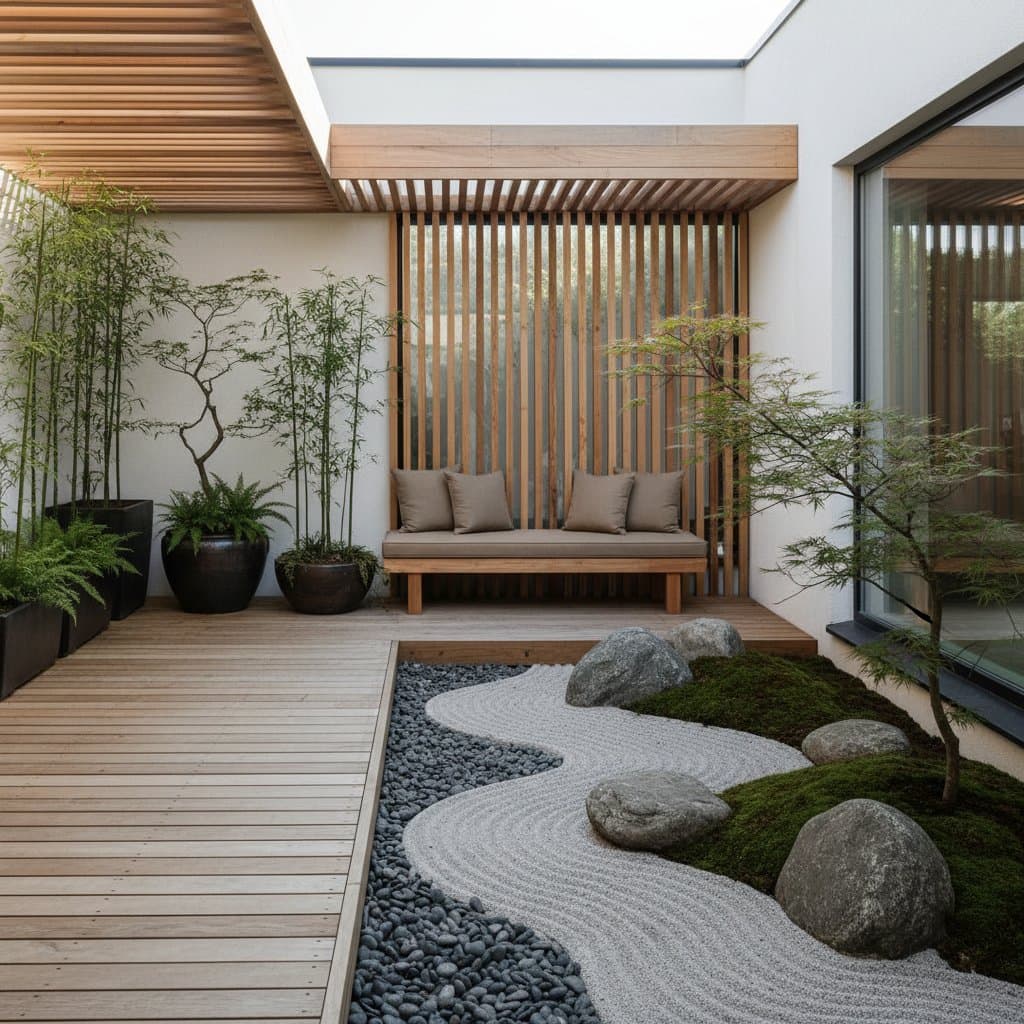
- Streamline the arrangement. Opt for precise, geometric forms. Linear walkways, rounded seating circles, or squared planting zones introduce order and tranquility without stiffness.
- Incorporate organic dividers. Employ bamboo panels, modest timber barriers, or rock outlines to delineate sections while preserving openness.
- Integrate contrasting surfaces. Pair sleek gravel or polished stone with plush ferns, creeping vines, or swaying reeds for tactile depth.
Erik Johansen, landscape architect at Nord Studio, advises, "Envision a Japandi garden reduced to its core. Question any element that prioritizes ornament over utility."
Select Subtle, Nature-Inspired Colors
In Japandi gardens, hues operate discreetly to amplify form and feel. Shun vibrant blooms or stark oppositions; favor gradual variations drawn from the earth, such as pale sage, soft taupe, subdued umber, and ivory.
These restrained shades allow architectural details and foliage to shine, while visually expanding confined yards. Introduce nuance via raw substances rather than artificial coatings.
Specific options include:
- Dark basalt pebbles or smoky quartz slabs for durable paths.
- Aged redwood or walnut timber for stable seating and platforms.
- Terracotta vessels or granite basins for earthy highlights.
For gentle vibrancy, rely on leaf tones over petals. Dwarf acers, sword ferns, and fescue varieties provide fluid motion and understated variety, preserving composure.
Embrace Authentic, Weathered Materials
Authenticity defines Japandi exteriors. Select substances that invite touch, endure exposure, and integrate with the site. Steer clear of polished or fabricated options; welcome patinas that develop organically.
Recommended selections encompass:
- Timber: Redwood, ipe, or locust for robust furnishings and surfaces.
- Rock: Limestone, lava stone, or smoothed boulders for borders and ornaments.
- Fabrics: Hemp, canvas, or felted blends for protective layers.
- Alloy: Brushed iron or oxidized copper for containers and fixtures.
Suki Larsen, principal at Oslo Outdoor Works, observes, "A Japandi garden matures alongside its users. Timber fades to silver, alloys gain depth, and flora tempers boundaries. This progression enhances appeal."
On limited budgets, source recycled lumber for raised beds or porcelain mimics of slate for terraces. Harmony among components matters more than flawlessness.
Plant with Purpose and Sparing Density
Greenery animates Japandi spaces, yet selection demands discipline. Concentrate on bold silhouettes and rhythmic groupings over dense coverage. Prioritize species suited to local conditions that demand little upkeep.
Effective varieties feature:
- Coniferous hedges such as yew or azalea for backbone.
- Clumping bamboo for vertical interest and rustle.
- Sphagnum carpets or woodland brakes for flooring.
- Sedges like festuca or Luzula for subtle volume.
- Compact specimens including bonsai pines or citrus dwarfs for anchors.
Group in modest groupings to foster unity. Limit diversity to avoid disorder. Adhere to a ratio of one part vegetation to two parts open expanse, using mulch, sand, or pools to frame plantings and soothe the gaze.
Integrate Water Elements for Serenity
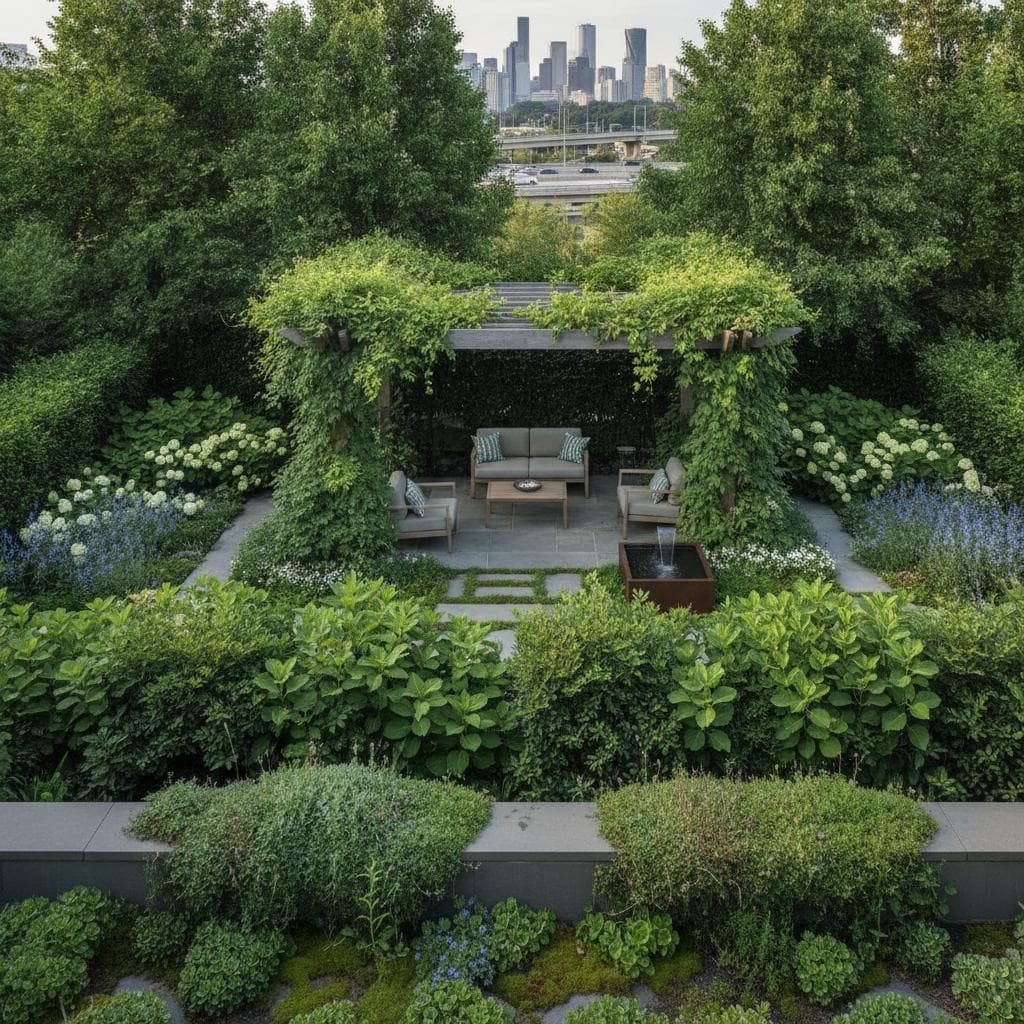
Water's murmur invites repose like few other features. Install a modest trough, bubbling cascade, or mirroring pool to elevate a modest terrace into a contemplative haven.
In rentals or tight plots, opt for portable basins or facade spouts to deliver soothing audio with minimal effort. Maintain understatement; water enhances rather than overwhelms.
Limit aquatic life to hardy koi or marginal reeds if desired, ensuring simplicity. Hana Kuroda adds, "Water in Zen contexts embodies flux and poise simultaneously. It attunes you to deliberate pace."
Select Functional, Unassuming Furnishings
Furnishings in Japandi settings stress ease and restraint. Grounded profiles, straightforward contours, and earthy finishes align with the overall ethos. Seek items merging Nordic utility with Eastern precision.
Viable choices:
- Unadorned teak settees paired with linen pads.
- Braided seagrass seats for organic weave.
- Pebble or aggregate consoles for resilience.
- Adaptable sectional groupings in tonal neutrals.
Eschew cumbersome or reflective pieces. Aim for understated grace that promotes repose without overshadowing greenery. For gatherings, employ stackable forms or portable perches, clad in resilient, subdued weaves matching the palette.
Design Gentle, Ambient Illumination
Evening light elevates Japandi gardens through subtle radiance. Prioritize cozy diffusion over intense beams, evoking traditional paper shades.
Implementation ideas:
- Photovoltaic globes lining routes.
- Dwarf stake fixtures beside lounges.
- Flame-mimic bulbs for diffused warmth.
- Discreet garlands in amber hues.
Forgo glaring canopies. Direct glow toward surfaces like bark or masonry to play with contours. Naomi Ellis, illumination specialist, remarks, "Effective Japandi lighting recedes visually. Its presence registers through mood, not mechanics."
Add Thoughtful, Sparse Ornaments
Ornaments in these gardens remain sparse and significant. Each item must enhance tranquility or utility. A lone porcelain urn, timeworn perch, or abstract boulder imparts subtle personality.
Confine to organic shades and artisanal marks. Reject synthetics or excess elaboration. Layer weatherproof linens or felts sparingly to infuse coziness without excess.
Infuse sentiment via understated relics, such as a cherished pebble from travels or a salvaged earthen pot, fostering narrative without ostentation.
Adopt Sustainable Practices Seamlessly
Sustainability aligns inherently with Japandi values of endurance and resource stewardship. Favor lasting investments and locale-adapted flora over transient trends.
Practical shifts:
- Repurpose salvaged planks for enclosures or walks.
- Deploy precise watering systems over broad sprays.
- Recycle clippings into soil amendments.
- Elect photovoltaic or low-energy sources for fixtures.
These choices embody deliberate existence. Erik Johansen concludes, "Sustainability in gardens demands patience. Gradual assembly yields perennial fulfillment."
Nurturing and Evolving Your Space
As your Japandi garden forms, its true value emerges through regular engagement. Treat it as a dynamic entity, adapting to seasons and use rather than demanding pristine order.
Dedicate brief intervals to care: smooth pebble mosaics, prune errant growth, or pause for herbal infusion amid foliage. Consistent presence attunes the area to your patterns.
Gradually, incorporate tailored elements like a culinary border or suspended sway for leisure. These evolutions enrich the narrative, blending discipline with personal expression.
Building Your Japandi Retreat Step by Step
Realizing a Japandi garden requires no overhaul or lavish expenditure. Initiate with focused simplification: refine boundaries, source genuine textures, and permit organic guidance.
Commence modestly. Substitute a plastic chair with a timber slab, exchange garish annuals for enduring perennials, or position a reflective dish for contemplation.
This method accommodates adaptation, valuing patina, skill, and quietude. Your garden transcends decoration, becoming a vital extension of mindful living.