Japandi Gardens: Merging Zen Serenity with Scandinavian Restraint
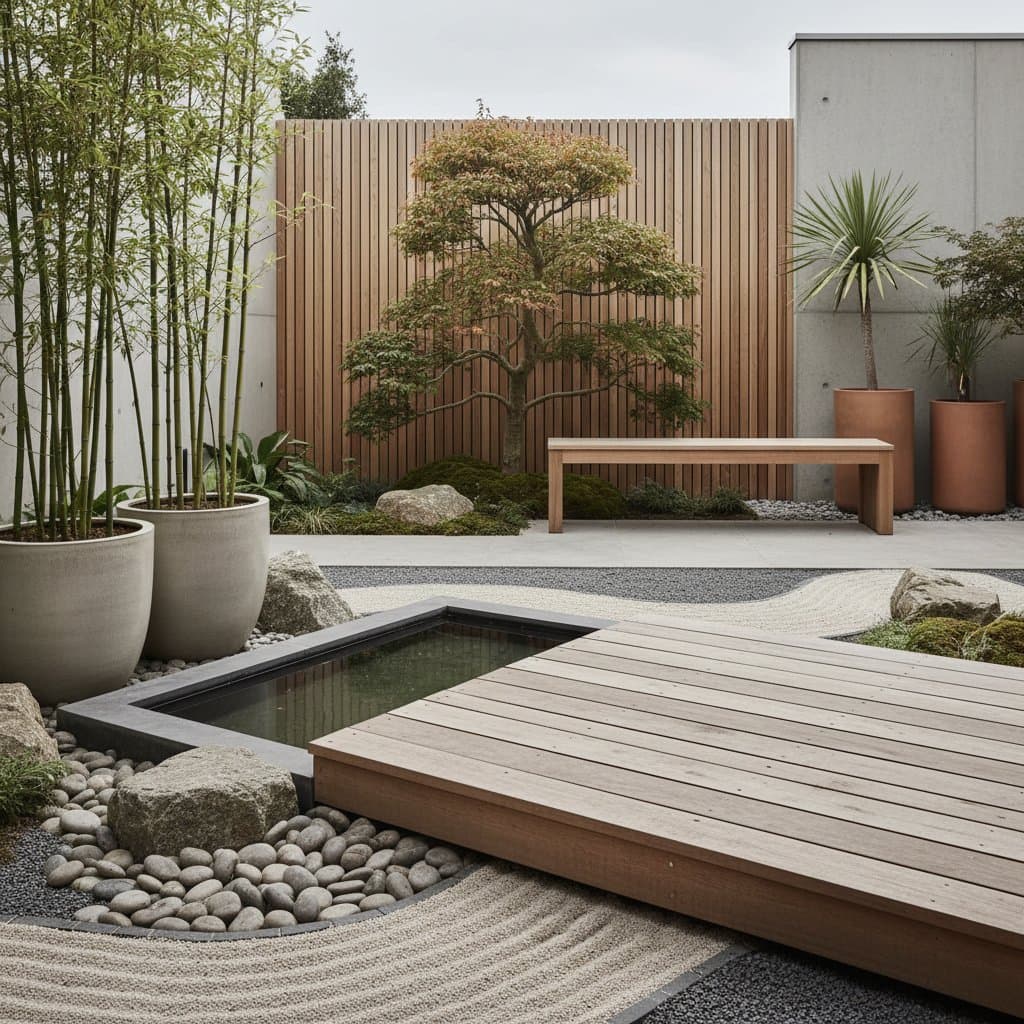
Japandi gardens fuse the meditative essence of Japanese Zen principles with the understated elegance of Scandinavian design. This approach yields outdoor spaces that promote tranquility and usability, where each component contributes to a harmonious whole. Ideal for those seeking respite amid daily demands, a Japandi garden transforms balconies, courtyards, or expansive yards into inviting havens of mindful living.
Both influences emphasize minimalism, quality materials, and a profound link to the natural world. Their combination produces landscapes that appear sophisticated without ostentation, serene yet suited to practical use. Regardless of space constraints, these gardens foster environments that encourage relaxation and subtle interaction with nature.
Establish a Serene Base Structure
- Defined pathways: Opt for straight gravel or stone paths that guide movement efficiently. Incorporate gentle curves only if they enhance flow without unnecessary embellishment.
- Organic materials: Select untreated wood, natural stone, or coarse gravel to ground the space. Examples include bamboo fencing, aged cedar benches, or slate tiles that weather gracefully over time.
- Strategic spacing: Maintain ample open areas between features to allow visual breathing room. This negative space prevents overcrowding and promotes a sense of expansiveness.
Landscape architect Mika Sato suggests, "Approach your garden as a balanced artwork. Incorporate rhythm through varied elements, balanced by moments of quietude. A solitary focal tree often conveys more impact than a dense cluster."
In limited spaces, such as urban balconies, position a few strategically placed boulders or a modular wooden platform to delineate areas. This method establishes order while preserving simplicity and ease of maintenance.
Introduce Varied Textures for Subtle Richness
Texture elevates a pared-down garden from stark to engaging, inviting touch and closer observation. Japandi aesthetics layer coarse and smooth surfaces to add depth without visual chaos.
Techniques to incorporate texture:
- Pair larger river rocks with finer pea gravel to differentiate zones and create subtle patterns underfoot.
- Integrate wooden planks or sleepers alongside polished concrete pavers for contrasting tactile experiences.
- Employ natural-fiber containers, such as rattan or seagrass pots, to soften hard edges and provide functional planting options.
- Place neutral-toned wool or linen pillows on benches to enhance comfort during extended stays.
Designer Akira Tanaka observes, "Texture transforms minimalism into something immersive. It engages the senses, making the space memorable beyond mere appearance."
For compact courtyards, experiment with proportional contrasts: position a textured granite orb next to a sleek metal tray filled with water. Such pairings generate dynamic interest through limited elements, ensuring the design remains uncluttered.
Integrate Subtle Water Elements
Water elements evoke peace in both Zen and Nordic traditions, representing flow, purity, and introspection. Scale these features to your space to avoid dominance, focusing instead on their calming auditory and reflective qualities.
Accessible water feature options:
- Install a low stone basin filled with still water, adorned with seasonal foliage for natural variation.
- Position a compact, solar-powered fountain on a side table to provide gentle trickle sounds near relaxation spots.
- Design a dry riverbed using raked gravel to mimic water's path, offering motion illusion without maintenance demands.
Maintain understatement in execution; the element should enhance rather than overwhelm. Tanaka recommends, "Effective water features blend seamlessly into the landscape. Their presence registers intuitively, drawing the eye and ear without fanfare."
For those avoiding permanent installations, a wide ceramic saucer replenished with rainwater doubles as a wildlife attractor and shimmering focal point. This low-effort addition introduces vitality and mirrors surrounding greenery effectively.
Select Purposeful Accents with Care
In Japandi gardens, decorative choices prioritize utility and resonance over abundance. Each item must serve the overall serenity, contributing to functionality or emotional depth.
Suitable accent suggestions:
- Hang rice-paper or terracotta lanterns to cast soft, diffused light during evenings.
- Utilize artisanal clay pots for housing specimen plants or as vessels for simple arrangements.
- Incorporate low wooden platforms or reclaimed stumps as stable surfaces for trays of herbs or candles.
- Introduce a singular abstract form, like a polished pebble stack or minimalist sculpture, to provide a contemplative anchor.
Resist the urge to accumulate; harmony arises from thoughtful selection. As Tanaka states, "Embrace voids as active participants. They allow the chosen elements to resonate fully."
Renters can achieve transformation through portable items: a set of portable lanterns, a handwoven rush mat, and a statement fern in a stone trough suffice to infuse concrete areas with warmth and intention.
Nurture the Garden's Ongoing Evolution
Japandi gardens embody fluidity, adapting to seasons, usage, and subtle environmental shifts. Patina on wood, emergent moss on stones, and gradual plant growth all enhance authenticity over time.
View the space as an evolving partner in daily life. Dedicate brief periods each day to observation: trace sunlight patterns on pathways, listen to foliage rustle in breezes, or inhale post-rain aromas.
Tanaka shares, "Gardens impart lessons in impermanence. True elegance emerges through gradual refinement and adaptation."
Over time, practical adjustments reveal themselves. A gravel trail may evolve into a dedicated reflection path, while a modest stool becomes a gathering point for quiet conversations. These organic developments deepen the garden's role in fostering well-being.
Cultivate Lasting Tranquility in Daily Practice
Beyond aesthetics, Japandi gardens cultivate mindfulness, integrating calm into routine moments. Their restrained forms prompt appreciation of nuances, from dew-kissed leaves to shifting shadows.
Start small, perhaps with a single resilient succulent in a neutral vessel, and build incrementally. Prioritize selections that align with personal rhythms, ensuring the space sustains rather than dictates.
This intentional creation yields enduring benefits: reduced stress, heightened awareness, and a private refuge that enriches ordinary days with subtle grace.