Grandmillennial Style: How Young Owners Are Reviving Vintage Dining
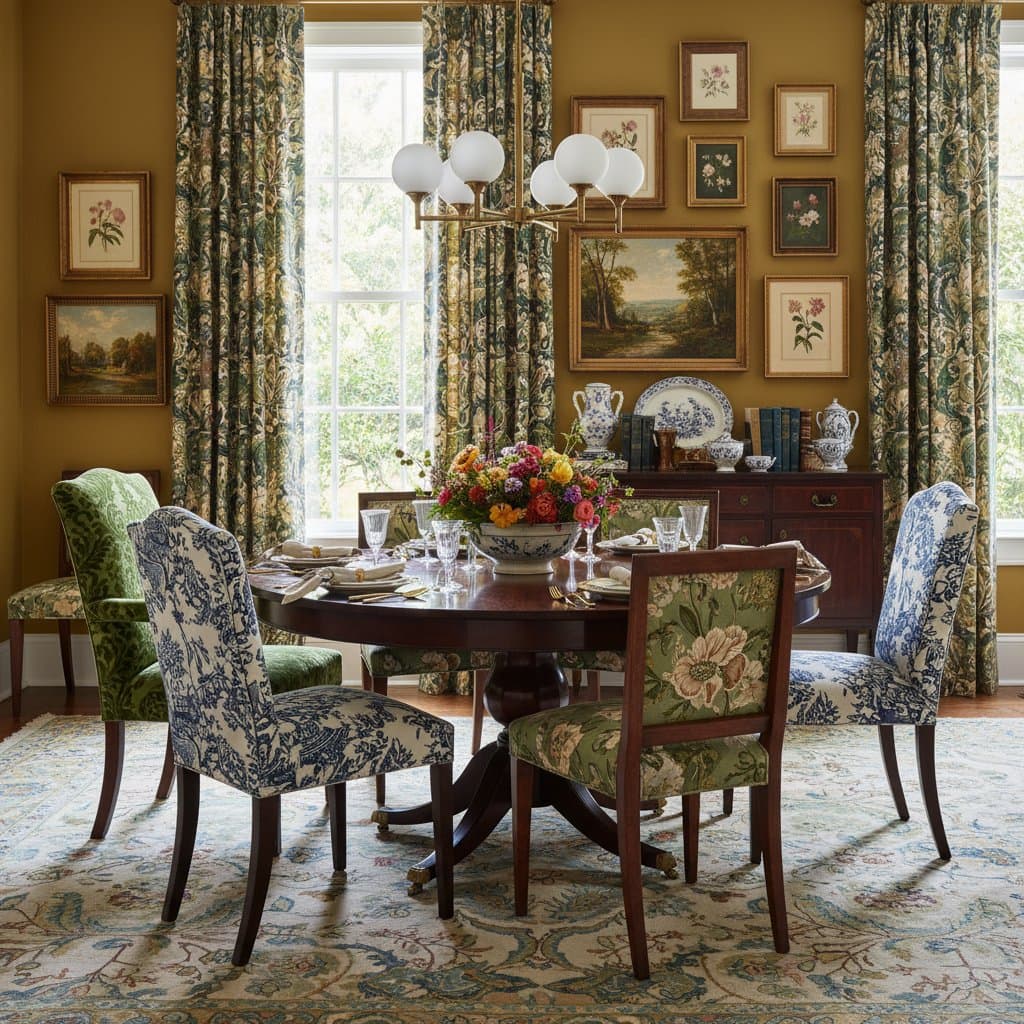
Dining rooms reminiscent of past generations, complete with polished mahogany sideboards, delicate floral china patterns, and finely stitched linens, are experiencing renewed popularity. This resurgence stems from a new generation of owners who approach these elements with innovative intent. Grandmillennial style honors historical aesthetics while infusing them with individual flair, creating environments that resonate on multiple levels.
The Appeal of Grandmillennial Design in Contemporary Homes
Grandmillennial style emerges as a deliberate counterpoint to the prevailing trends of sparse, monochromatic interiors. Individuals seek depth and emotional resonance after periods dominated by unadorned surfaces. Vintage components provide an inherent coziness that contemporary designs occasionally overlook. For instance, a dining table featuring intricately carved legs can coexist harmoniously with a geometrically shaped overhead fixture, illustrating a seamless integration of eras.
Steps to Create a Grandmillennial Dining Space
Begin the process by inventorying existing possessions that evoke sentiment or history. An inherited set of upholstered armchairs or a forgotten embroidered runner can serve as the foundation, imbuing the room with narrative depth. Introduce contemporary accents gradually to maintain equilibrium and prevent the space from appearing dated.
Follow these structured approaches to assemble the room:
-
Integrate diverse textures and finishes. Select a high-gloss surfaced dining table to contrast with rustic wooden benches. Incorporate metallic elements, such as polished nickel flatware alongside earthenware platters, to achieve visual interest without overwhelming the composition.
-
Incorporate layered patterns thoughtfully. Opt for motifs like blooming florals on upholstery, geometric stripes on chair cushions, or pastoral scenes in fabric wall hangings. Balance proportions by pairing finer details, such as a subtle vine print on napkins, with bolder statements like a medallion-motif area rug.
-
Embrace a palette of enduring shades. Neutral foundations in warm ivory or soft taupe allow vibrant accents to shine. Introduce jewel tones, including emerald greens for seat covers or terracotta reds for vase arrangements, to evoke seasonal depth and emotional warmth.
-
Curate lighting for ambiance and utility. Install a faceted glass pendant as a central feature, supplemented by adjustable wall-mounted fixtures that cast soft, diffused glows. This combination ensures the area remains inviting during evening gatherings while highlighting architectural details.
-
Select decorative objects for narrative impact. Display framed illustrations of botanical studies or etched glass decanters that reflect personal travels. Limit quantities to avoid clutter, focusing instead on items that prompt discussion, such as a collection of monogrammed silverware passed through generations.
Consider scalability for varied living situations. In compact apartments, a multifunctional console that doubles as a serving station can incorporate vintage drawer pulls alongside sleek hardware. For larger homes, expand with built-in cabinetry that showcases layered dishware arrangements.
Practical Benefits of Grandmillennial Dining Areas
Grandmillennial interiors excel in their adaptability to everyday use. Minor asymmetries, such as a uniquely shaped side chair or a subtly worn serving tray, contribute to an authentic patina rather than detracting from the overall harmony. These rooms naturally encourage prolonged social interactions, from casual brunches to formal dinners, as the environment promotes relaxation and connection.
The style suits diverse lifestyles, including those constrained by budget or space. Affordable adaptations, like sourcing secondhand linens from local markets or upcycling thrifted frames, deliver substantial impact. Over time, the space evolves organically, accommodating life changes while retaining its core identity.
Sustaining and Evolving Your Dining Haven
As the room takes shape, maintain its vitality through periodic refinements. Rotate seasonal textiles, such as lightweight cottons for summer and heavier wools for winter, to keep the atmosphere dynamic. Gradually acquire complementary pieces, like hand-blown glass tumblers or woven placemats, to build a cohesive yet ever-growing collection.
This approach transcends temporary decor, cultivating an environment that mirrors personal growth. Grandmillennial design reaffirms the value of heritage in modern contexts, inviting owners to craft legacies of their own through deliberate, heartfelt choices.