Why Moss Walls Are the 2025 Vertical Garden Hit
Many people admire living walls for their vibrant appeal but hesitate to install one due to the extensive care required. Homeowners often envision endless tasks such as watering, pruning, and pest control. Traditional vertical gardens indeed demand such attention. Moss walls, however, provide a lush aesthetic with virtually no ongoing effort. This innovation positions them as the leading vertical garden trend for 2025.
Why Homeowners Avoid Traditional Living Walls
The primary deterrent for traditional living walls remains their high maintenance needs. These installations require precise irrigation, adequate lighting, and stable humidity levels. Neglect even briefly, and the foliage wilts or discolors. Professionals acknowledge the challenges of sustaining them in typical indoor settings with low moisture.
What Makes Moss Walls Different
Moss walls differ fundamentally from conventional plant-based walls. They incorporate either preserved or living moss that demands minimal intervention. Preserved moss undergoes treatment to retain its vivid color and soft texture, enduring for years without soil, water, or natural light. Living moss thrives with ambient humidity alone, requiring far less care than standard houseplants.
Several key attributes drive the popularity of moss walls:
- Low maintenance: No routine watering, pruning, or fertilization is necessary.
- Extended durability: High-quality preserved moss maintains its appearance for several years.
- Noise reduction: The material naturally absorbs sound, ideal for open-plan areas or workspaces.
- Improved air quality: Living moss captures dust particles and regulates humidity.
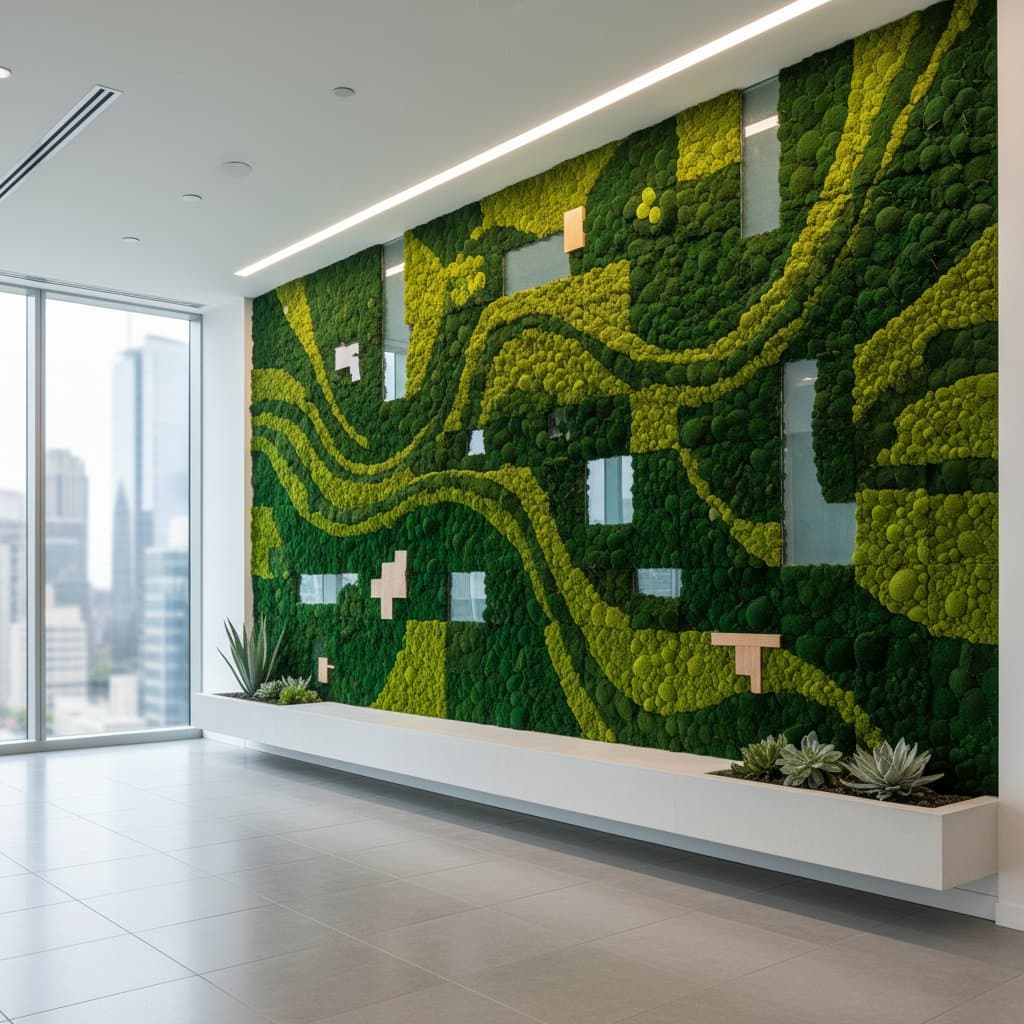
- Versatile design options: Installations adapt to custom patterns, geometric shapes, or complete wall surfaces.
Homeowners appreciate achieving the essence of a living wall without the associated demands, which accelerates their adoption.
Before You Begin: What You Need to Know
Prior to acquiring materials or commencing assembly, consider essential elements for success. Moss wall projects hinge on suitable environmental conditions, quality supplies, and sound installation practices.
Environment:
Preserved moss performs optimally in controlled indoor spaces with consistent humidity. Position it away from direct sunlight or heating elements to prevent fading. Living moss benefits from higher moisture levels, suiting locations like bathrooms or covered outdoor areas.
Materials:
For preserved moss projects, gather:
- Pre-cut moss panels or bulk preserved moss
- A moisture-resistant backing such as sealed MDF or plywood
- Non-toxic adhesive formulated for botanical elements
- Secure mounting brackets or hooks
For living moss, include additionally:
- A water-retentive substrate or felt mat
- A fine-mist sprayer or automated system
- Supplemental LED lights if natural illumination is insufficient
Skill Level:
This qualifies as a moderate-level project suitable for those comfortable with basic carpentry. Measure accurately, cut materials precisely, and secure fixtures firmly. For expansive or professional applications, consult experts to guarantee uniform adhesion and humidity control.
Step-by-Step: Building a Moss Wall
- Plan the layout. Assess the target wall dimensions and select between a framed accent or comprehensive coverage. Draft a simple sketch to visualize the arrangement.
- Prepare the surface. Secure a sealed plywood or MDF panel to the wall structure. Verify it remains level and stable using a spirit level and appropriate anchors based on wall type.
- Apply adhesive. Select a durable, eco-friendly glue designed for natural fibers. Spread it in thin, even layers across manageable sections to avoid excess buildup.
- Attach the moss. Firmly press moss segments onto the adhesive, overlapping edges slightly for seamless integration. Incorporate varied moss types and colors to mimic organic variation.
- Fill gaps. Insert finer moss fragments into any exposed areas or joints for a cohesive finish.
- Mount the panel. Allow 24 hours for the adhesive to set fully, then affix the completed assembly to the wall with heavy-duty hardware.
With living moss, apply a light mist every three to five days, monitoring the substrate for even dampness. Prevent saturation to avert fungal growth.
Common Mistakes to Avoid
First-time builders often encounter avoidable setbacks in moss wall creation. The following represent frequent errors:
- Unsealed backing materials: Exposure to any moisture warps or degrades untreated wood. Apply a protective sealant prior to assembly.
- Proximity to heat sources: Warm drafts accelerate drying and discoloration in preserved moss. Maintain a distance of at least three feet from vents or radiators.
- Inadequate humidity monitoring: Living moss requires 40 to 60 percent relative humidity. In arid climates, introduce a nearby humidifier to sustain vitality.
- Inferior adhesives: Temporary glues fail under weight and environmental stress. Choose specialized products rated for long-term botanical applications.
Thorough planning mitigates these risks and ensures a lasting result.
When to Call a Professional
Opt for expert assistance on projects featuring oversized panels, embedded illumination, or automated watering features. Specialists handle structural reinforcements, electrical integrations, and compliance with building regulations. Simpler framed pieces or accent walls remain accessible for capable homeowners, provided they proceed methodically.
Enhancing Longevity and Enjoyment
Post-installation care for moss walls proves straightforward. Gently remove dust using a soft-bristled brush or compressed air at low pressure every few months. For living varieties, observe for subtle drying cues and rehydrate sparingly. Sustain ambient humidity and shield from intense light to preserve vibrancy.
A thoughtfully constructed moss wall infuses spaces with organic warmth and serenity. It tempers acoustics, elevates air purity, and introduces tranquil greenery that complements contemporary interiors seamlessly.