Why Young Homeowners Crave Grandmillennial Vintage
The term grandmillennial style first appeared in a design magazine and prompted laughter. It evoked images of floral drapes and tasseled lampshades in a compact urban apartment. However, upon entering a friend's Upper West Side residence, the reality emerged: a velvet sofa paired with needlepoint pillows and a scalloped lampshade illuminating botanical prints on a gallery wall. The space conveyed warmth, personality, and comfort rather than stuffiness or irony.
This encounter highlighted a broader shift in decoration preferences among younger homeowners and renters. Following an era dominated by minimalism, individuals now seek textures, history, and emotional resonance. Grandmillennial style represents more than mere nostalgia; it serves as a subtle rebellion, infused with elements like teacups and lace trim.
The Comfort of the Familiar
The Backlash Against Bare Minimalism
Minimalism dominated design for an extended period, with white walls and concealed storage solutions promoting order in compact urban dwellings and hectic schedules. Yet, such sparsity eventually evoked sterility rather than serenity.
Grandmillennial style counters this by embracing abundance through layered fabrics, ornate frames, and vintage china, which add character rather than clutter. This philosophy welcomes imperfection; a chipped teacup or mismatched chair enhances the overall appeal. Additionally, sourcing vintage items promotes sustainability, appealing to environmentally aware young homeowners who frequent estate sales, thrift stores, and online platforms for meaningful acquisitions.
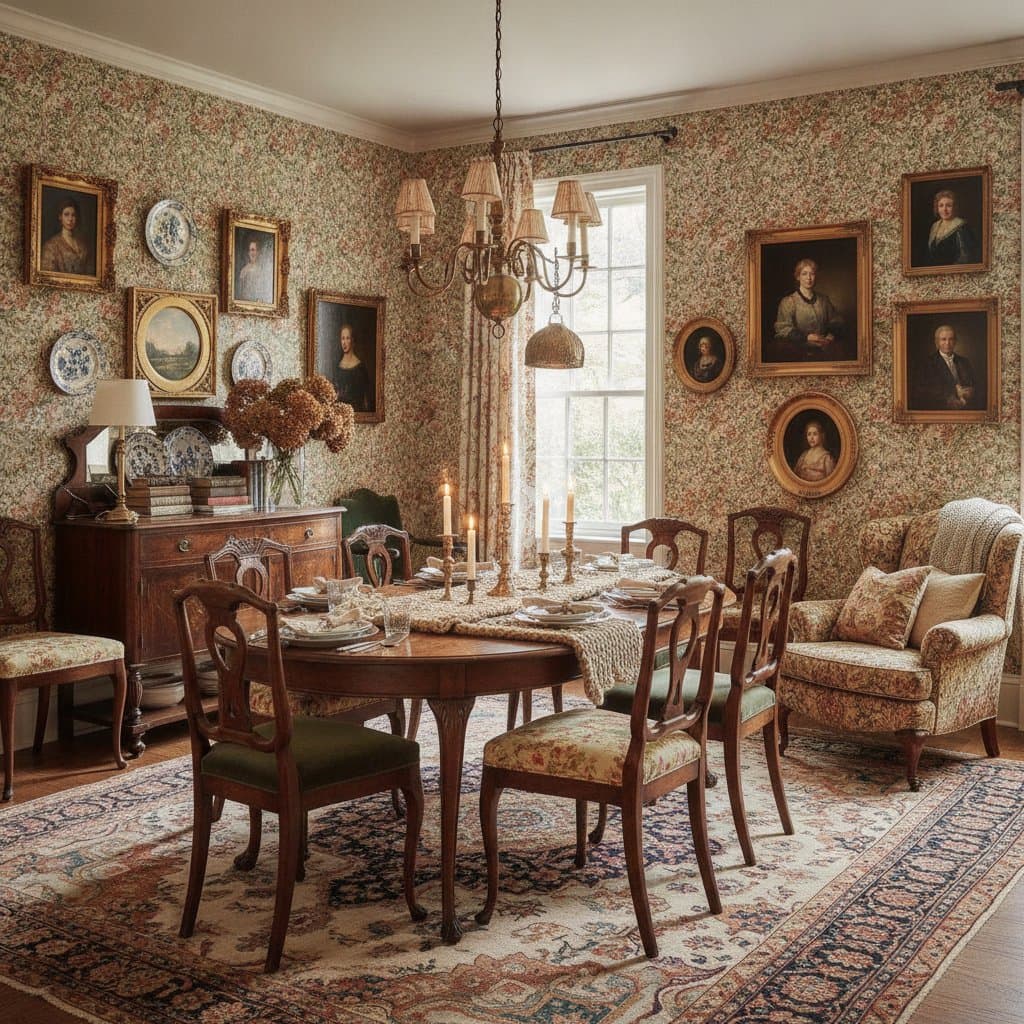
Acquiring a vintage dining set, featuring a dark wood table with carved legs and slightly uneven chairs, initially raised concerns about fitting a modern environment. Sanding the surface and adding a soft floral tablecloth, however, integrated it seamlessly, transforming the room into an intentional, welcoming haven.
Blending Old and New
Grandmillennial style gains popularity through its adaptability, allowing seamless integration of vintage and contemporary elements without strict adherence to one era. A modern sofa can support a needlepoint cushion, while ornate gold frames encircle minimalist artwork.
Balance proves essential to avoid overwhelming spaces. Excessive vintage risks evoking a dated parlor, whereas insufficient amounts dilute the charm. Effective contrasts include a ruffled lampshade beside a streamlined side table or floral wallpaper accenting a clean-lined headboard.
An initial attempt to fully immerse a dining room in floral prints, lace curtains, and extensive china displays resulted in an overly enclosed atmosphere. Scaling back to retain the wallpaper while introducing simple linen panels created necessary breathing room, demonstrating that grandmillennial style reinterprets tradition through contemporary perspectives.
The Emotional Pull of Objects with Stories
Home design trends fluctuate, yet grandmillennial style endures due to its profound emotional resonance beyond surface aesthetics. It fosters connections through items imbued with narratives.
Younger homeowners value objects like a vintage dining table that hints at past family gatherings or a floral armchair associated with quiet evenings of reading. Surrounding oneself with such pieces affirms a shared human experience. Friends adopting this style describe their acquisitions in terms of discovery, such as a flea market find from New Jersey or an inherited aunt's vase, shifting focus from mere purchase to personal narrative.
This linguistic evolution underscores a quest for authenticity amid disposable trends. Grandmillennial decor encourages appreciation for craftsmanship and enduring beauty, prompting a deliberate pace in home curation.
Creating a Grandmillennial Dining Room
The dining room exemplifies grandmillennial design, serving as a nostalgic focal point with polished wood, delicate china, soft illumination, and subtle floral accents. Before incorporating family heirlooms, consider these practical strategies derived from hands-on application.
-
Begin with a single statement piece, such as a vintage buffet, chandelier, or patterned rug, to establish the foundational tone without overwhelming the space.
-
Integrate eras strategically by pairing a traditional table with contemporary chairs, ensuring dynamic contrast that prevents a static, museum-like feel.
-
Incorporate varied textures through elements like a linen table runner, embroidered napkins, or velvet cushions to infuse warmth and dimension.
-
Select patterns judiciously; designate one dominant floral motif and allow supporting elements to complement it, avoiding visual overload.
-
Curate displays intentionally; showcase cherished vintage china on open shelves, but maintain elegance by preventing overcrowding.
Assembling a personal dining room revealed the inherent joy in this process. The result fostered an environment conducive to extended meals, relaxed guest interactions, and appreciation for each item's subtle backstory.
Sustaining Personal Expression Through Grandmillennial Design
Grandmillennial vintage evolves personally, accumulating layers that reflect individual journeys. Collections grow organically, with updates like reupholstering a chair in fresh fabric, reframing inherited artwork, or repainting a dresser in pastel hues.
This approach avoids static nostalgia, instead promoting ongoing adaptation. To initiate, introduce one or two vintage items that evoke consistent delight, such as a floral teapot, carved mirror, or embroidered pillow. Prioritize selections guided by genuine affection over rigid design conventions.
Why It Matters
Grandmillennial vintage transcends fleeting trends, mirroring how younger generations redefine home as a sanctuary of safety, rootedness, and self-expression. It counters minimalism's emphasis on void with a celebration of layered abundance, symbolizing soulful richness.
Reflecting on a grandmother's potential reaction to her dining set's modern resurgence evokes her likely approval: good taste endures across generations. This style affirms that meaningful homes prioritize depth over disposability.