Mushroom Grout: A Sustainable Upgrade for Bathrooms
Sustainable bathroom design often focuses on fixtures like low-flow showerheads or recycled materials. Few consider the grout between tiles as a key element for environmental improvement. Mushroom grout, derived from mycelium, represents an innovative shift in construction materials that prioritizes biodegradability and low environmental impact.
This material originates from the root-like networks of fungi, which form dense, fibrous structures. Designers recognize mycelium's potential to replace conventional grout, offering strength without the drawbacks of cement-based products. As awareness grows, mushroom grout emerges as a practical choice for eco-conscious renovations.
The Limitations of Conventional Grout
Grout serves as the essential binder in tile installations, yet traditional formulas rely on Portland cement. Cement production demands substantial energy and releases significant carbon dioxide emissions. The process involves high-temperature kilns that contribute to global warming.
Understanding Mushroom Grout
Mushroom grout utilizes mycelium, the vegetative part of fungi, combined with natural binders and agricultural byproducts such as corn husks or sawdust. The mixture grows in controlled conditions to form a solid, foam-like substance. After drying and compression, it yields a durable material suitable for tile applications.
Mycelium's natural properties provide inherent advantages. The interwoven threads create a flexible yet strong matrix that resists cracking under stress. Producers enhance water resistance through treatments like natural oils or waxes, ensuring performance in humid environments. Unlike cement, this grout requires minimal energy for production and generates no harmful emissions.
Environmental and Performance Benefits
Mycelium-based materials excel in sustainability due to their growth process. Fungi cultivate rapidly on waste substrates, diverting materials from landfills. The result is a carbon-sequestering product that supports circular economies.
In terms of durability, mycelium grout demonstrates antimicrobial qualities that inhibit mold and bacteria. Its self-binding nature eliminates the need for synthetic adhesives, reducing potential weak points. Laboratory tests indicate that it withstands moisture and impact better than many traditional options, with the added benefit of compostability at end-of-life.
Practical Applications and Testing
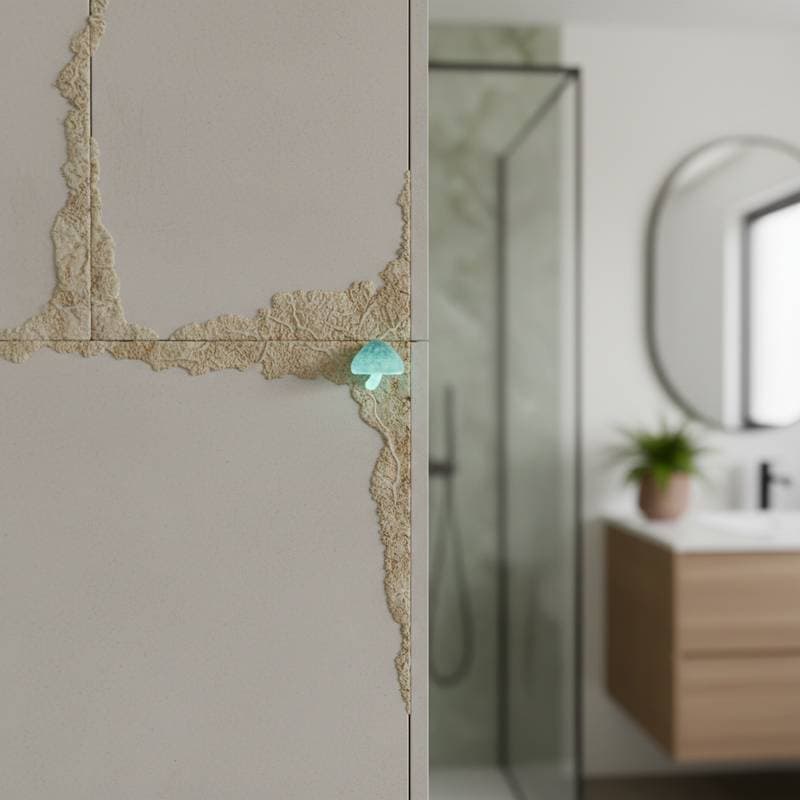
Early adopters experiment with mushroom grout in low-exposure areas, such as backsplashes or decorative accents. A sample application involves preparing a mycelium substrate, hydrating it, and allowing growth in a mold over several days. The cured material adopts an earthy texture, blending seamlessly with natural tiles.
Testing reveals solid adhesion and water repellency in small-scale uses. For instance, patching a cracked tile area shows no degradation after exposure to splashes. While full-scale installations require further refinement, these trials confirm viability for targeted renovations.
Integrating Mushroom Grout into Bathroom Design
Mushroom grout aligns with regenerative design principles, where materials enhance rather than deplete resources. Pair it with complementary elements like recycled glass tiles or mycelium insulation for a cohesive eco-system.
Consider these steps for incorporation:
- Assess exposure levels and begin with non-submerged surfaces.
- Select compatible tiles, such as terracotta or handmade ceramics, to highlight the organic aesthetic.
- Inquire about natural sealants from suppliers to boost longevity.
- Plan for easy removal, as the material decomposes without toxic residue.
This approach transforms bathrooms into spaces that support environmental health.
Overcoming Current Challenges
Mushroom grout encounters hurdles in scaling production. Limited manufacturing results in variable availability and higher initial costs compared to standard grout. Performance in diverse climates demands additional research on moisture treatments.
Decomposition occurs only under specific composting conditions, not within active use. However, these limitations mirror those of early sustainable products like bamboo flooring. As demand increases, advancements in processing will likely lower prices and improve consistency.
The net environmental gain remains compelling. Each unit of mycelium grout displaces cement, cutting emissions and waste. Widespread adoption could redefine tile installation standards.
Designer Perspectives on Mycelium Innovation
Architects and interior designers value mycelium for its tactile qualities and ethical implications. The material imparts a warm, organic finish to tiled surfaces, often tinted with mineral pigments for customization.
Professionals envision applications beyond grout, such as self-healing wall panels. Mycelium's regenerative capacity allows minor repairs through regrowth, fostering dynamic interiors. This integration of biology and design appeals to those prioritizing holistic sustainability.
Implications for Homeowners
For those pursuing green living, mushroom grout offers tangible benefits in durability and reduced maintenance. It symbolizes a broader commitment to materials that harmonize with nature.
Even without immediate adoption, supporting mycelium innovators through purchases or awareness builds momentum. Opt for low-VOC alternatives in the interim to ease the transition toward fully sustainable spaces.
Advancing Sustainable Interiors
Embracing materials like mushroom grout elevates everyday renovations. Homeowners gain confidence in choices that minimize ecological footprints while enhancing living environments. As this technology matures, bathrooms evolve into models of regenerative design.