Enzyme Cleaners: Harnessing Biology to Combat Bathroom Grime
Key Takeaways
- Enzyme cleaners employ biological enzymes to decompose organic grime, odors, and stains through natural processes.
- These products offer greater safety for families, pets, and ecosystems compared to conventional chemical cleaners.
- They perform reliably on bathroom elements such as tiles, grout, drains, and toilets.
- Consistent application prevents accumulation and sustains freshness without strong artificial scents.
- Enzyme cleaners prove both cost-effective and accessible, with options for homemade preparations or commercial purchases.
Understanding Enzyme Cleaners
Enzyme cleaners consist of natural formulations that utilize enzymes to target and break down organic materials. Professional cleaning consultant Lila Warner notes, “Enzymes are proteins that break down specific kinds of waste, like fats, starches, or proteins, into simpler components that rinse away.”
Contrasting Enzyme Cleaners with Chemical Alternatives
Conventional bathroom cleaners typically incorporate acids, bleach, or artificial scents, which can provoke skin irritation or respiratory issues in confined spaces. Enzyme cleaners achieve comparable results through biological mechanisms, minimizing health risks.
Environmental scientist Dr. Ian Caldwell, who studies household product impacts, states that enzyme formulas degrade fully into inert compounds. “They break down into harmless substances once their job is done,” he explains. “That makes them safer for waterways and septic systems.”
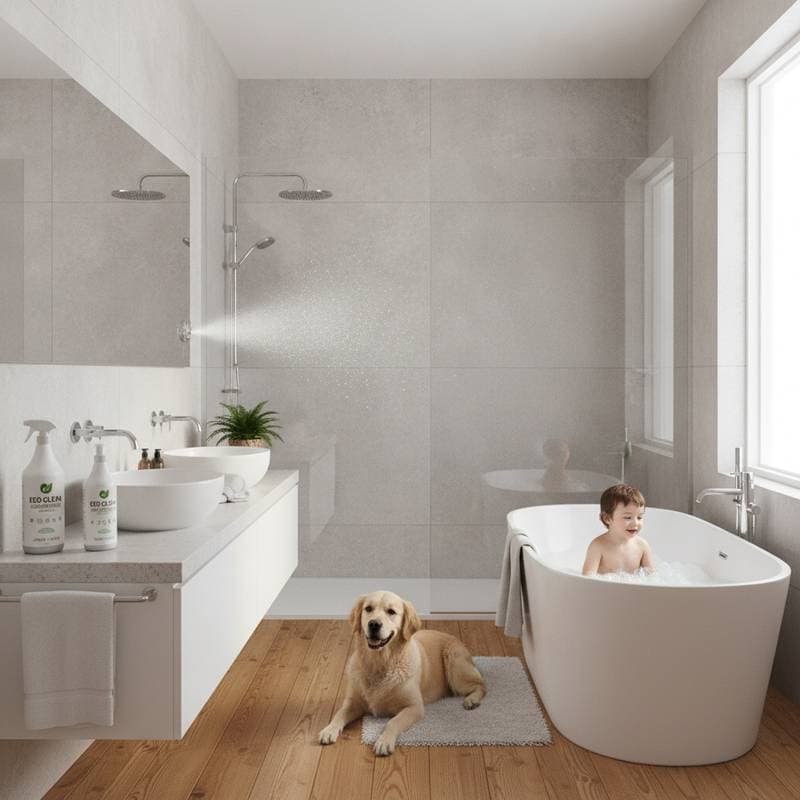
This safety extends to daily routines. In households with young children or pets, residues from chemical products require thorough rinsing to avoid exposure. Enzyme cleaners eliminate such concerns, leaving no toxic film and allowing immediate use of treated areas.
Personal experience reinforces this advantage. During family bath times or pet cleanups, the absence of lingering hazards provides reassurance alongside visible cleanliness.
Applying Enzyme Cleaners for Optimal Results
Enzyme cleaners require dwell time to activate fully, distinguishing them from quick-acting chemical sprays. Allow sufficient contact to maximize their digestive action.
Follow this step-by-step method, adapted from home application practices:
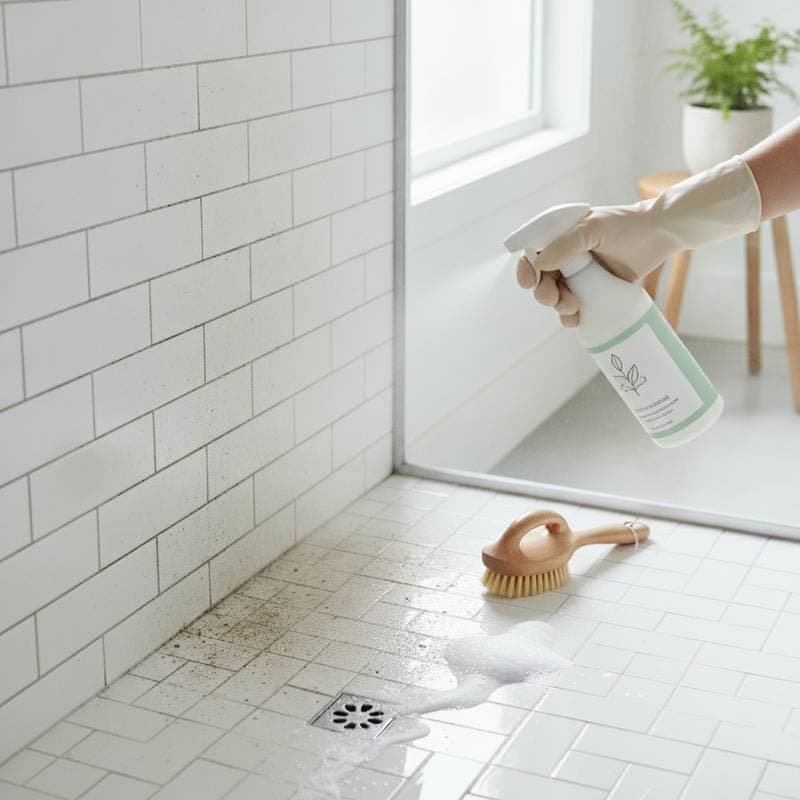
- Prepare the surface. Remove loose debris or standing water with a dry cloth or towel.
- Apply the cleaner. Spray or pour generously to saturate the target area, ensuring full coverage on vertical surfaces like walls.
- Allow penetration. Permit at least 15 to 30 minutes of contact; for heavy buildup, extend to several hours.
- Agitate as necessary. Employ a non-abrasive brush for stubborn spots, such as grout joints or drain edges, to aid enzyme access.
- Rinse thoroughly. Use warm water to flush away dissolved particles, followed by drying to prevent new moisture-related issues.
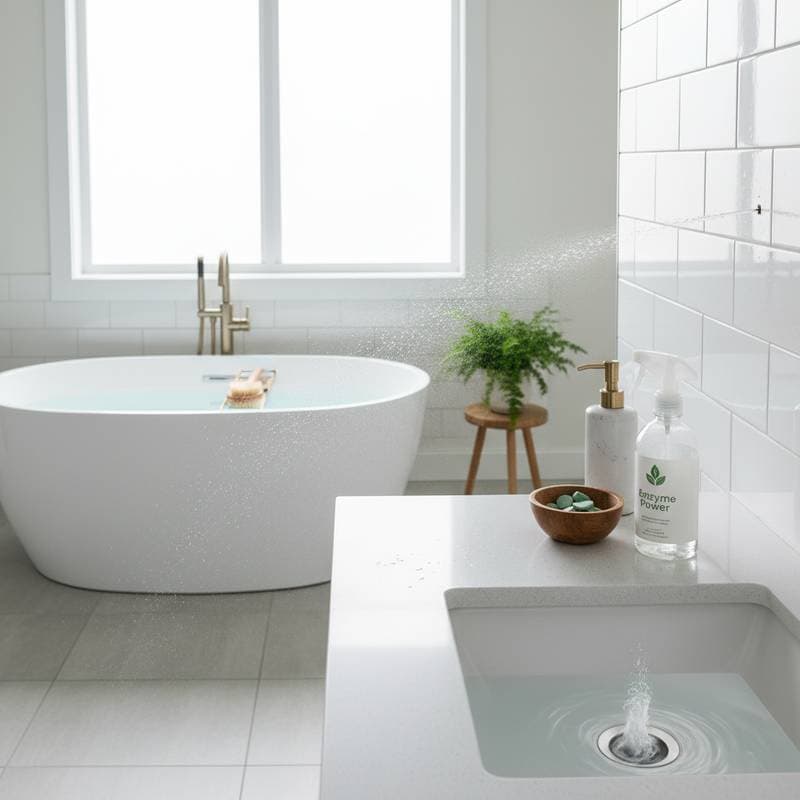
For drain maintenance, introduce the cleaner directly into the pipe and avoid flushing for 8 to 12 hours. This interval enables enzymes to reach and fragment clogs formed by hair, soap, and organic debris deep within the system.
Test products on inconspicuous areas first, particularly on delicate materials like marble, to confirm compatibility and avoid unintended etching.
Strategies for Sustained Bathroom Cleanliness
Cleaning expert Sara Beaumont, an interior stylist, advises integrating enzyme cleaners with preventive routines. “No cleaner can do all the work alone,” she observes. “Use a squeegee after showers, keep air circulating, and treat problem areas weekly.”
Implement these practical measures to extend cleaning intervals:
- Maintain daily readiness. Fill a spray bottle with diluted enzyme solution for spot treatments on fixtures and counters.
- Target drains proactively. Introduce a capful weekly before bedtime to dissolve emerging blockages.
- Incorporate complementary agents. Apply white vinegar to tackle hard water scales, as it pairs seamlessly with enzymes without disrupting their activity.
- Organize cleaning tools. Designate color-coded microfiber cloths for different zones, such as one for glass and another for porcelain, to prevent germ transfer.
- Monitor humidity levels. Employ exhaust fans or dehumidifiers to reduce mold growth, enhancing enzyme efficacy.
These habits transform bathroom care from a chore into a streamlined process. Weekly attention curbs deep cleans, preserving both appearance and functionality.
Embracing a Greener Bathroom Routine
Adopting enzyme cleaners yields a noticeably refreshed space, with prolonged cleanliness and subdued natural scents. Tiles gleam without effort, drains flow freely, and the atmosphere remains inviting.
This transition influences more than surfaces; it fosters a mindful approach to home maintenance. Across urban and rural settings, simple, biology-based tools align with sustainable living, harmonizing with family dynamics and environmental priorities.
Start by replacing a single traditional product with an enzyme alternative in one high-traffic area. Observe the ease of upkeep and the subtle improvements in air quality. Over time, these choices cultivate a serene sanctuary, rewarding consistent, gentle care each day.