Essential Elements of Grandmillennial Gardens
- Affordable Elegance: Grandmillennial gardens draw on heirloom seeds, antique vessels, and traditional configurations to deliver refined beauty without excessive spending.
- Safety Considerations: DIY tasks suit gardeners with moderate experience; however, structural features like pathways or water systems benefit from expert input to ensure stability.
- Time Commitment: Dedicate regular intervals, such as weekend sessions, to plant care, soil enrichment, and ornament placement for sustained vitality.
- Enduring Impact: These gardens yield a personalized, eco-conscious retreat that honors heritage while adapting to contemporary needs.
The Appeal of Grandmillennial Gardens
Grandmillennial gardens attract enthusiasts by combining historical allure with the demands of today's lifestyles. Individuals seek solace in deliberate gardening practices that prioritize gradual development over rapid results. Such spaces resonate with those who value organic textures, legacy flora, and artisanal details.
Project Essentials
Time Investment: Initial establishment spans multiple weekends, followed by year-round tending during active growth periods.
Overall Duration: Perpetual oversight across seasons to foster maturation.
Required Expertise: Moderate proficiency in basic horticulture.
Budget Range: Reasonable, influenced by choices in flora and furnishings.
Grandmillennial gardening suits individuals who prize perseverance and excellence. Begin with site assessment, heirloom procurement, and antique restoration. Expenses stay controlled by utilizing salvaged or recycled items, aligning with principles of fiscal prudence and ecological mindfulness.
Required Materials and Equipment
Core Materials:
- Heirloom propagules or young specimens including peonies for lush blooms, foxgloves for vertical drama, delphiniums for spires of blue, and lavender for aromatic borders.
- Natural compost blends and bark mulch to enhance moisture retention.
- Ornamental supports such as lattice trellises, timber edging, or ornate railings.
- Retro-inspired ceramics, stone urns, or salvaged bins for containment.
- Natural fiber fabrics like canvas for canopies or cushions.
Suggested Equipment:
- Precision trowel, secateurs, and digging fork for soil manipulation.
- Traditional watering vessel or adjustable nozzle attachment.
- Testing kit to monitor soil acidity for optimal nutrient uptake.
- Durable hand protection and reinforced apron for extended sessions.
Select implements that align with ergonomic needs and promise longevity through routine upkeep. This selection mirrors the ethos of heirloom tools: acquire durable pieces, service them diligently, and engage with purpose.
Detailed Implementation Guide
-
Design the Configuration
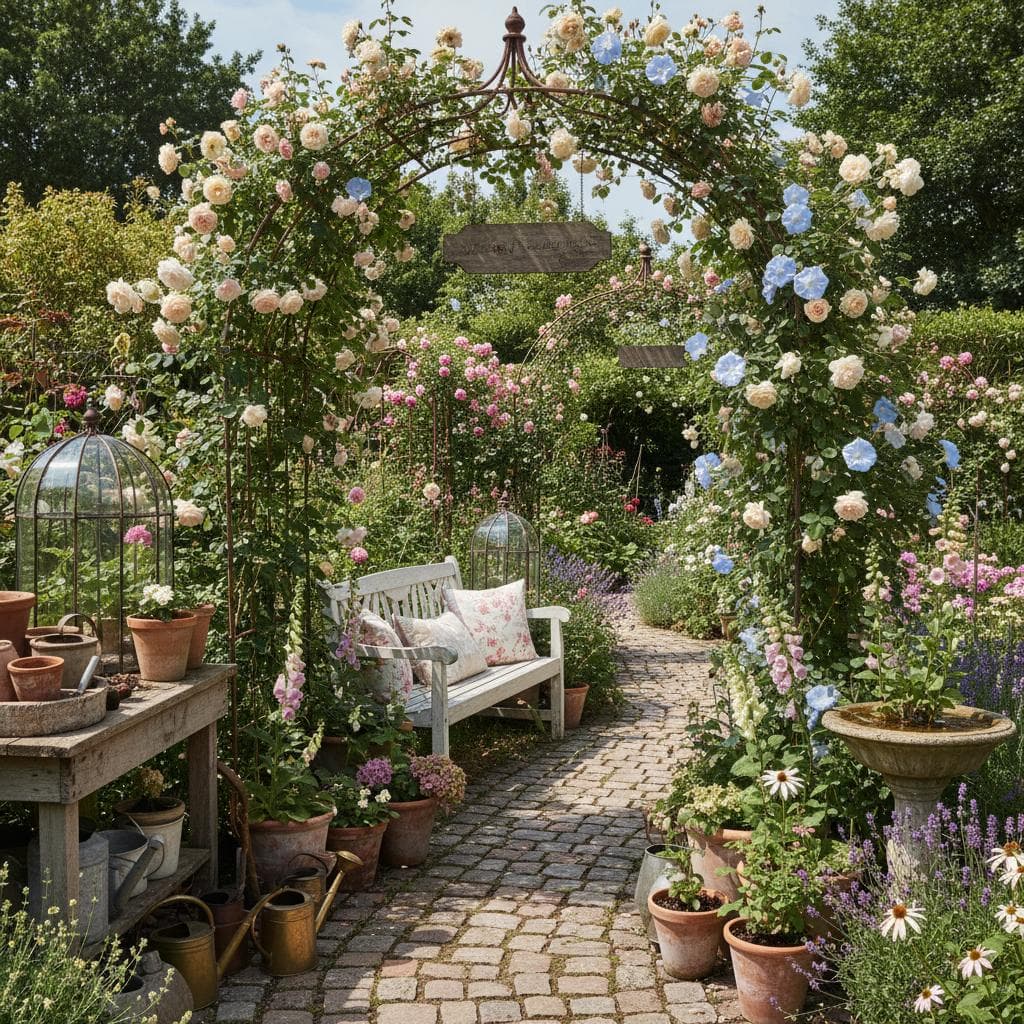
Outline the area on paper or digitally. Traditional grandmillennial layouts employ balanced symmetry or clear delineations. Incorporate restful benches amid blooms and meandering gravel paths that invite exploration.
-
Condition the Ground
Robust earth forms the bedrock of vitality. Incorporate aged manure or leaf mold to boost aeration and nutrient levels. Steer clear of synthetic amendments that disrupt microbial balance over time.
-
Incorporate Heritage Plants
Prioritize selections that offer visual splendor, scent, and narrative depth. Integrate antique rose cultivars for fragrance, mophead hydrangeas for volume, and culinary herbs such as rosemary or mint for utility. Combine persistent perennials with seasonal bloomers to sustain vibrancy from spring through autumn.
-
Infuse Nostalgic Accents
Integrate salvaged seating, patinated basins, or crafted arbors. Position a restored enamel pail for tools or a timeworn trellis clad in ivy to evoke eras past.
-
Sustain Through Vigilance
Trim selectively to promote vigor, irrigate thoroughly at root depth, and replenish ground cover periodically. Eradicate intruders by hand or mulch barriers, eschewing toxic interventions.
Deciding Between Self-Directed and Professional Efforts
Numerous aspects of grandmillennial creation lend themselves to personal execution. Handle sowing, earth amendment, and spatial arrangement independently for hands-on satisfaction. Engage specialists for complex installations like mortared borders, automated watering networks, or illuminated features to guarantee safety and precision.
Refining for Expert Finishes
Consistency elevates a grandmillennial garden to professional stature. Conduct routine clippings, acidity checks, and debris removal to distinguish a nurtured haven from untamed growth. Aim for harmonious proportions, permitting foliage to flourish freely while maintaining crisp perimeters.
Extend meticulous care to built features. Smooth and preserve timber against weathering, apply protective coatings to ferrous components, and verify walkway evenness to prevent hazards.
Strategies for Optimal Results
- Maintain a logbook detailing bloom cycles, pest observations, and adjustment notes.
- Exchange divisions or pods with local growers to diversify holdings economically.
- Employ natural deterrents through interplanting marigolds with vegetables or applying diluted botanical extracts.
- Restore adornments yearly via abrasion, varnishing, or recoloring to preserve patina.
- Shift potted specimens quarterly to balance light and shadow exposure.
Sustaining Lasting Value
A diligently managed grandmillennial garden flourishes progressively. Bolster earth quality annually with homemade compost, apply fresh layers of cover before planting, and update worn textiles or fractured vessels promptly. These practices ensure the area remains a welcoming sanctuary.
Grandmillennial gardens encourage mindful engagement with the earth, fostering skills in cultivation and appreciation for heritage bonds. From nurturing a single vintage shrub to reimagining a full plot, the outcome is an animated domain rich in aesthetics, legacy, and perpetual grace.