Key Points
- Enzyme-based cleaners dissolve grime, soap scum, and buildup without harsh chemicals.
- Safe for most bathroom surfaces, including tile, grout, glass, and fixtures.
- Offer a natural alternative to bleach or ammonia-based products.
- Work best with proper surface prep, dwell time, and consistent use.
- Can be made at home or purchased in concentrated form for budget flexibility.
Why Enzyme Cleaners Are Taking Over Bathroom Cleaning
For generations, bathroom cleaning meant strong-smelling chemical sprays and endless scrubbing. Many homeowners accepted that burns in the nose and eyes were the price of a clean shower. That mindset is changing fast. Enzyme cleaners are proving that you can cut through grime, soap scum, and mildew stains without resorting to caustic products.
These natural cleaners use biological action instead of brute force. Enzymes are proteins that break down organic matter into smaller, washable pieces. When used correctly, they eat away the gunk that collects on tile, grout, and fixtures. The result is a deep clean that feels effortless and smells fresh rather than artificial.
Project Overview
Working Time: 30 minutes per session
Total Time: 1 to 2 hours including dwell time
Skill Level: Beginner
Estimated Cost: $10 to $25 depending on brand or homemade formula
Cleaning your bathroom with enzyme-based products does not require professional experience. The main skill is patience. The enzymes need time to digest the grime. Rushing the process often leads to disappointment. A steady approach, regular maintenance, and proper application technique will keep your bathroom spotless with minimal effort.
When to DIY vs Hire a Professional
For general bathroom cleaning, enzyme solutions are perfect for do-it-yourself use. They are non-toxic and easy to handle. You can safely clean tile, porcelain, and glass with them.
If you are dealing with deep mold infiltration behind tile, damaged caulk, or crumbling grout, that is when professional help is worth considering. Enzyme cleaners work on surface contamination, but they cannot fix structural water damage or black mold hidden behind drywall. Always investigate if you smell a persistent musty odor that cleaning cannot remove.
Materials and Tools
Materials:
- Commercial enzyme cleaner or homemade version (see below)
- Warm water for rinsing
- Soft microfiber cloths or sponges
- Spray bottle for even application
Optional Additions:
- Baking soda for extra scrubbing power
- Vinegar for mineral deposit control
- Old toothbrush or grout brush for small crevices
Tools:
- Bucket for mixing and rinsing
- Rubber gloves
- Eye protection when working overhead
How Enzyme Cleaners Work
Enzymes are like tiny workers that break down specific types of buildup. Different enzymes target different messes:
- Protease breaks down protein residues such as body oils, soap scum, and mildew.
- Amylase attacks starch-based residues from toothpaste or cosmetic products.
- Lipase dissolves fatty deposits from conditioners or lotions.
Most commercial enzyme cleaners combine these types for all-purpose cleaning. When sprayed on a dirty surface, the enzymes start digesting the grime at a molecular level. The key is letting them sit long enough to do their work. Afterward, the residue can be wiped or rinsed away easily.
Step-by-Step Cleaning Process
1. Preparation
Start by removing personal items, towels, and rugs from the bathroom. This gives you full access to every surface. Wipe away loose dust or hair so the enzymes can reach the grime directly.
2. Application
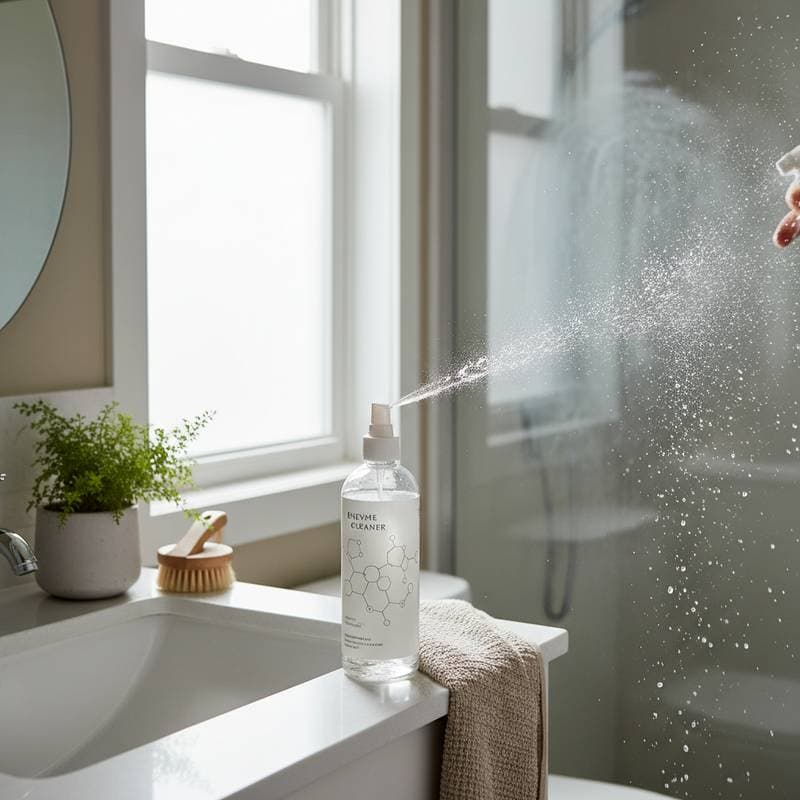
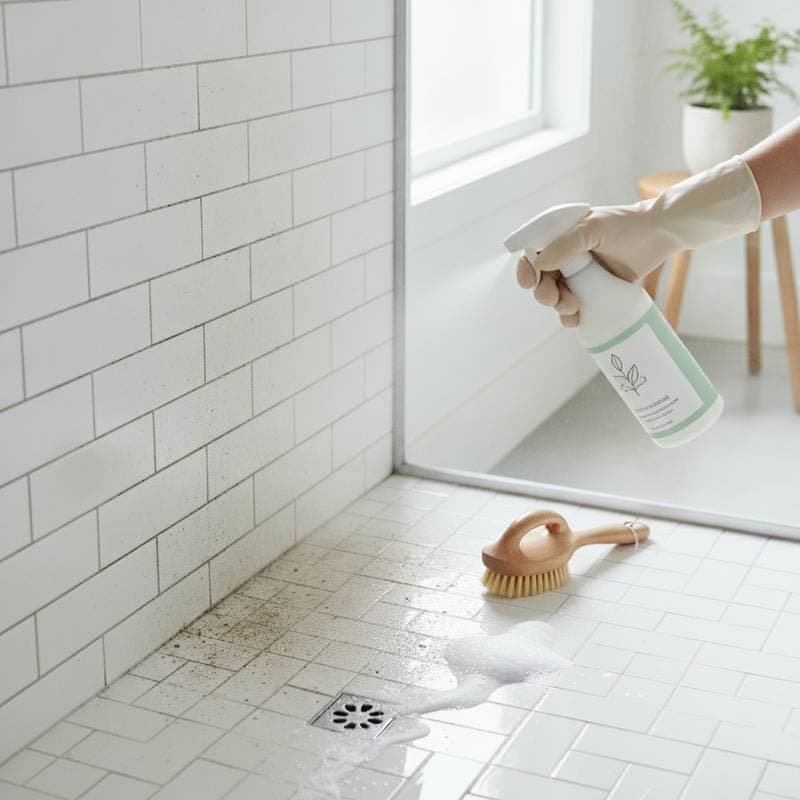
Spray the enzyme cleaner generously on tile walls, sinks, faucets, and the shower floor. Focus on corners and grout lines where buildup collects. Avoid mixing it immediately with vinegar or bleach, as those substances can deactivate enzymes.
3. Dwell Time
Patience makes the difference here. Let the cleaner sit for at least 10 to 15 minutes. For stubborn soap scum, extend to 30 minutes. The solution should remain damp so the enzymes stay active. If it dries too quickly, lightly mist with more cleaner.
4. Gentle Agitation
Use a microfiber cloth or brush to loosen softened grime. For grout, an old toothbrush works perfectly. The goal is to move the solution around rather than scrub aggressively.
5. Rinse and Dry
Rinse thoroughly with warm water. Dry with a fresh towel or cloth to prevent water spots. For fixtures, a final wipe with vinegar can bring out a streak-free shine.
6. Repeat as Needed
Heavily soiled areas may take a few sessions to reach full cleanliness. Once the deep grime is gone, light weekly maintenance will keep the bathroom fresh with minimal effort.
Making Your Own Enzyme Cleaner
If you prefer a budget-friendly and natural approach, you can make enzyme cleaner at home using fruit scraps. Citrus peels, sugar, and water ferment into a mild but effective cleaning liquid.
Ingredients:
- 2 cups chopped citrus peels
- 1/2 cup brown sugar
- 4 cups water
Mix everything in a large plastic bottle but leave space for gas buildup. Loosen the cap every day to release pressure. After a few weeks, strain the liquid and store it in a spray bottle. This homemade cleaner works well for light grime and general upkeep.
While it may not match the strength of commercial formulas, it offers a cost-effective solution that smells pleasant and avoids synthetic chemicals.
Quality Control Tips
- Test Before Broad Use: Always test on a small area first, especially natural stone or unsealed grout.
- Avoid Mixing Chemicals: Enzymes are sensitive to pH changes, so never combine them with bleach or acid-based cleaners.
- Use Consistently: Enzymes build effectiveness with regular application. Each use removes another layer of buildup.
- Store Correctly: Keep enzyme cleaners in a cool, dark place to maintain their potency.
Budget Considerations
Commercial enzyme cleaners are available in concentrate form, allowing you to dilute them for everyday use. A single bottle can last for months if mixed properly. Homemade versions cost next to nothing, using kitchen scraps that would otherwise be discarded.
If your budget allows, invest in a high-quality product for deep cleaning, then maintain surfaces with your homemade mix. This approach balances cost and performance.
Safety Notes
Though enzyme cleaners are non-toxic, always wear gloves when cleaning. Prolonged contact with any cleaning solution can dry out skin. Ventilate the bathroom well to prevent moisture buildup and mildew regrowth.
If you have asthma or allergies, check product ingredients for added fragrances. Choose unscented versions to avoid irritation.
Why Enzyme Cleaners Outperform Traditional Chemicals
Traditional bathroom cleaners rely on acids, solvents, and surfactants. They can strip grime fast, but they also damage surfaces over time. Enzyme cleaners work differently. They do not dissolve materials by force. Instead, they break down the food sources that grime and bacteria feed on.
This creates a cleaner that lasts longer. Because enzymes remove residues at the root level, new buildup takes longer to appear. That means less work later. The surface stays cleaner between sessions without the dull etching that harsh cleaners can cause.
Common Mistakes to Avoid
- Rushing the dwell time – Enzymes need contact time to digest grime. Wiping too early wastes product and effort.
- Applying over soap residue – Clean loose dirt first so the enzymes can reach the target buildup.
- Using too little product – A light mist may not deliver enough enzymes to the surface. Coat the area evenly.
- Expecting instant results on old buildup – Deep stains may take multiple sessions.
- Mixing with bleach or ammonia – These chemicals destroy enzymes instantly.
Pro Tips for Success
- Warm water speeds up enzyme activity, so use it for rinsing or diluting concentrates.
- For glass shower doors, use an enzyme cleaner followed by a vinegar rinse to dissolve mineral spots.
- To clean grout lines, use a spray bottle with a narrow stream to direct enzyme cleaner precisely where needed.
- Keep a small spray bottle of diluted enzyme solution handy for quick touch-ups after showers.
Maintaining Long-Term Cleanliness
After your bathroom reaches that fresh, residue-free state, the key is maintenance. Light weekly cleaning prevents buildup from returning. Spray enzyme cleaner on damp surfaces after showers, let it sit for a few minutes, and rinse.
Keep ventilation in mind. Use an exhaust fan or open a window during and after showers to reduce moisture that feeds mildew. Replace worn caulk and re-seal grout yearly to maintain resistance against water damage.
Building on Your Skills.