
The Rise of Mushroom Compost in Modern Gardening
Key Takeaways
- Mushroom compost delivers a potent blend of nutrients and organic matter that revitalizes soil and supports diverse plant types.
- It excels at enhancing moisture retention, aeration, and microbial activity, leading to more resilient gardens.
- By recycling agricultural byproducts, this compost promotes waste reduction and aligns with sustainable practices.
- Proper integration fosters deeper root systems and increased yields for both edible and ornamental plants.
- Rooted in time-honored farming methods from Europe and Asia, it adapts seamlessly to contemporary urban and rural settings.
Understanding Mushroom Compost
Mushroom compost refers to the spent substrate from commercial mushroom farming, typically composed of straw, peat moss, gypsum, and manure-based organics. Once mushrooms have completed multiple growth cycles, this material loses its viability for fungi but retains valuable elements like nitrogen, phosphorus, and potassium that benefit garden plants.
Horticulturist Emily Grant shared insights during a tour of an Oxfordshire community garden: “This compost acts as a nutrient spa for your soil. It refines texture, nourishes beneficial microbes, and ensures consistent moisture availability for roots.”
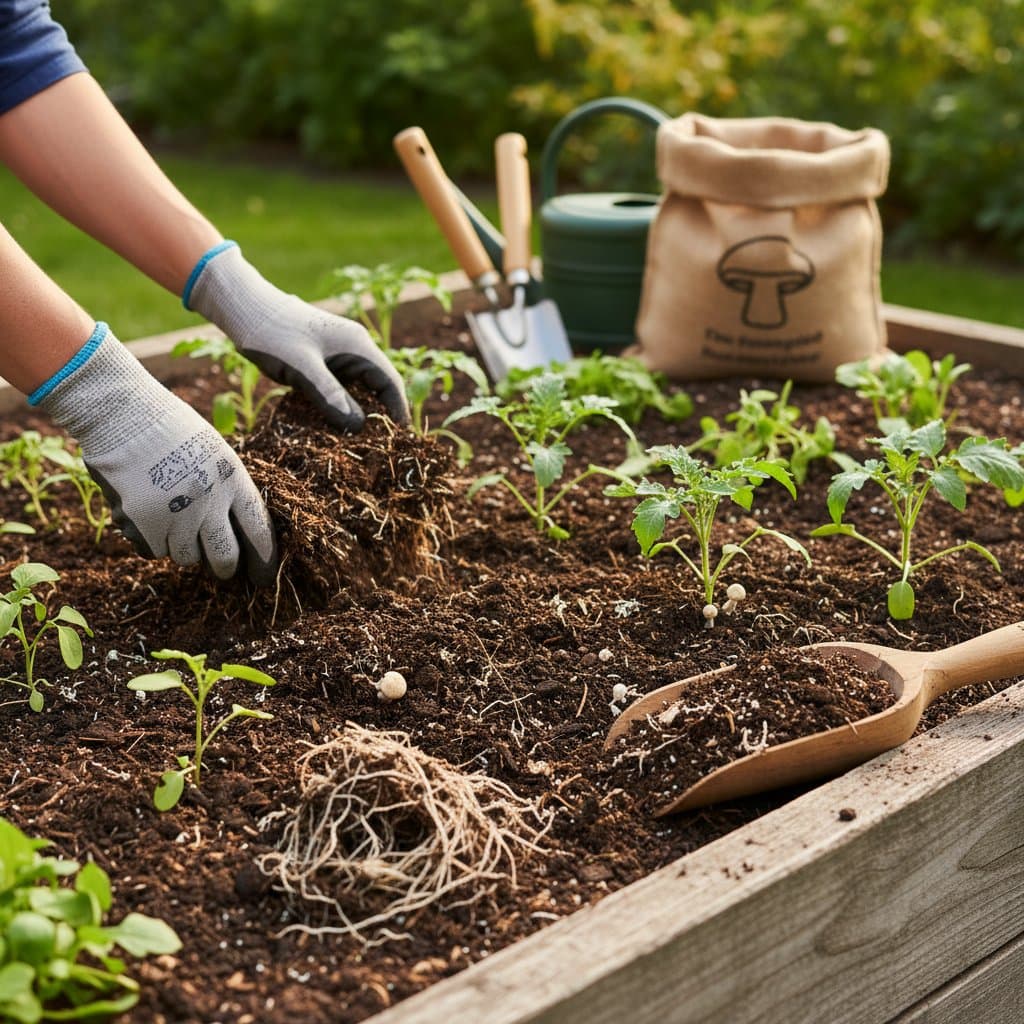
The finished product appears as a dark, friable blend with an earthy aroma, free from offensive odors. Gardeners incorporate it by blending into beds at a rate of 2 to 4 inches, applying as a 1- to 2-inch mulch layer, or sprinkling sparingly on container soils to avoid compaction.
Pitfalls to Sidestep When Using Mushroom Compost
Mushroom compost offers substantial advantages, yet improper use can lead to setbacks. Consider these guidelines to maximize its potential.
- Allow full curing before application. Uncured compost may harbor high salt levels that stress young plants; age it for at least six months or source pre-cured batches.
- Apply in moderation. Excessive amounts risk root suffocation or pH shifts; incorporate no more than 20 percent by volume into native soil.
- Conduct a soil pH test beforehand. This compost tends neutral to slightly alkaline, so pair it with acidic amendments like pine needles if your soil exceeds pH 7.0.
- Select quality sources. Opt for organic-certified suppliers to minimize risks from pesticides or heavy metals; local mushroom farms often provide traceable options.
Personal experience underscores these points. In my initial Cotswolds garden, I applied uncured compost liberally to lettuce rows, resulting in stunted seedlings and visible salt crusts. Adjusting to cured material and lighter incorporation yielded bountiful, flavorful harvests the following year.
Roots in Global Farming Practices
Mushroom compost aligns with ancient agricultural wisdom, repurposing substrates in ways seen across cultures. Chinese and Japanese rice paddy farmers have integrated spent mushroom materials for centuries to bolster field fertility. Similarly, French vintners near limestone caves historically amended vineyards with composted remnants from underground mushroom cultivation.
This approach embodies a core tenet of sustainable agriculture: closing the loop on organic resources to honor natural renewal processes. After residing in diverse locales from Asia to Europe, I value how such methods minimize environmental impact while enhancing productivity.
Today, mushroom compost gains traction in compact urban spaces, proving its versatility. Balcony gardeners in London or rooftop enthusiasts in New York City achieve similar results by top-dressing pots or enriching container mixes, demonstrating that traditional principles scale to modern constraints.
Integrating Mushroom Compost into Your Garden
To incorporate mushroom compost effectively, begin with a trial area. Purchase a 40-pound bag and amend a 4-by-4-foot bed, monitoring plant performance over one season before broader use.
For novice gardeners:
- Blend it at a 1:3 ratio with native soil or homemade compost to temper its strength.
- Spread as a thin mulch layer around perennials or shrubs, refreshing annually in spring.
- Combine with complementary organics, such as composted leaves or worm castings, to create a balanced nutrient profile.
Its appeal stems from straightforward application and proven outcomes. Gardeners report 20 to 30 percent improvements in soil tilth and plant vigor within the first year.
Cultivating Lasting Garden Vitality
Robust soil underpins successful cultivation. Mushroom compost exemplifies how repurposed materials can deliver essential nourishment, turning potential waste into a cornerstone of thriving landscapes. By adopting this practice, gardeners not only elevate their yields but also contribute to a more circular, earth-friendly approach to growing.