Japandi Dining: Achieving Minimalist Harmony in 2025
Individuals frequently enter a dining room and sense immediate tranquility. Soft light filters through the space, clean lines dominate, and materials convey inherent warmth. This subtle, balanced beauty characterizes Japandi style, a fusion of Japanese minimalism and Scandinavian comfort. In dining environments, this aesthetic delivers serenity alongside practicality.
Japandi dining creates spaces that encourage conversation, extend beyond basic nourishment, and restore energy after long days. The style emphasizes harmony, imperfection, and mindfulness over perfection or rigidity. The sections below provide practical guidance for integrating these elements into a home dining area.
Establishing the Color Palette: Neutral Tones with Textural Depth
- Soft whites and warm beiges for walls and major furniture pieces
- Greige or pale clay tones to add subtle variation
- Charcoal or deep black accents for grounding elements
- Natural wood tones like white oak, ash, or walnut to introduce warmth
This restrained palette highlights textures and materials. For example, place an unglazed ceramic vessel in terracotta as a focal point against neutral backgrounds. Mastery comes from restraint; stop adding elements just before the space feels complete to achieve perfect balance.
To implement this approach, choose paint samples that account for natural light changes throughout the day. Test fabric swatches for upholstery or table linens alongside wood samples. This methodical process ensures the palette harmonizes with the room's daily light patterns.
Selecting the Dining Table: Central Element of Connection
The dining table forms the heart of a Japandi dining area. It demands solidity, simplicity, and tactile appeal. The goal focuses on promoting interaction over display, with a surface that invites lingering conversations.
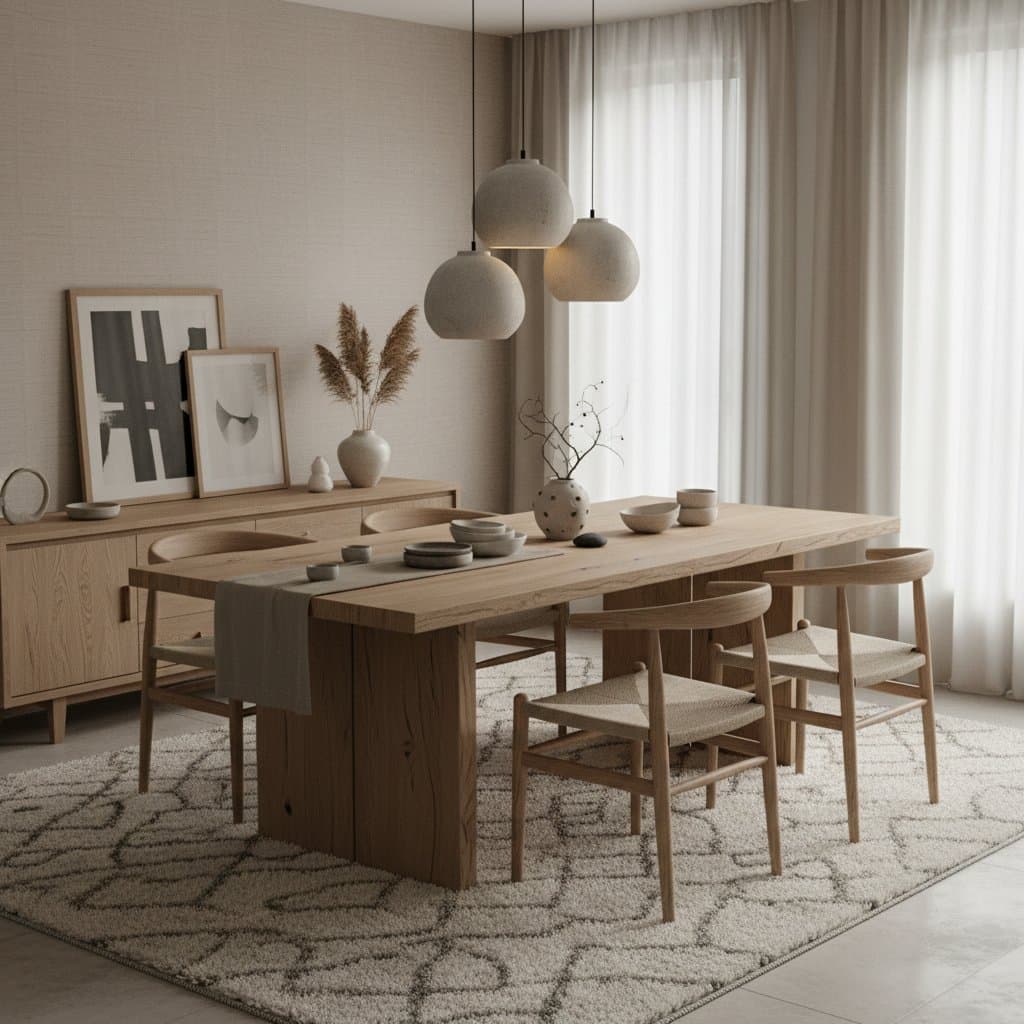
Wood serves as the primary material. Select a table made from light oak or ash with unembellished edges to set the tone. Choose rounded corners and straightforward joinery to create a softer silhouette that aligns with the serene atmosphere. Avoid glossy finishes; opt for matte or oil-treated surfaces that welcome daily use and gain patina over time.
For added character, consider a table from reclaimed wood, where inherent imperfections invite storytelling during meals. In smaller spaces, a round design fosters intimacy and reduces formality. Measure the area carefully to fit the table without crowding; maintain at least 36 inches of clearance around it for easy movement.
Pair the table with chairs that match its material, such as those with woven seats in neutral fibers like rattan or linen. This cohesion strengthens the overall aesthetic while offering ergonomic comfort for extended sitting.
Designing Lighting: Layers of Gentle Illumination
Lighting in a Japandi dining space emphasizes ambiance over brightness. The objective involves multiple soft sources that eliminate harsh contrasts.
Start with a central pendant light over the table. Choose rice paper globes or fabric-shaded cylinders to diffuse light evenly and create a hospitable glow. For artistic flair, select fixtures incorporating natural materials like woven bamboo or rattan to echo the organic theme.
Add secondary lights for depth. Place a small table lamp on a side console or a floor lamp in a nearby corner to layer warmth. Install dimmer switches to allow gradual adjustments in brightness, which supports Japandi's focus on the interplay of light and shadow.
Lighting influences emotional tone. A thoughtfully arranged system elevates everyday meals into special events, accentuating details like wood grain or fabric textures. Use bulbs rated at approximately 2700K for a warm, enveloping effect that complements the neutral palette without overpowering it.
Incorporating Storage: Seamless Functionality
Minimalism requires smart storage rather than none at all. In dining areas, this means built-in solutions that organize without cluttering the view.
A low credenza in a matching wood tone stores tableware, linens, and serveware while providing room for selective displays of pottery or art. Open shelves work well if items receive careful curation; limit displays to a few meaningful pieces to uphold simplicity.
In tight spaces, use benches with hidden storage under the seats. These multifunctional pieces combine seating with spots for linens or utensils. Select hardware that blends seamlessly, such as flush pulls in the same finish as the wood, to preserve the streamlined look.
Japandi prioritizes function as much as form. Assess each storage item for its utility; include only those that serve multiple purposes or support daily routines. This selective approach prevents buildup and maintains the room's intentional serenity.
Harmonizing Simplicity with Comfort
A common mistake in applying Japandi involves pushing minimalism too far, resulting in starkness rather than tranquility. Balance sparsity with welcoming features to succeed.
Accomplish this by:
- Layering textures, such as combining smooth ceramics with rough weaves or brushed metals.
- Adding warmth through wood and soft fabrics instead of vibrant colors.
- Keeping sightlines open while filling spaces thoughtfully.
- Introducing personal touches via subtle items like twisted rush baskets or inherited silverware.
The philosophy revolves around keeping only resonant essentials that sustain energy. Resist over-editing; curate intentionally to capture authentic living.
To put this into practice, review current furnishings: keep items that fit the principles and remove the rest. Add one new piece per season, then evaluate its effect before proceeding. This gradual refinement allows the space to evolve naturally.
Evolving with the Space: Embracing Organic Change
Once a Japandi dining area takes shape, permit it time to settle before making adjustments. The style thrives on patience, uncovering details like sunlight playing across wood surfaces or the feel of everyday objects.
Meals deepen in such settings, promoting mindfulness and relaxation. Over time, the space shifts gently: a vase develops a subtle sheen, fabrics gain softness from use, or tabletops show light traces of handling. Embrace these changes as signs of a lived-in refuge.
Routine care upholds the design's integrity; gently clean fabrics and apply oil to wood surfaces occasionally to highlight their natural luster. This upkeep keeps the area as a source of refreshment, not mere ornamentation.
Implementing Japandi Principles
Japandi dining teaches that simplicity equals clarity, not emptiness. Every choice in tableware, seating, or lighting must add purpose and calm.
Start by drawing a floor plan that emphasizes circulation and daylight. Procure materials from eco-conscious sources to honor the style's natural ethos. These actions transform the dining space into a sanctuary for significant shared moments, offering timeless wellness beyond passing fads.