Key Points
- Earthship bathrooms integrate water recycling and passive design to create self-sustaining sanitation systems.
- Greywater and blackwater management form the core of their efficiency, reducing waste and conserving resources.
- Natural materials and off-grid systems replace conventional plumbing and electrical infrastructure.
- DIY adaptability enables homeowners to build sustainable bathrooms that operate independently from municipal services.
- Proper planning, filtration, and ventilation maintain hygiene, control odors, and meet environmental standards.
Technical Background
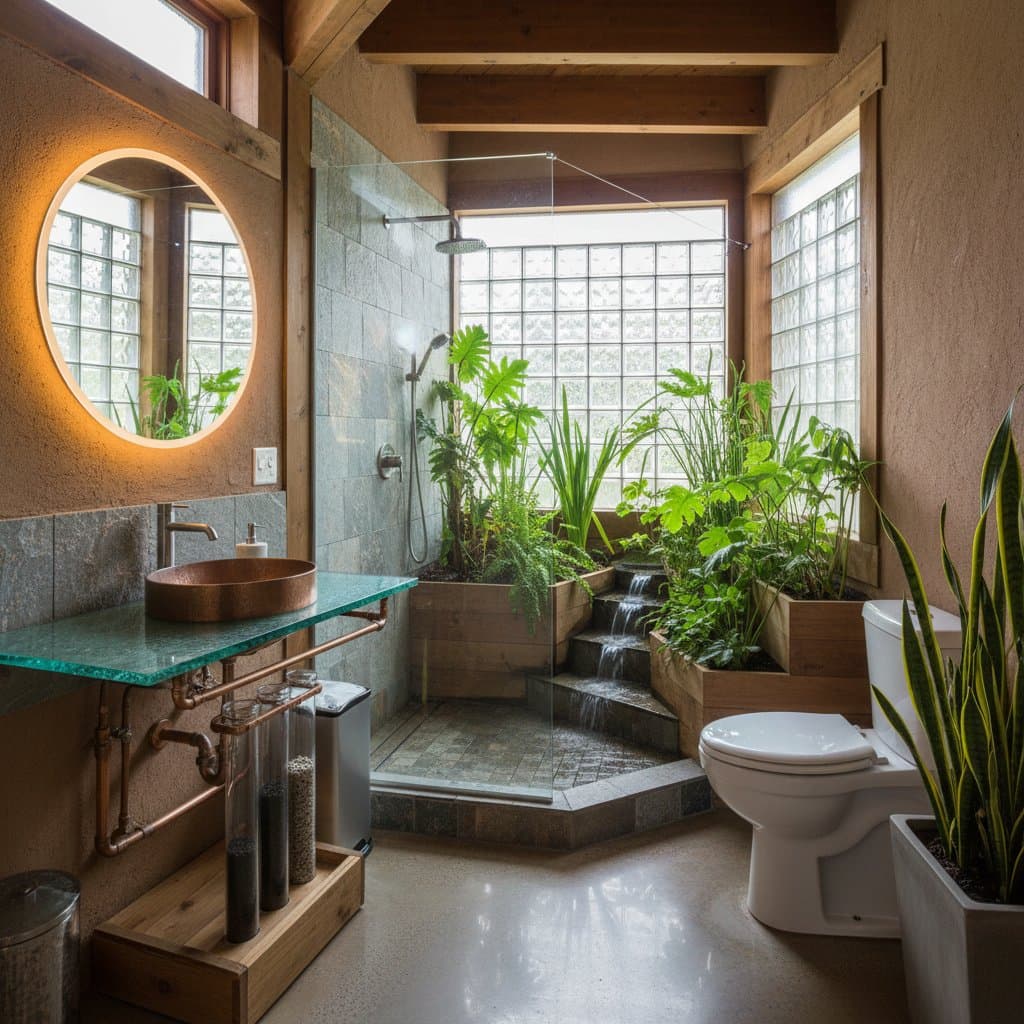
Earthship bathrooms function within a closed-loop system that reuses and purifies household water. Water from sinks or showers becomes greywater, which filters through indoor planters before use in toilet flushing. Toilet output produces blackwater, processed in outdoor containment cells or solar-enhanced wetlands using natural filtration, microbial action, and evapotranspiration to return water safely to the environment.
Assessing Your Current Situation
Homeowners converting a conventional bathroom to an Earthship-style system must first evaluate key conditions. Start by identifying the water source, such as collected rainwater, a well, or stored supply tanks, and assess its quality. Next, examine the existing drainage layout to determine if plumbing can separate greywater from blackwater.
Consider available space for indoor planters and outdoor zones for containment or filtration cells. Review local regulations on wastewater reuse and composting toilets. Factor in climate and soil type, as these affect evaporation rates and filtration efficiency. This assessment avoids costly retrofits and aligns designs with site-specific needs.
Planning Phase
Tools and Materials
Gather PVC or HDPE piping rated for wastewater transport. Include greywater filtration media like gravel, sand, and activated charcoal. Prepare waterproof planter liners and soil for wetland vegetation, along with a solar-powered pump or low-energy pressure system.
Select a composting or low-flush toilet, non-toxic sealants, and moisture-resistant finishes. Add ventilation fans and flexible ducting. These components support a functional, eco-friendly setup.
Safety and Code Considerations
Install backflow prevention valves to prevent contamination between greywater and potable water. Incorporate vent stacks to manage odors and balance air pressure. Ensure all piping complies with plumbing code standards for wastewater.
Add inspection ports for maintenance and water testing. Plan a timeline that covers design, rough-in plumbing, waterproofing, system testing, and final finishes. This sequence minimizes rework and verifies subsystem performance before enclosure.
Implementation
Step 1: Separate and Direct Greywater
Route sink and shower drains to a dedicated greywater line. Install a filtration unit with a sediment trap, gravel bed, and charcoal layer. Direct the filtered water to an indoor planter stocked with high-transpiration plants like canna lilies or papyrus.
These plants serve as living filters, absorbing nutrients and oxygenating the water. This step recycles greywater effectively for non-potable uses.
Step 2: Integrate Toilet and Blackwater Treatment
Fit a low-flush or composting toilet. For flush systems, connect to the indoor planter outflow. Route toilet discharge to an outdoor blackwater containment cell, a lined trench with gravel and wetland plants.
Microbial breakdown and solar heating in the cell complete purification. This process ensures safe handling of blackwater.
Step 3: Manage Ventilation and Humidity
Employ cross-ventilation and solar-powered fans for consistent airflow. Place vents above fixtures that generate moisture to avoid condensation and mildew. In colder climates, use thermal mass walls or floors to retain heat and reduce humidity.
Effective ventilation preserves air quality and system longevity.
Step 4: Apply Finishes and Protective Layers
Seal wet surfaces with lime plaster, microcement, or waterproof clay finishes. These materials resist mold without emitting volatile compounds. Choose moisture-resistant flooring like sealed concrete or recycled tile.
Avoid synthetic coatings that impede vapor permeability, as they can trap moisture in walls. Proper finishes enhance durability and health.
Quality Assurance
Perform a pressure test on plumbing lines before sealing walls or floors to detect leaks. Verify greywater filtration flow rates to prevent pooling. Monitor pH and clarity of filtered water over several days prior to toilet integration.
Assess odor levels and vent airflow; a balanced system stays odor-free in humid conditions. Document plumbing paths and electrical connections, labeling access points for ongoing maintenance.
Maintenance and Long-Term Care
Monitor sustainable bathrooms regularly to sustain performance. Clean sediment traps every few months. Trim plants in filtration beds to avoid root blockages.
Replace charcoal and sand layers when absorption diminishes. Inspect composting or blackwater units for microbial activity and temperature consistency. Healthy systems exhibit neutral, earthy odors and stable moisture.
Pro Tips for Success
- Start small by routing one fixture, like a shower, to a greywater planter before full expansion.
- Incorporate redundancy with manual bypass valves for rerouting water during clogs or failures.
- Adapt seasonally by selecting plant species and adjusting flow rates to temperature and sunlight variations.
- Document diagrams and notes for troubleshooting or resale purposes.
- Consult experts for design and code guidance, even with DIY experience.
Achieving Reliable Off-Grid Sanitation
Earthship bathrooms turn daily routines into partnerships with natural processes. Each use contributes to a cycle of renewal through thoughtful design and maintenance. Homeowners gain dependable sanitation that balances comfort with conservation, blending engineering, craftsmanship, and ecology for enduring sustainability.