Key Points
- Organizing by color triggers small dopamine releases that transform tidying from a draining task into a rewarding experience.
- Color-coded systems minimize decision fatigue and visual clutter, fostering a calmer and more purposeful environment.
- Employ color as a dual-purpose tool that combines aesthetic appeal with psychological motivation.
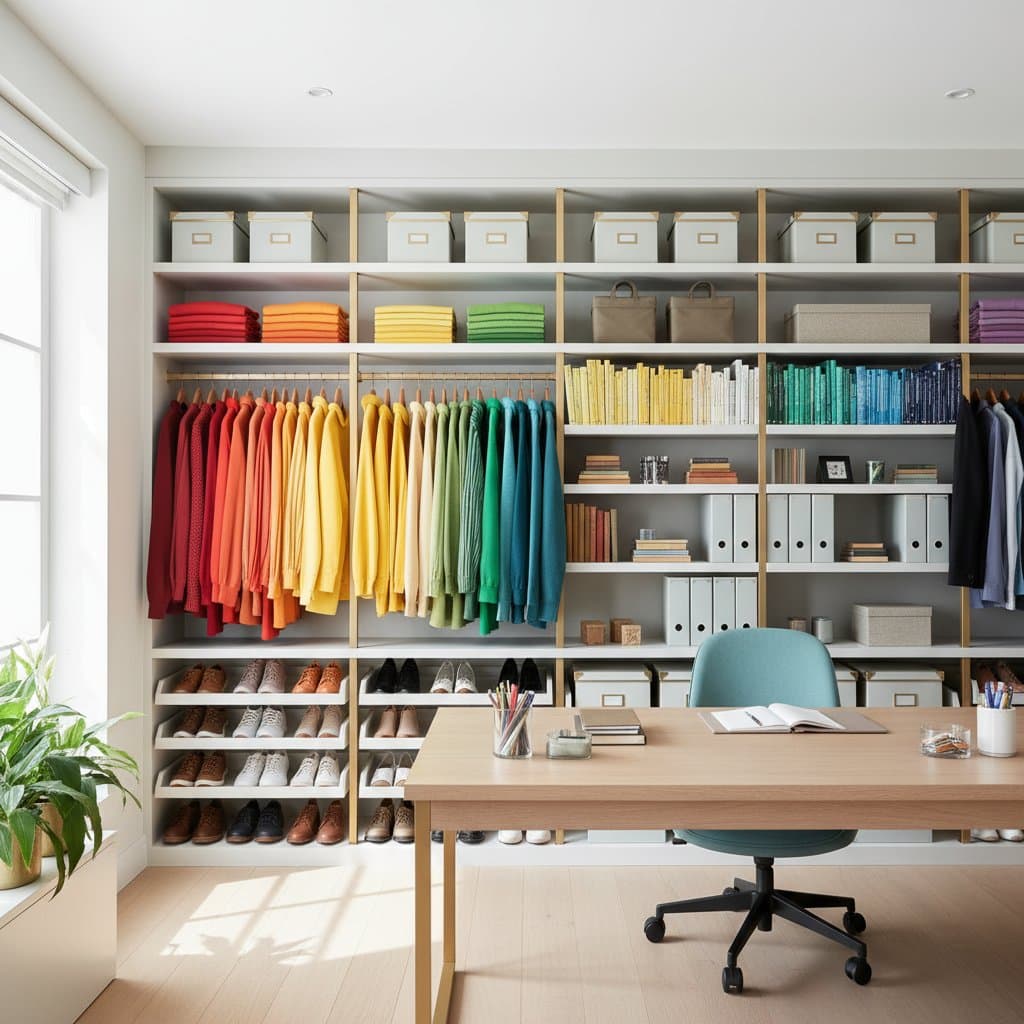
- Professionals recommend beginning with a single area, such as a bookshelf or closet, to gain an immediate sense of mental uplift before extending the approach to other spaces.
- The objective lies in achieving visual harmony that promotes ongoing organizational habits, rather than pursuing flawless perfection.
The Science of Dopamine and Decluttering
Dopamine serves as the neurotransmitter linked to pleasure, motivation, and reward. The brain releases it upon completing tasks, including minor accomplishments like pairing socks or emptying an inbox. Color-based organization engages this neurological pathway. Each instance of aligning items by hue provides the brain with a swift dose of satisfaction.
The Cultural Influence of Color Organization
Color-driven organization has evolved from specialized design publications to a staple in everyday lifestyle practices. Platforms like social media showcase vibrant examples, from spectrum-arranged bookshelves to tonal pantries. These displays captivate visually, yet their true value stems from emotional resonance.
Popular media frequently employs color schemes to convey order or disorder, reflecting character traits or psychological states. Apply this principle to personal spaces by viewing the home as a curated backdrop for daily routines. Cohesive visuals streamline navigation and enhance comfort.
Color organization offers accessibility to all, independent of costly organizers or extreme minimalism. Simple actions suffice, such as sorting a collection of markers by hue or aligning spice jars in gradient order. These efforts yield comparable surges of satisfaction to comprehensive rearrangements.
Practical Steps for Color-Based Decluttering
Approach the task with deliberate focus rather than an aim for flawlessness. The following framework integrates insights from dopamine research with principles of design to yield effective results.
-
Select a Starting Area
Identify a space that appears chaotic or overwhelming. Limiting the scope to one zone avoids exhaustion and allows testing of the method prior to broader implementation.
-
Evaluate Items by Emotional Impact
Prior to considering colors, assess each object's emotional resonance. Retain only those that evoke comfort or delight. This step ensures the effort centers on meaningful possessions.
-
Develop a Personal Color Scheme
Spread out the items and observe emerging color groupings. Preferences may lean toward cool blues and greens or warm earth tones. Follow intuitive inclinations to shape the layout.
-
Form Gentle Color Transitions
While strict rainbow sequences gain popularity online, subtle shifts between hues create a more natural flow. Arrange items to blend seamlessly, echoing patterns found in nature.
-
Incorporate Supportive Storage Solutions
Opt for clear containers, glass vessels, or exposed shelves to keep the color arrangement in view. For concealed options, apply labels featuring color names or small swatches to uphold uniformity.
-
Sustain with Daily Fine-Tuning
Replace large-scale overhauls with brief evening adjustments. The brain responds positively to these incremental successes, reinforcing the cycle of motivation.
-
Scale Up Methodically
After stabilizing the initial area, replicate the process in adjacent spaces. Maintain emphasis on the enjoyment of the activity to prevent it from becoming burdensome.
Examples from Everyday Applications
Revitalizing a Bookshelf
A homeowner who previously avoided tidying her living room discovered renewed enthusiasm through a hue-sorted book collection. She likened the arrangement to "painting with narratives." Passing the shelf repeatedly triggered subtle waves of contentment, inspiring upkeep of surrounding areas.
Streamlining a Wardrobe
A professional stylist restructured her closet by color rather than type. Daily outfit selection accelerated as her gaze intuitively sought pieces aligned with her mood. Bold reds suited energetic occasions, while serene blues supported reflective moments. This connection elevated dressing into a form of personal affirmation.
Organizing Digital Files
Digital disarray affects focus similarly to physical mess. A freelance writer categorized project folders by colors corresponding to themes, such as greens for wellness topics and oranges for creative endeavors. The resulting visual order enhanced concentration and reduced interruptions during work sessions.
These cases illustrate that color-infused organization extends beyond surface appeal. It harmonizes emotional responses, surroundings, and routines for lasting impact.
Integrating Color into Daily Routines
Color organization merges scientific principles with nurturing practices. It unites systematic order with the joy of visual creation. The resulting dopamine response underscores the brain's affinity for balance. Engaging spaces through color elevates maintenance into a multisensory pursuit.
Begin modestly with a single drawer or shelf. Notice the subtle elevation in mood as disorder yields to structured beauty. Over time, this practice cultivates a home that supports clarity and inspiration.