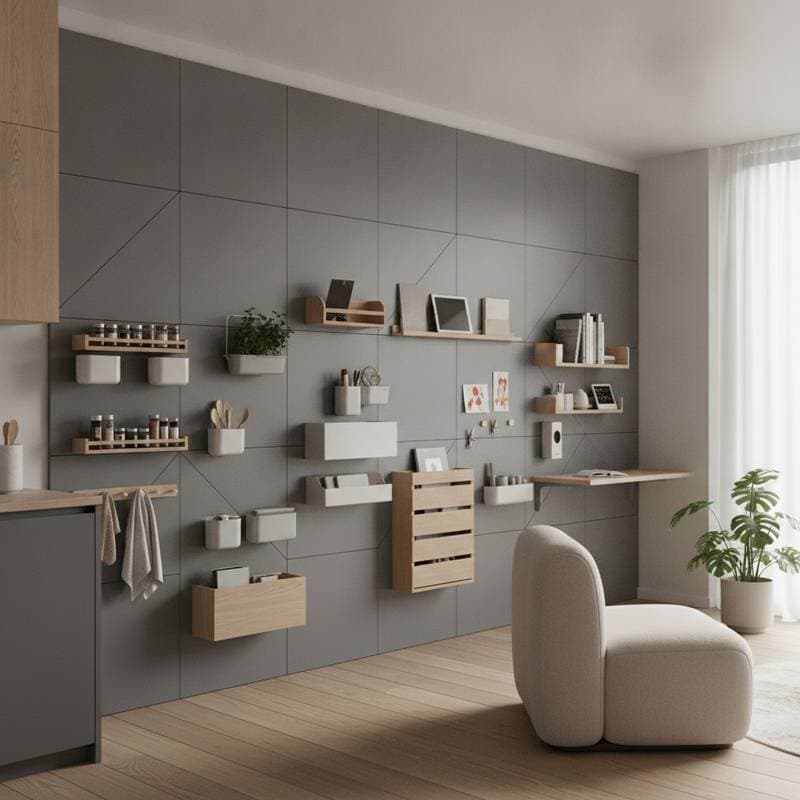
4. Floating Wall Desk with Concealed Compartments
A wall-mounted desk featuring hidden storage suits compact rooms or dedicated home offices. This piece folds away when idle, revealing compartments for stationery, laptops, or documents inside. Precision in installing hinges and wall anchors ensures reliable performance.
Practical Advice from Experienced Builders: Secure the mount directly into wall studs rather than relying on drywall. Initial stability may deceive, but improper anchoring leads to loosening screws over time, compromising the entire structure.
5. Ottoman with Hidden Interior Storage
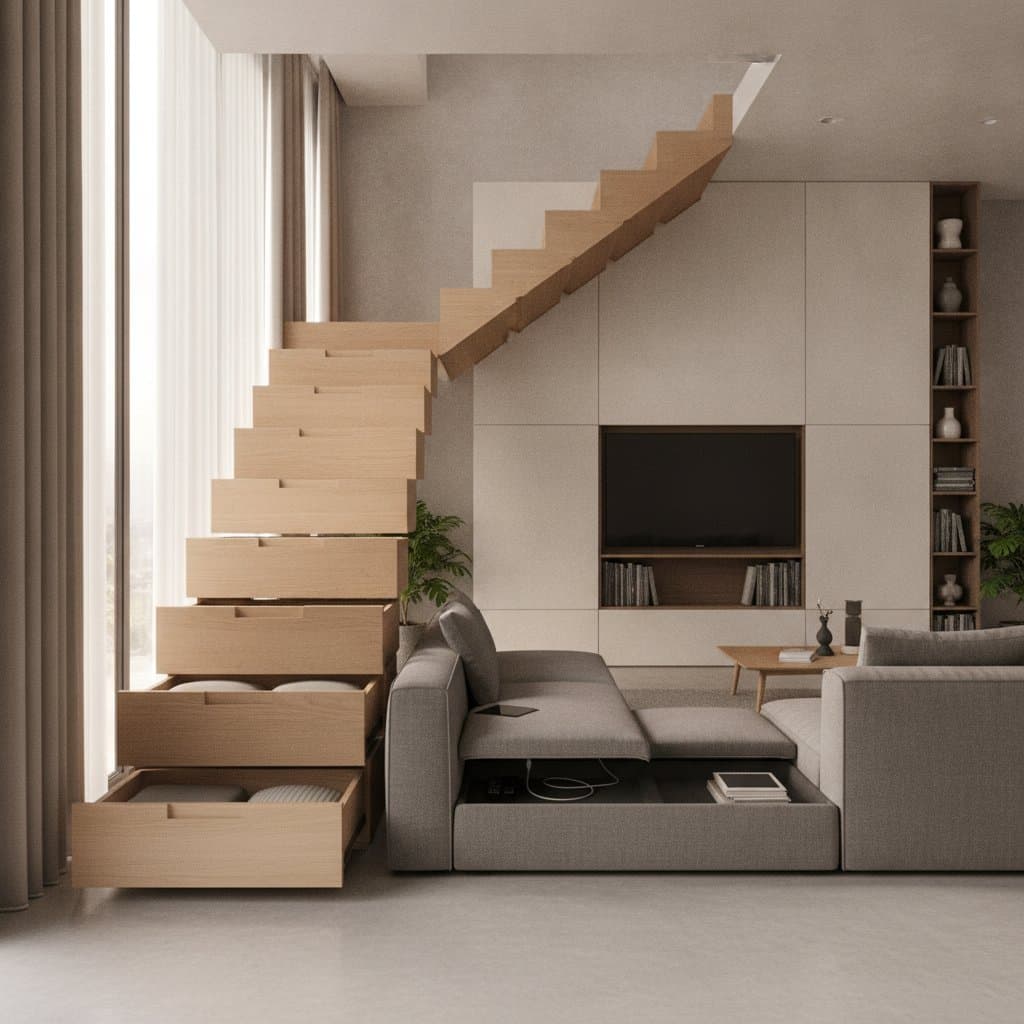
Storage ottomans provide straightforward, adaptable solutions for concealed organization. Upholster the cushioned top to flip open, exposing space for blankets, toys, or remote controls. This design maximizes floor area without sacrificing comfort.
6. Dining Table with Secret Drawers
Incorporate hidden drawers into the table's apron for discreet storage of placemats, utensils, or napkins. These compartments remain unseen from standard viewpoints, preserving the table's clean aesthetic. Careful construction maintains seamless integration.
Construction Guidance: Select undermount slides to conceal the drawers effectively. Measure the drawer faces meticulously before drilling pilot holes, guaranteeing symmetrical alignment and smooth operation.
7. Mirror Cabinet or Hidden Vanity
A mirror that serves as a shallow cabinet works well in bathrooms or bedrooms, hiding toiletries or jewelry while maintaining a tidy appearance. The design conceals essentials behind a reflective surface for visual simplicity.
For custom builds, attach a pre-framed mirror to a box using concealed hinges. Anchor the assembly securely into wall studs to support weight and prevent accidents.
Essential Building Techniques for Lasting Quality
Projects involving hidden storage introduce dynamic elements and added weight to furniture, demanding robust joinery and precise measurements from the outset.
Reinforcement and Stability
Incorporate corner blocks or cleats to fortify interior joints, particularly in enclosed boxes or benches. Minor alignment discrepancies may appear negligible initially, yet they cause structural racking under load. Verify squareness with a reliable square tool during assembly.
Smooth Operating Mechanisms
Pre-drill all holes for hardware installation to prevent wood splitting. Rub a light coating of paraffin wax on drawer slides and hinges, promoting effortless movement and reducing friction over years of use.
Protective Finishing Applications
Furniture with integrated storage endures regular handling, so select resilient finishes such as polyurethane or hardwax oil. These options withstand scratches and daily wear far better than delicate varnishes, extending the piece's lifespan.
Managing Weight and Balance
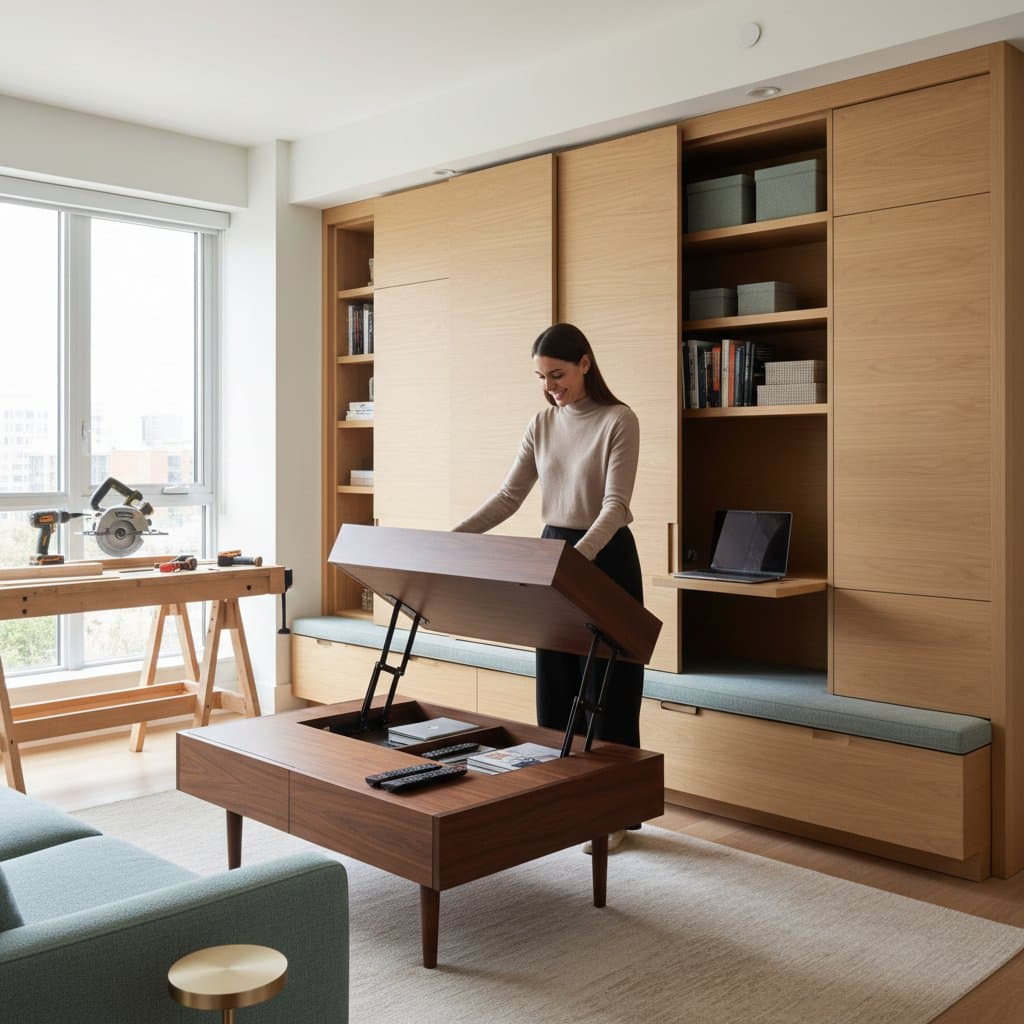
In designs with lift mechanisms, evaluate balance prior to completing assembly. Fine-tune hinge or piston positions until the motion feels even and controlled, avoiding strain on components during operation.
Budget Strategies for Effective Projects
Balancing costs ensures accessible woodworking without sacrificing quality in hidden storage builds.
Key Areas for Investment
- Hardware Components: Prioritize premium hinges, slides, and lift systems. Inferior options degrade rapidly, undermining the project's integrity and requiring costly replacements.
- Core Structural Woods: Choose sturdy, dimensionally stable lumber for frames. Plywood outperforms particleboard by resisting warping and sagging under repeated stress.
Opportunities for Cost Reduction
- Exterior Surfacing: For painted finishes, standard plywood suffices after thorough priming and sanding, delivering a professional look at lower expense.
- Finish Preparations: Blend natural oils at home for custom finishes, often cheaper than commercial alternatives while providing comparable protection.
Repurposing Existing Pieces
Revive old furniture into innovative storage solutions. Convert a dated dresser into a bench by extracting drawers and fitting a hinged lid, creating internal compartments. This approach cuts expenses and revitalizes quality wood destined for disposal.
Prioritizing Safety in Design and Installation
Hidden storage often incorporates hinges, gas struts, or substantial lids, necessitating thorough hardware testing before finalizing the build. Install soft-close features or safety props on any closing mechanism to avert pinching injuries.
For additions like interior lighting, consult a certified electrician to handle wiring. Compromising on electrical work poses serious risks.
Wall-attached units demand stud finders and heavy-duty brackets for secure mounting. Drywall anchors alone fail under significant loads, leading to potential falls.
Rigorous Quality Control and Testing Protocols
Examine every joint, hinge, and slide on completed pieces before deployment. Conduct load tests incrementally: for a storage bench, begin with light pressure and progress to full capacity, monitoring for shifts or creaks.
Assess drawer and lid motions for fluidity. Address any sticking or instability promptly, as unresolved flaws accelerate wear in everyday scenarios.
Ongoing Maintenance Practices
Sustain hidden storage furniture through routine care to preserve its efficiency.
- Hinge Lubrication: Apply machine oil sparingly every few months to maintain silent, fluid action.
- Hardware Securing: Periodically tighten screws and bolts, as vibrations from openings cause gradual loosening.
- Finish Renewal: Refresh protective layers upon noticing scuffs or fading to shield against further damage.
- Interior Cleaning: Vacuum enclosed areas regularly to remove dust buildup, preventing interference in under-bed or lift-top configurations.
Advanced Strategies for Flawless Execution
- Detailed Pre-Planning: Draft sketches or utilize digital tools to outline exact dimensions and hardware positions, minimizing errors.
- Clearance Verification: Confirm that drawers and lids operate without obstruction from adjacent surfaces or items.
- Precision Templates: Fabricate guides for consistent hinge and hole drilling across components.
- Assembly Dry Runs: Assemble parts without adhesive first, allowing simple corrections before permanent bonding.
Advancing Your Craft Through These Projects
Constructing hidden storage furniture hones foundational woodworking techniques applicable to broader home enhancements. Mastery of hinges, slides, and intricate joints emerges naturally, yielding practical items that elevate living spaces.
With experience from multiple builds, everyday furniture inspires ideas for concealed features. This evolving perspective defines skilled artisans who harmonize ingenuity with meticulous execution.