The Emergence of Hidden Storage in Contemporary Design
Hidden storage solutions address the demands of modern life by creating organized environments that prioritize both aesthetics and accessibility. These designs eliminate visible clutter while preserving the warmth and individuality of a space. Homeowners increasingly adopt such features to align with evolving preferences for simplicity and efficiency.
Essential Benefits
- Achieve visual clarity in compact areas without reducing usable space.
- Incorporate furniture that serves dual purposes, enhancing overall functionality.
- Respond to urban living challenges, such as limited square footage in apartments and townhouses.
- Maintain easy access to frequently used items through thoughtful placement.
- Combine artistic elements with durable construction for lasting appeal.
Evolving Attitudes Toward Organized Living
Minimalism extends far beyond surface-level style; it represents a deliberate approach to well-being and spatial harmony. Public interest in organization strategies, amplified by media and social platforms, encourages individuals to evaluate their material surroundings critically. Yet, complete elimination of possessions proves impractical for many, leading to the appeal of concealed options that balance openness with storage needs.
This preference signals a broader weariness with overt displays of items. Residents now select what merits visibility, storing the rest discreetly to cultivate environments that inspire tranquility. Such arrangements deliver practical utility alongside refined visuals, ensuring homes remain inviting rather than austere.
Areas Where Hidden Storage Enhances Daily Life
Living Areas with Integrated Versatility
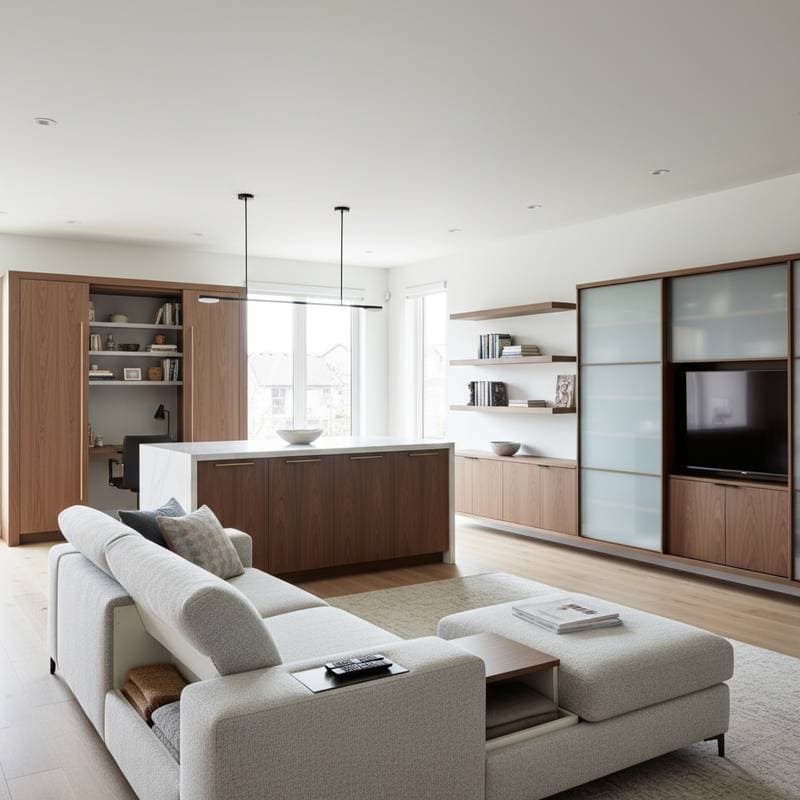
Contemporary living rooms benefit from multifunctional pieces like coffee tables featuring elevating surfaces for hidden compartments. Ottomans convert into storage units with padded lids that seal smoothly, while media cabinets incorporate sliding panels for cables and remotes. Designers employ flush hardware and matching materials to ensure these elements integrate seamlessly, preserving a cohesive look.
To implement this, measure your room's traffic flow and select pieces that align with existing decor. For instance, position an ottoman near seating areas to store blankets or magazines without disrupting the layout.
Kitchens Optimized for Efficiency
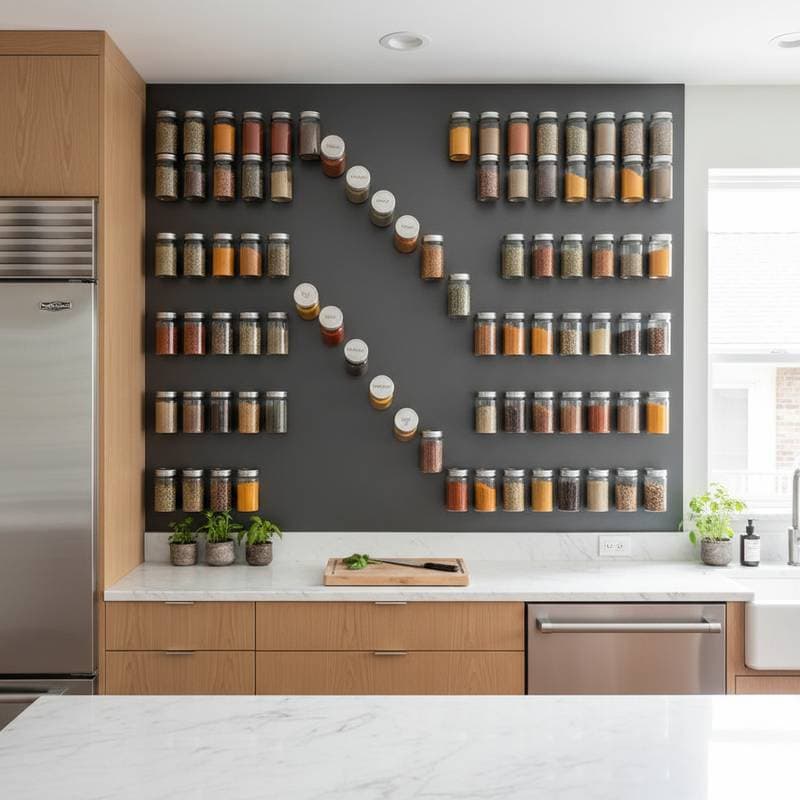
Kitchens frequently face accumulation of tools and appliances, yet targeted storage resolves this issue effectively. Install drawers in baseboard areas to hold utensils, or use vertical pull-out racks for spices adjacent to cooking zones. Concealed panels behind countertops can house mixers and blenders, freeing surfaces for meal preparation.
Custom solutions, such as doors with embedded magnets that swing open to expose pantry shelves, adapt to specific needs. Begin by mapping high-use items and retrofitting cabinets accordingly to streamline routines.
Bedrooms Designed for Rest
Bedrooms gain from under-bed drawers on glides that access linens effortlessly, or frames with hydraulic lifts revealing spacious voids below. Beside tables include false bottoms for jewelry and books, maintaining a clutter-free nightscape. Upholstered headboards with recessed pockets store reading materials without altering the room's serene profile.
These features promote relaxation by minimizing distractions. Assess sleep habits to position storage near the bed, ensuring essentials remain within arm's reach.
Bathrooms Focused on Serenity
Compact bathrooms require ingenious approaches to maintain order. Medicine cabinets with mirrored exteriors open to tiered shelving for toiletries, while vanities feature divided compartments behind uniform fronts. Recessed wall niches, framed by waterproof grout, conceal shampoos amid shower walls.
Prioritize moisture-resistant materials to sustain hygiene. Organize by category, dedicating zones for daily versus occasional items to simplify morning preparations.
Entry Zones Streamlined for Welcome
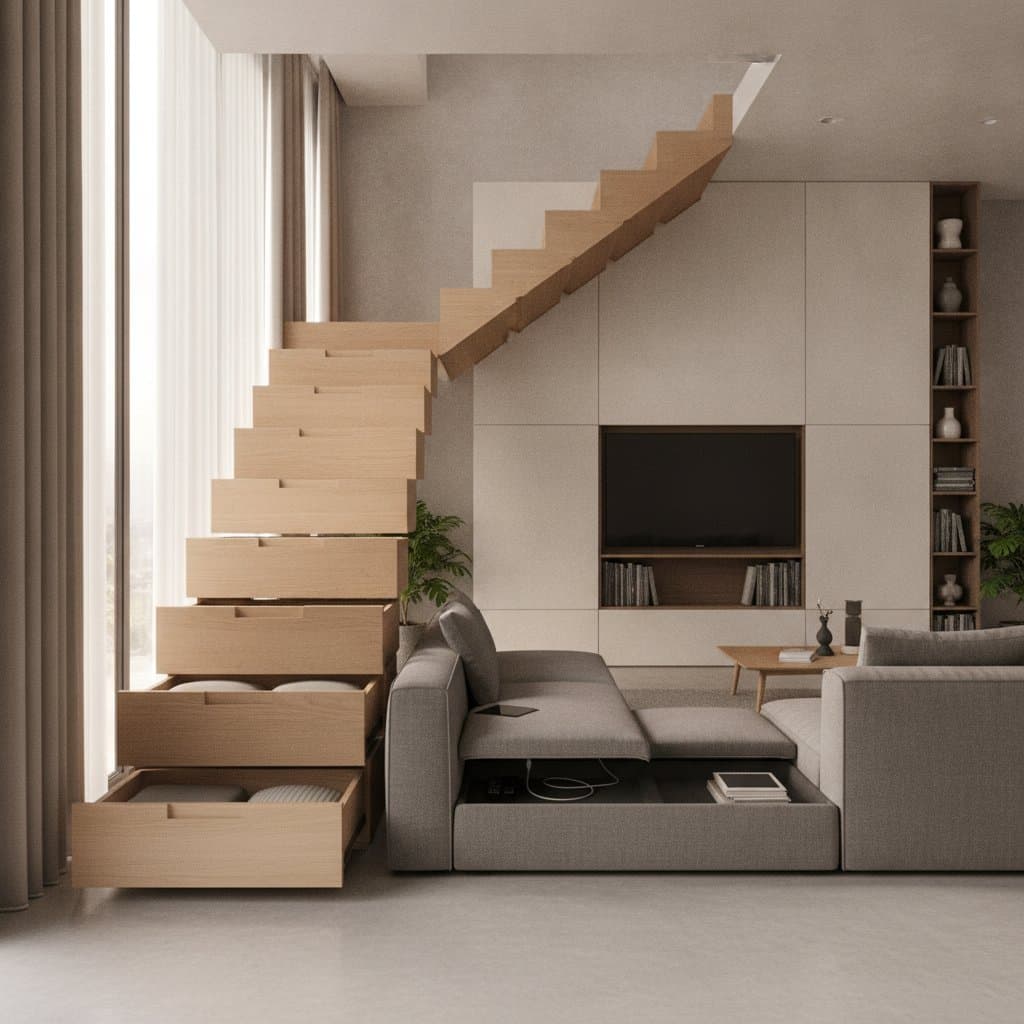
Entryways and corridors often collect miscellaneous objects, but strategic storage prevents this. Benches with hinged seats accommodate footwear below, paired with recessed hooks that retract into walls. Under-stair units with pull-out bins organize coats and accessories efficiently.
These setups create positive first impressions. Evaluate entry traffic to install durable, low-maintenance options that withstand frequent use.
Cultural Inspirations from Media and Stories
Concealed elements have captivated imaginations through films, series, and books, evoking mystery in everyday settings. Think of panels that slide to uncover vaults or desks hiding documents, themes that now influence residential architecture. Professionals draw from these narratives to infuse homes with subtle intrigue.
This connection elevates storage beyond mere utility, embedding personal tales into the built environment. Residents find joy in discovering these layers, turning maintenance into an engaging process that reflects their unique journeys.
Guidance from Design Professionals
Experts advise evaluating routines to identify storage priorities, ensuring frequent items stay prominent. Target solutions that fulfill multiple roles, such as a hallway bench that seats guests, conceals bags, and anchors the decor. Opt for finishes like soft matte paints that mask daily wear, or woods with natural grains that obscure joints.
Consult measurements before purchasing; prototypes or sketches help visualize integration. Balance concealment with accessibility to avoid frustration in use.
The Value of Tranquil Environments
Adopting hidden storage supports emotional well-being by reducing visual overload, fostering concentration and restful nights. Such homes correlate with heightened efficiency in tasks and leisure. Market trends show properties with these innovations command attention for their smart utilization of area.
Prospective owners value the foresight in design, viewing it as an asset for enduring comfort. This investment yields ongoing returns in satisfaction and usability.
Implementing Hidden Storage Effectively
Successful integration occurs when features enhance rather than dominate the space, fading into routines seamlessly. Select based on lifestyle demands, testing mechanisms for reliability. Professional installation ensures precision, while modular kits offer flexibility for updates.
Homeowners report eased minds from designated spots that accommodate life's fluctuations. This approach crafts adaptive sanctuaries where peace prevails over chaos.