Dopamine Decor: Bedroom Colors Lifting Moods in 2026
Imagine sunlight filtering through soft linen curtains and illuminating a wall in a hue that deepens your breath and draws an unwitting smile. The atmosphere lightens, tranquility settles, and the morning unfolds with renewed brightness. This subtle enchantment defines dopamine decor, a design philosophy that harnesses color and texture to foster joy and equilibrium in living spaces. It blends scientific insight with artistic intuition, transforming homes into environments that offer genuine embrace.
The Mood-Color Connection
Colors convey subtle signals to the brain before conscious awareness arises. Certain shades soothe, others invigorate, and many elevate spirits quietly. Dopamine decor operates on this principle: select tones that elicit positive emotional reactions. View it as therapeutic application of color within daily surroundings. The bedroom serves as an ideal canvas, a haven for rest and rejuvenation.
The Science of Color and Emotion
Research in psychology highlights color's impact on emotional states. Individual responses differ, yet specific shades reliably provoke consistent reactions. Gentle blues reduce heart rates, warm yellows foster optimism, and subdued greens promote serenity and poise. Thoughtful integration of these colors aids emotional regulation and enhances sleep.
In an era of constant stimulation, dopamine decor offers a soothing recalibration. It positions color as emotional framework rather than mere ornamentation. Walls, fabrics, and accents form a deliberate scheme to uplift mood and calm perceptions.
Building Your Dopamine Bedroom Palette
Develop a dopamine-inspired bedroom by considering desired sensations upon waking and retiring. Seek tranquility or bursts of inspiration? Envision a snug enclosure or expansive dawn? Allow these feelings to shape the selection.
Key color families gaining prominence in mood-enhancing interiors include:
-
Sunny Citrine and Buttery Yellow
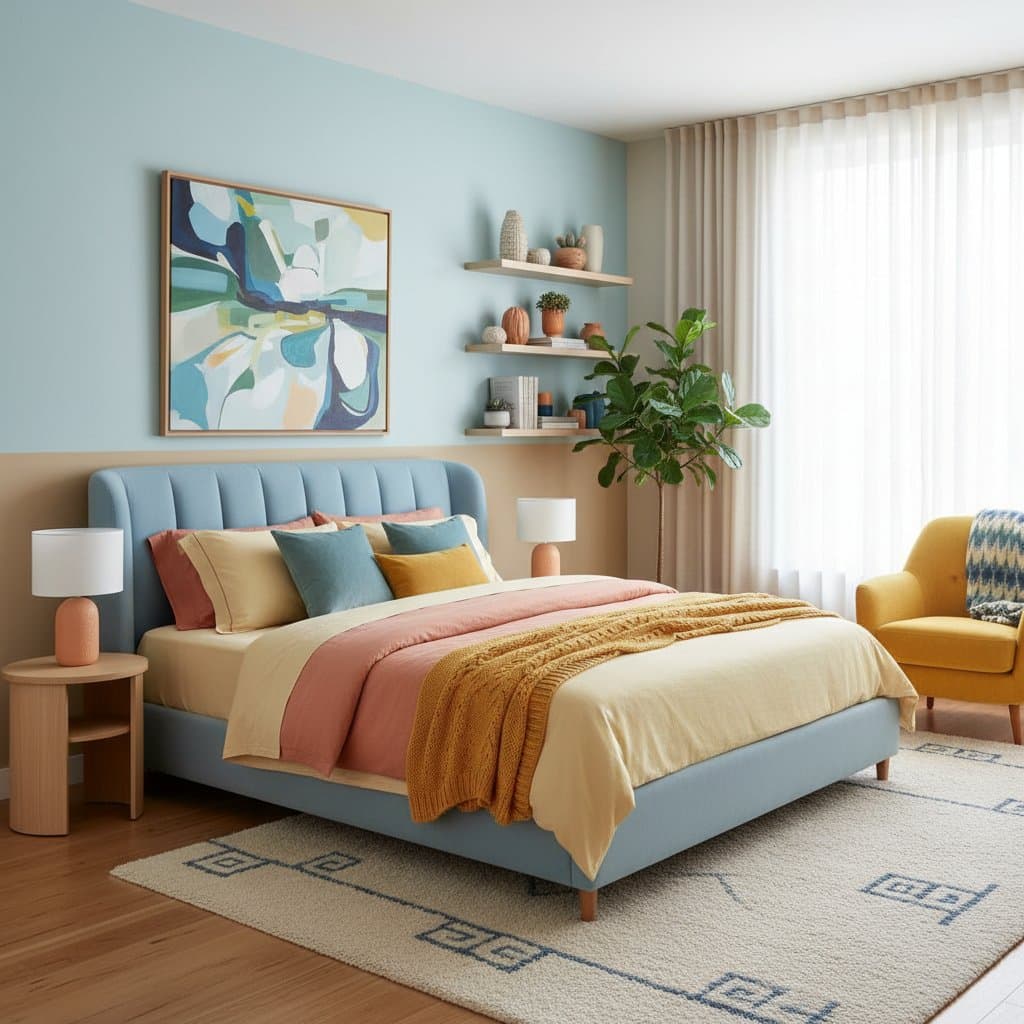
These shades emit warmth and positivity. They emulate sunlight, expanding compact areas and welcoming occupants. Apply them to feature walls or via accessories such as pillows, lamp shades, and rugs with subtle patterns. Combine with pristine white linens to maintain clarity and prevent saturation.
-
Tranquil Teal and Ocean Blue
Blue variations evoke vast skies and serene seas, diminishing stress and facilitating profound repose. Subtle teal introduces fluid motion, whereas richer navy fosters an enveloping ambiance suited to uninterrupted slumber.
-
Earthy Terracotta and Clay
These organic tones provide grounding and coziness. They link interior realms to nature's steady rhythm. Terracotta surfaces, matched with ivory linens and timber elements, achieve a poised rustic elegance.
-
Blush, Coral, and Rosewood
Pink-infused options, particularly those with apricot nuances, inspire tenderness and ease. They render bedrooms hospitable without excess sentiment. Temper with neutral fabrics or pale gray for refined sophistication.
-
Sage and Mossy Greens
Green symbolizes refreshment and equilibrium. Pale sage surfaces or verdant linens dispel cognitive disarray. These choices excel in settings dedicated to unwinding.
Texture and Light: The Unsung Heroes of Mood
Color requires allies in texture and illumination to fully convey a room's emotional intent. These elements amplify the intended atmosphere.
- Natural Textures: Integrate fibers such as linen, cotton, or bamboo for sensory solace that aligns with chosen hues. A braided floor covering or wicker fixture introduces coziness and intrigue.
- Layered Lighting: Steer clear of stark ceiling fixtures. Employ diffused sources like table lamps, garlands, or mounted fixtures. Warm bulbs accentuate inviting tones; cooler ones highlight crispness.
- Reflective Surfaces: Position mirrors or lustrous pottery to distribute light, animating colors across daily cycles.
The Psychology of Personalization
Dopamine decor defies rigid prescriptions, emphasizing attunement to personal rhythms. Hues invigorating one individual may unsettle another. Mastery emerges through trial and observation.
Initiate modestly: refresh one surface or replace drapery. Monitor emotional responses. Should a tone energize mornings yet agitate evenings, mitigate with harmonious shades or subdued glow. The bedroom adapts alongside personal evolution, mirroring shifting sentiments.
Sustainable Joy: Natural Paints and Eco-Friendly Materials
Authentic dopamine decor extends to enduring comfort. Volatile compounds in conventional paints and artificial fabrics can affect ease via odors, ventilation, and feel. Natural, low-emission alternatives bolster holistic wellness.
Select botanical or mineral-based formulations. These yield nuanced tones that evolve with illumination. Complement with responsibly harvested timber, upcycled fabrics, and artisanal pottery for spaces that nurture body and spirit.
The Return of Playfulness
Following years of subdued palettes, vibrant expression reemerges. Dopamine decor tempers exuberance with restraint, distinct from excess. A vivid coral harmonizes with neutral taupe; a fresh mint pairs seamlessly with softened lavender. Allow each shade space to distinguish itself within unity.
Experiment securely via color zoning. Outline a headboard silhouette in offset tone on the wall, or divide vertically with base and upper divisions. Such methods infuse personality sans dominance.
Beyond Paint: Dopamine Details in Decor
Influence extends past surfaces to furnishings and accents, forming strata of perceptual uplift.
- Artwork: Select visuals that evoke response. Abstracts in positive ranges ignite imagination; natural motifs instill peace.
- Bedding: Prioritize sensory appeal. Sage or blush linens induce prompt calm.
- Plants: Foliage infuses vitality. A modest fern alters ambiance.
- Accent Furniture: A standout seat or cabinet in striking color anchors emotionally.
The Nomadic Perspective: Making Any Space Feel Like Home
From experience in transient dwellings, color anchors transience effectively. When permanence eludes, mobile elements infuse dopamine principles.
- Textiles travel well. Bold cushion slips or a plush coverlet revitalize bland settings swiftly.
- Removable wallpaper enables commitment-free exploration for tenants.
- Portable lighting such as Himalayan salt fixtures or cordless lanterns infuses warmth in varied locales, from rentals to mobile units.
Color anchors identity, affirming home as portable essence.
Expert Insights: What Designers Are Saying
Professionals regard dopamine decor as substantive evolution, intertwining mind, ecology, and self-expression across demographics.
Color specialist Marla Jensen notes it prioritizes equilibrium over saturation. "People are craving authenticity in their surroundings," she explained. "They want spaces that reflect hope and personality rather than perfection."
Design psychologist Dr. Leo Hart observes color's role in biological cycles and self-control. "When we engage with color intentionally, we send subtle cues to the brain that it is safe to relax or ready to awaken," he said. "That balance is essential in the bedroom."
Bringing Balance to Boldness
Vibrancy thrives with anchors. Pair intense corals with sand linens; oceanic blues with amber woods to counter chill.
Diversify textures: blend matte and sheen, coarse and sleek, for dimension without excess. Aim for engagement, not overwhelm.
Making It Happen
Infuse dopamine decor without overhaul. Begin with intent over swatches. Query desired entry sensations, then align hues accordingly.
- For calm: Favor blues, greens, soft neutrals.
- For joy: Embrace yellows, corals, peach warms.
- For comfort: Stack rusts, clays, sands.
Advance incrementally: repaint a side table, renew linens, add art. Track mood shifts.
Color communicates safety, inviting rest and possibility. In a bedroom alive with thoughtful tones, mornings ignite with appreciation, evenings yield to restorative peace. This space becomes a well-being foundation, where color dialogues with inner states daily.