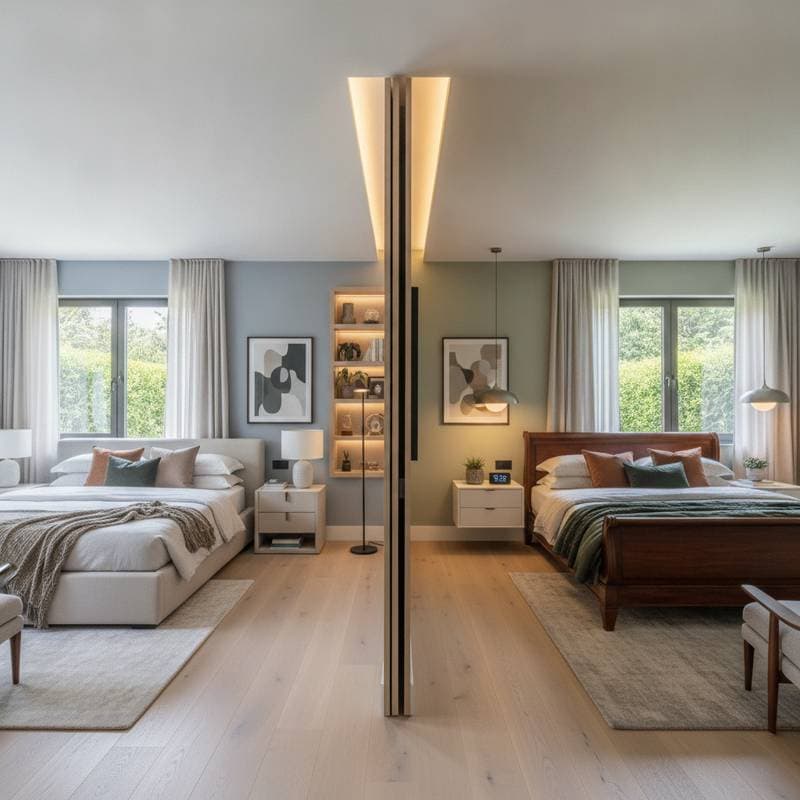
Understanding Dual-Zone Bedrooms
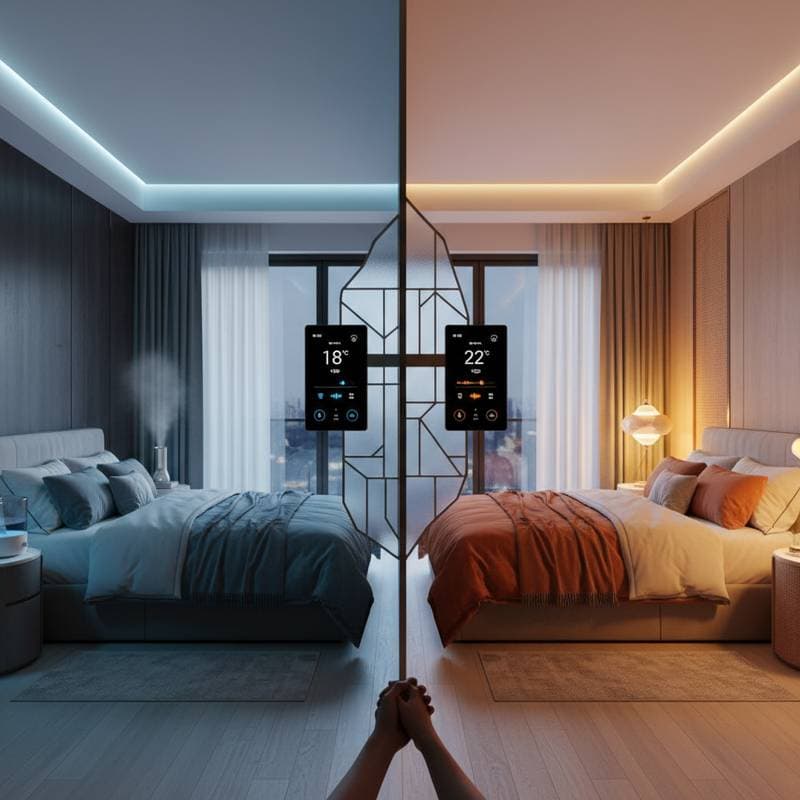
Couples often face sleep challenges due to differing needs for temperature, light, and quiet. Dual-zone bedrooms offer a practical solution by dividing a shared space into personalized areas. This design supports restful nights while keeping partners close.
The concept builds on the growing sleep divorce trend, where individuals sleep apart to improve quality. Instead of full separation, dual zones maintain intimacy through shared living areas. Partners benefit from tailored environments that reduce disturbances and stress.
Key advantages include better health outcomes from consistent sleep and stronger relationships from reduced conflicts. Implementation focuses on balance, ensuring privacy does not create emotional distance. With thoughtful planning, these bedrooms enhance daily life.
The Science Behind Better Sleep
Evaluating Your Bedroom Space
Start with a detailed assessment of your room's layout. Measure dimensions accurately and map outlets, vents, and windows. Consider natural light patterns and how they influence sleep routines.
Discuss preferences with your partner openly. Identify needs like early rising, reading in bed, or reliance on white noise. Options range from distinct zones to subtle changes like dual duvets.
This evaluation combines practical analysis with communication. It prevents mismatches in setup and ensures the design supports both function and connection. Address potential issues early for smoother results.
Creating a Project Plan
Outline your dual-zone project with clear steps, budget, and timeline. Categorize tasks to streamline the process and avoid overwhelm.
Essential Tools and Materials
- Use a measuring tape and level to define zones precisely.
- Choose a split-king mattress for independent firmness adjustments.
- Add bedding like gel-infused toppers for cooling or warming blankets.
- Install separate HVAC units, such as mini-splits with remote controls.
- Select adjustable LED lamps for personal illumination.
- Include acoustic panels or thick curtains to dampen sound.
Electrical and Safety Checks
Review your home's electrical load before adding devices like fans or heated pads. Install dedicated circuits if needed to prevent hazards. Consult professionals for vent changes or new wiring to meet safety standards.
Prioritize compliance with local codes. Test all setups for stability and airflow. This step safeguards the space and users.
Budget and Schedule
Costs vary from $200 for basic adapters to over $5,000 for full systems. Start with affordable items like zoned mattress covers, then upgrade. Allocate time for planning, installation, and testing phases.
Expect one to two weeks for completion, including adjustments. Track expenses to stay within limits. Phased approaches allow gradual improvements.
Step-by-Step Implementation
Follow a sequence to install features efficiently and test as you go.
Defining the Zones
Use rugs, screens, or furniture to separate areas without blocking circulation. Sliding panels provide privacy while allowing easy access. Maintain an open feel to encourage interaction.
Position beds to minimize disturbances, such as facing away from windows. Ensure pathways remain clear for nighttime movement.
Setting Up Climate Controls
Install a mini-split system with dual remotes for independent temperatures. Retrofit vents using smart dampers to direct air flow. Calibrate to hold settings like 68 degrees on one side and 74 on the other.
Monitor for even distribution and adjust humidity levels. This creates stable conditions tailored to each sleeper.
Tailoring Lighting
Mount adjustable lamps or recessed lights for targeted glow. Use dimmers to shift from 2700K blue tones for alertness to 3000K amber for winding down. Control via apps to sync with sleep schedules.
Avoid spillover by directing beams precisely. This supports circadian rhythms without mutual interference.
Handling Sound and Privacy
Apply foam panels or padded headboards to absorb vibrations. Add personal audio options like under-pillow speakers for relaxation sounds. Block external noises with earplugs or white noise machines.
Test during quiet hours to confirm effectiveness. These measures create peaceful havens within the shared room.
Customizing Bedding
Select a split mattress with varying foam depths, such as 4 inches soft on one side and 6 inches firm on the other. Use adjustable bases to raise heads up to 30 degrees independently.
Assign linens based on needs: breathable fabrics for heat-sensitive sleepers and insulating ones for those who run cold. Rotate and wash regularly for hygiene.
Testing and Refining the Setup
After installation, track performance over several nights. Record data on comfort, noise levels, and morning energy. Adjust thermostats, lights, or dampers based on feedback.
Inspect electrical connections and air balance. Aim for 40 to 60 percent humidity to prevent mold. Involve both partners in reviews to align changes.
Iterate until the system feels intuitive. This phase ensures reliability and satisfaction.
Long-Term Care and Relationship Benefits
Maintain the setup with monthly filter cleanings and quarterly mechanism checks. Review annually to incorporate new habits or technologies like smart sensors.
Foster open talks about evolving needs. This reinforces the design's purpose in supporting rest and bonds.
Over time, dual zones yield deeper sleep, reduced arguments, and renewed closeness. Couples invest in shared well-being, turning bedtime into a strength rather than a challenge.