Budget Range: Moderate, varying with selected materials and furnishings
Tools and Materials:
- Interior wall paint and primer
- High-quality brushes and rollers
- Painter's tape and drop cloths
- Measuring tape and level
- Hammer, nails, or wall anchors for artwork
- Soft lighting fixtures or dimmable bulbs
- Textiles including rugs, pillows, and throws featuring varied textures
Safety remains paramount. Ensure proper room ventilation during painting, use protective gloves with solvents, and adhere strictly to all product guidelines.
Step-by-Step Guide: Creating a Dopamine Bedroom for Restful Sleep
1. Select a Grounding Base Color
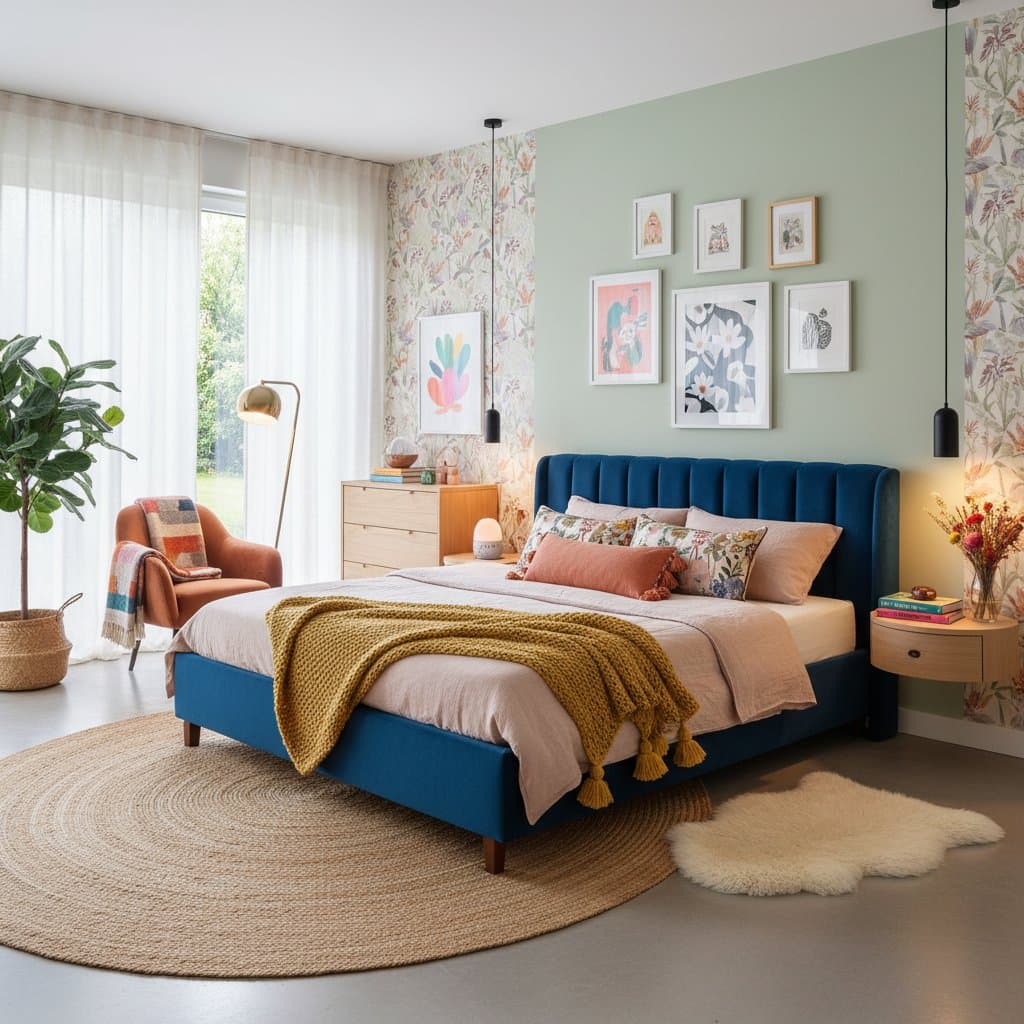
Begin by choosing a single grounding color that evokes calm, such as a muted clay, sage green, or soft blush pink. Introduce one or two accent colors that spark joy, applying them to textiles, artwork, or furniture while keeping walls and ceilings in the base shade. This method builds visual appeal without dominating the space.
2. Incorporate Layers of Texture for Sensory Comfort
3. Infuse Personality via Thoughtful Art and Accessories
Express individuality through artwork that uplifts, cherished keepsakes, or curated thrifted items. Distinguish intentional dopamine design from clutter by ensuring each element serves the room's harmony. If chaos emerges, eliminate select pieces to restore equilibrium.
4. Control Lighting with Precision
Effective lighting distinguishes a vibrant space from a restful one. Avoid stark overhead illumination; instead, opt for layered sources with warm white bulbs and dimmer switches. Blend a prominent lamp with subtle accents to support activities like reading, then dial down for pre-sleep wind-down.
5. Emphasize Comfort as the Core Element
True elegance lies in functionality. Select premium bedding, ergonomic pillows, and blackout curtains as needed to promote deep rest. Favor breathable fabrics like cotton or linen over heat-retaining synthetics, ensuring the design supports rejuvenation over mere appearance.
Addressing Frequent Design Challenges
Excessive Color: A chaotic feel signals an overextended palette; restrict to three colors, designating one as the primary base, another for contrast, and the third for minor highlights.
Inadequate Lighting: Harsh illumination undermines comfort; substitute bright white bulbs with warmer alternatives and diversify light sources for versatility.
Accumulating Clutter: The allure of dopamine decor risks hoarding; conduct periodic reviews to retain only calming contributions, storing away disruptive items.
Disproportionate Scale: Oversized patterns overwhelm compact rooms; scale prints to match the space's dimensions, preventing visual strain.
Engaging Professional Expertise
For tasks involving wallpaper application, electrical lighting modifications, or custom carpentry, consult a qualified specialist. Intricate wallpaper patterns demand precise alignment, and lighting installations require compliant wiring for safety. Professionals ensure flawless execution, particularly beyond basic painting and accessorizing, which most individuals manage with diligence.
Understanding the Psychological Foundations
Color psychology underpins these choices beyond mere aesthetics. Warm shades like coral, peach, and terracotta foster comfort and vitality, whereas cooler options such as sage or lavender soothe the nervous system. Dopamine responses arise from brain associations with pleasure and familiarity; apply this insight to select hues that anchor rather than agitate.
Essential Strategies for Optimal Results
- Apply paint samples to walls and observe them under different lights before final selection.
- Pair a single bold pattern with two understated ones to maintain cohesion.
- Ensure continuity by repeating a color or texture across elements, like echoing a pillow shade in artwork or flooring.
- Integrate natural components such as plants, wooden accents, and basketry to temper bold vibrancy.
- Position the bed as the central serene feature amid playful surroundings.
Evolving Your Space Over Time
After completing the dopamine bedroom, allow adaptation periods. Initial intensities may soften, or desires for added contrast could arise. Treat design as dynamic: refresh accessories seasonally, interchange artwork, or update fabrics to reflect shifting preferences.
Ultimately, a sleep-promoting sanctuary emerges from personal resonance, blending energizing visuals with ergonomic support. This tailored approach elevates trends into lasting havens of balance and renewal.