2025's Leading Trend: Japanese Soaking Tubs
Homeowners increasingly seek bathroom remodels that transform functional spaces into personal retreats. Japanese soaking tubs, known as ofuro, blend minimalist aesthetics with profound relaxation. These fixtures emphasize vertical immersion over horizontal sprawl, fostering a ritual of calm amid daily routines.
The design philosophy behind ofuro tubs prioritizes depth, allowing full body submersion in an upright position. This approach contrasts with conventional Western bathtubs, which often compromise on comfort due to their shallow profiles. By focusing on experiential luxury within a modest footprint, these tubs appeal to diverse bathroom sizes and lifestyles.
Reasons Homeowners Embrace Japanese Soaking Tubs
Comfort drives the popularity of Japanese soaking tubs. Users achieve complete immersion without awkward adjustments, as the depth envelops the torso and limbs simultaneously. This upright posture promotes muscle relaxation and improved circulation, mimicking professional spa treatments.
Project Realities: What Installation Entails
Installing a Japanese soaking tub demands careful consideration beyond aesthetic appeal. These vessels retain substantial water volumes, increasing weight loads significantly. Plumbing adaptations and enhanced ventilation address the elevated humidity levels produced during use.
Most projects classify as intermediate to advanced in complexity. Individuals with proficient carpentry and plumbing expertise may proceed independently, though structural reinforcements often necessitate professional input. Wooden subfloors, in particular, require joist strengthening to accommodate the filled tub's mass.
Budget for potential unforeseen adjustments, such as floor leveling or electrical updates for ventilation systems. Professional consultations early in the process mitigate risks and ensure compliance with building codes.
Essential Preparation and Planning Steps
Accurate measurements form the foundation of successful installation. Standard ofuro tubs feature diameters of 40 to 48 inches and depths of 28 to 32 inches. Verify spatial allowances for user entry, maintenance access, and surrounding fixtures.
Assemble necessary tools and materials in advance:
- Pipe wrench and adjustable pliers for secure connections
- Level and tape measure for precise alignment
- Circular saw and framing tools for structural modifications
- Silicone sealant and waterproof membrane to safeguard surfaces
- Compatible supply and drain fittings matched to existing plumbing
Incorporate a comprehensive waterproofing protocol during full remodels. Apply membranes to floors and lower walls to counter increased splashing inherent in deep designs. This preventive measure preserves structural integrity over time.
Choosing the Ideal Tub Material
Material selection influences both aesthetics and practicality in Japanese soaking tubs. Each option presents unique characteristics suited to specific user needs and environments.
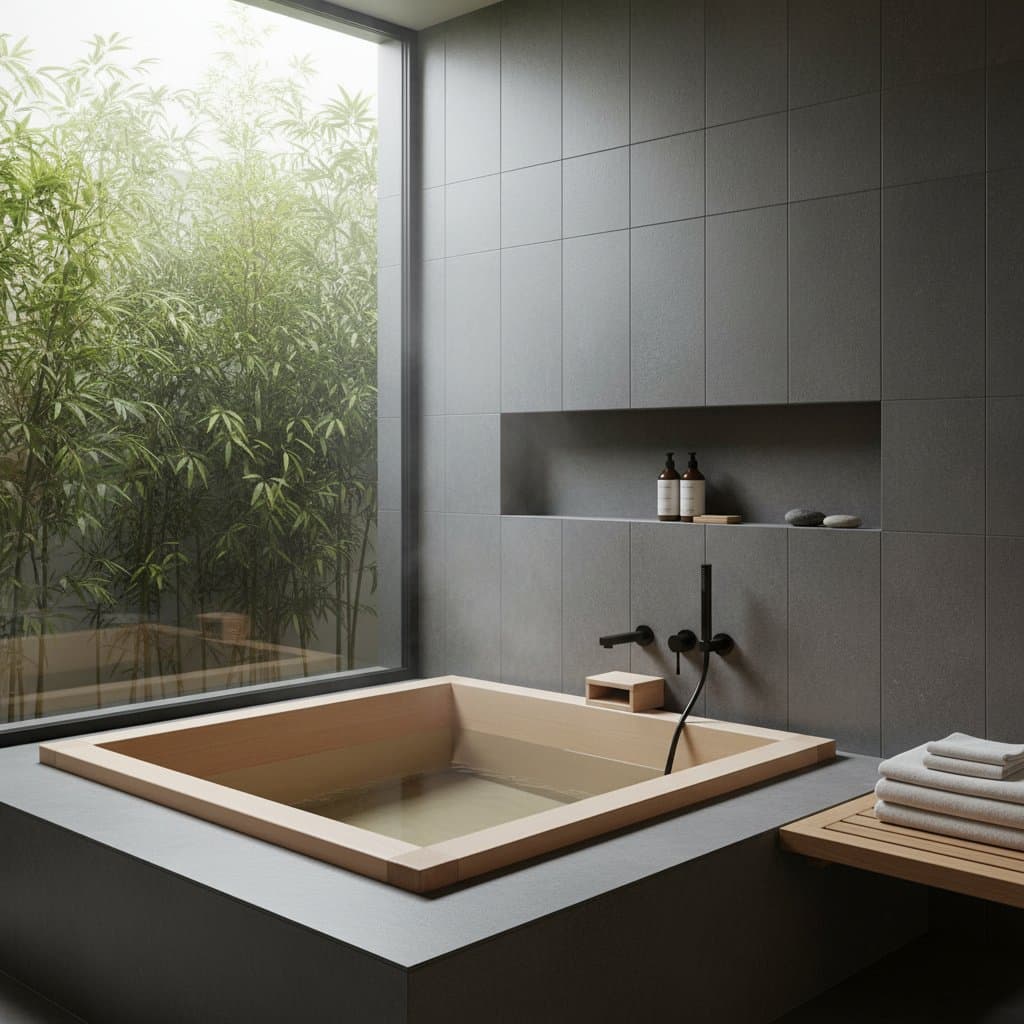
Hinoki wood offers traditional allure with its natural fragrance and antimicrobial properties. Regular oiling and gentle cleaning maintain its integrity, though it suits low-traffic settings to avoid wear.
Acrylic provides a lightweight, resilient alternative ideal for straightforward installations. Its smooth surface resists stains and simplifies daily upkeep, accommodating various contemporary finishes.
Stainless steel or copper delivers enduring sophistication and superior heat retention. These premium choices command higher costs but elevate bathroom designs as striking centerpieces.
Stone resin or cast stone imparts opulent texture and stability. Their substantial weight necessitates professional handling and floor reinforcements, best for permanent, high-end applications.
Align choices with household dynamics. Families with active routines benefit from durable acrylic or resin, while serene solo spaces thrive with aromatic wood.
Detailed Installation Guide
-
Assess and reinforce the floor structure. Evaluate load-bearing capacity first. A fully filled tub may exceed 800 pounds; install additional support beams or reinforce joists accordingly to distribute weight evenly.
-
Configure drain and plumbing systems. Ofuro tubs typically employ central bottom drains. Align with existing rough-ins or modify lines using corrosion-resistant pipes. Secure all joints with threaded fittings to prevent future leaks.
-
Construct a waterproof foundation. Build a stable, sloped base lined with impermeable membranes. Extend protection to adjacent walls if integrating within a shower enclosure, ensuring comprehensive moisture barriers.
-
Position and secure the tub. Lower the unit into place and verify levelness across multiple axes. Apply generous silicone caulk along the perimeter to seal against subsurface infiltration.
-
Attach supply lines and conduct tests. Connect hot and cold feeds with insulated piping. Partially fill and inspect for seepage; address issues before complete operation.
-
Complete finishes and ventilation setup. Affix vapor-tight trim and install a high-CFM exhaust fan positioned for optimal steam extraction. This setup maintains air quality and prevents condensation buildup.
Pitfalls to Sidestep During Installation
Underestimating water volume and resultant weight poses the primary risk. Insufficient floor support leads to deflection or catastrophic failure; consult engineers for precise calculations in older homes.
Inadequate waterproofing invites persistent moisture issues. Standalone ofuro designs expose rims to overflow; seal all proximal surfaces with marine-grade adhesives and test for watertightness.
Overlooking ventilation fosters mold proliferation from steamy soaks. Select fans with humidity sensors and duct them directly outdoors to sustain a dry, healthy environment.
Indicators for Professional Assistance
Engage licensed contractors for tasks involving structural alterations or plumbing rerouting. Cutting into load-bearing elements or installing new drain lines requires certified expertise to uphold safety standards.
Plumbers verify water heater adequacy against tub capacity, typically 100 to 150 gallons. Upgrades to tankless systems ensure consistent hot water delivery, avoiding mid-soak interruptions.
Professionals also navigate permit requirements and code adherence, streamlining the process for seamless results.
Enhancing the Spa Atmosphere Through Design
Minimalism defines the aesthetic surrounding Japanese soaking tubs. Curate elements that amplify tranquility without overwhelming the space.
Incorporate natural textures such as bamboo accents, slate flooring, and organic fabrics for grounded serenity.
Layer ambient illumination via recessed fixtures or dimmable LEDs to evoke soothing twilight.
Position utilitarian accessories like teak benches or floating shelves for essentials, maintaining visual clarity.
Attach a versatile handheld shower for pre-soak rinses and post-bath cleanup, integrating functionality with form.
Sustaining Long-Term Performance
Consistent care preserves the tub's condition and extends its lifespan. After each session, rinse thoroughly and pat dry to minimize residue accumulation.
For wooden variants, replenish with food-grade oils quarterly to nourish the surface and avert splits.
Inspect seals biannually, reapplying caulk where erosion appears to block potential leaks.
Operate ventilation post-use to dissipate humidity, complemented by periodic deep cleans using mild, non-abrasive solutions.
Integrating Serenity into Daily Life
Japanese soaking tubs redefine bathroom utility as restorative havens. Their depth-centric design delivers profound relaxation within accessible dimensions, aligning with wellness-oriented living.
By methodically planning installation and embracing minimalist enhancements, homeowners cultivate enduring tranquility. This investment yields daily moments of renewal, harmonizing tradition with contemporary comfort.