Why Regenerative Lawns Are Taking Over Backyards
Many homeowners look at their patchy, thirsty lawn and question whether constant mowing, watering, and fertilizing deliver real value. The traditional turf that once symbolized suburban success now often feels like an endless chore. People seek landscapes that align with natural systems rather than oppose them.
Regenerative lawns address this shift. These living systems improve soil, store carbon, and support pollinators without draining resources. The approach replaces chemical dependence with biological processes that sustain growth over time.
Defining a Regenerative Lawn
A regenerative lawn prioritizes function over uniform appearance. The focus rests on building soil health until the yard sustains itself. Synthetic fertilizers and frequent irrigation give way to natural nutrient cyclesplants and soil organisms.
Limitations of Traditional Turf
Traditional turfgrass develops shallow roots that require regular irrigation and fertilizer. Additional watering keeps roots near the surface and increases long-term dependence. Gas mowers add emissions while weekly maintenance consumes weekends and budgets.
Many lawns appear green yet rest on compacted, lifeless soil. Chemical treatments mask underlying depletion instead of correcting it. Regenerative methods rebuild soil biology so the yard eventually supports itself.
Steps to Establish a Regenerative Lawn
Assess your goals first. Determine whether the space must accommodate play or serve mainly as low-maintenance habitat. The intended use shapes plant selection.
Required Tools and Materials
- Garden fork or aerator
- Rake
- Broadcast spreader
- Compost or screened topsoil
- Regional seed mix of grasses and clover
- Light straw mulch
- Watering equipment
Establishment Process
- Test soil compaction and organic content with a core sample.
- Loosen the surface and spread one to two inches of compost.
- Distribute seed evenly and rake lightly for soil contact.
- Apply thin mulch and keep the surface moist during germination.
- Mow when growth reaches four inches, cutting back to three inches.
- Apply compost tea or organic amendments seasonally.
Overwatering and impatience cause most early setbacks. Allow several months for visible improvement while roots and microbes develop. Light mulch reduces seed loss to birds.
Carbon Storage Benefits
Grass blades pull carbon dioxide from the air and direct sugars to roots. Soil microbes convert these sugars into stable humus. Traditional practices such as bagging clippings interrupt this cycle.
Regenerative lawns maintain continuous cover and deeper roots. Small yards managed this way can store several times more organic carbon than chemically treated turf. Better water retention and reduced runoff follow directly.
When Professional Help Helps
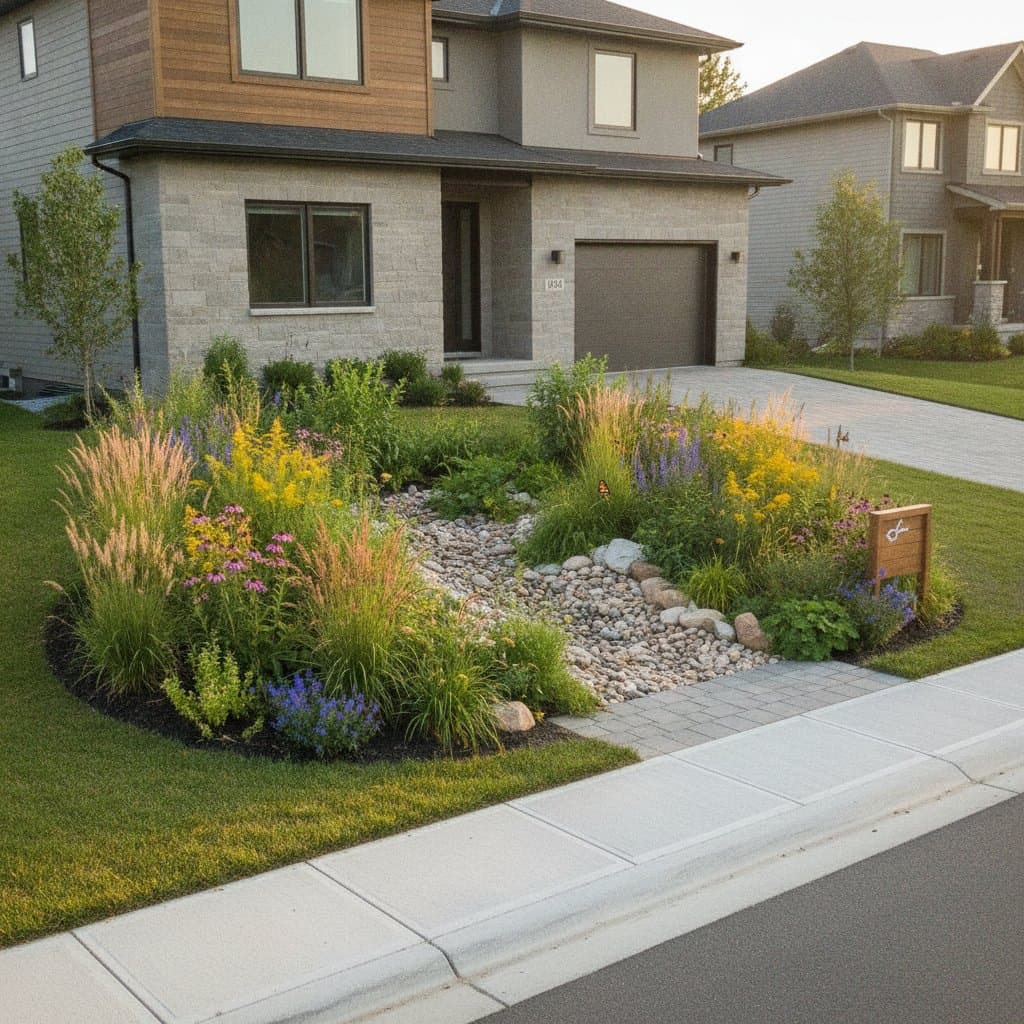
Major grading, irrigation changes, or sloped sites benefit from guidance by a landscaper experienced in regenerative techniques. Soil tests and local seed recommendations prevent costly errors. Drainage features such as swales protect nearby waterways.
Long-Term Costs and Care
Initial expenses for seed, compost, and amendments exceed those of conventional installation. Ongoing costs drop because fertilizer, water, and mowing decrease sharply after establishment. Annual top-dressing with compost maintains soil life.
Natural Appearance and Design
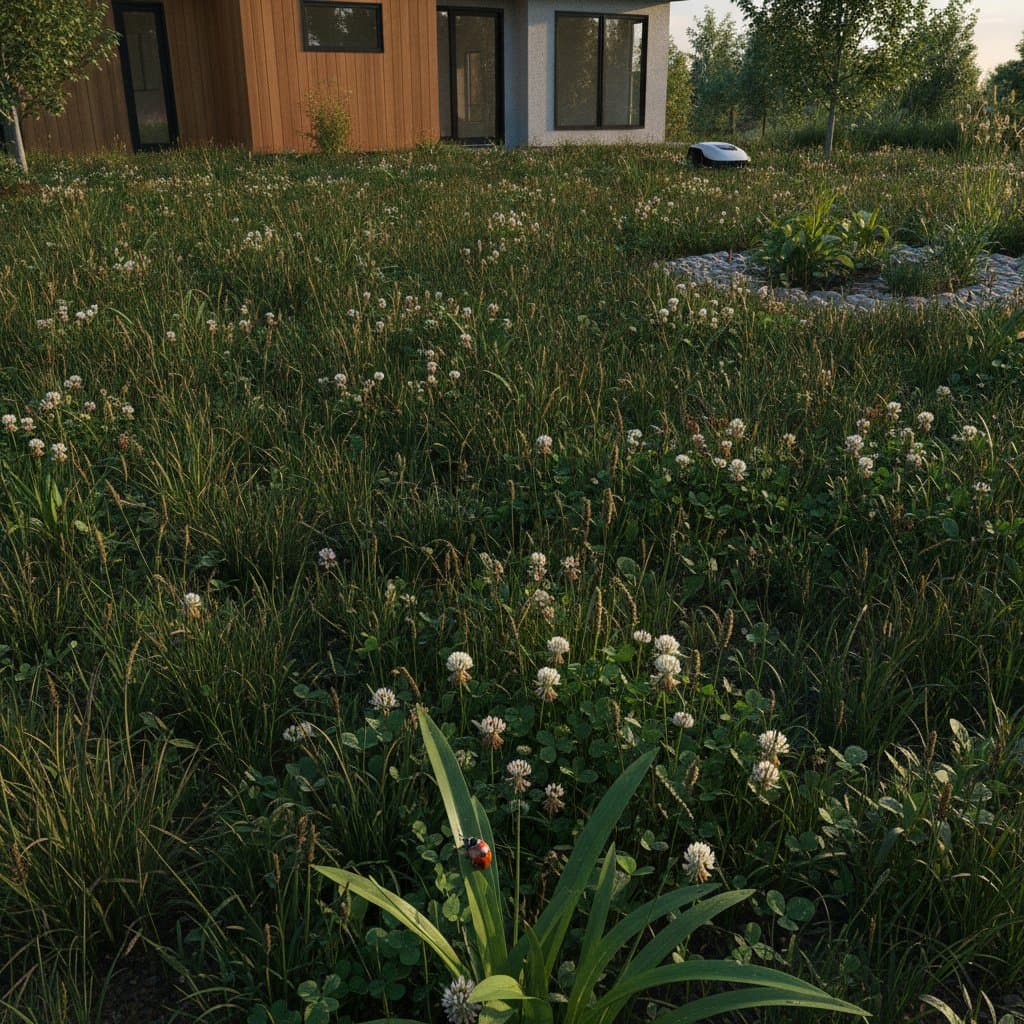
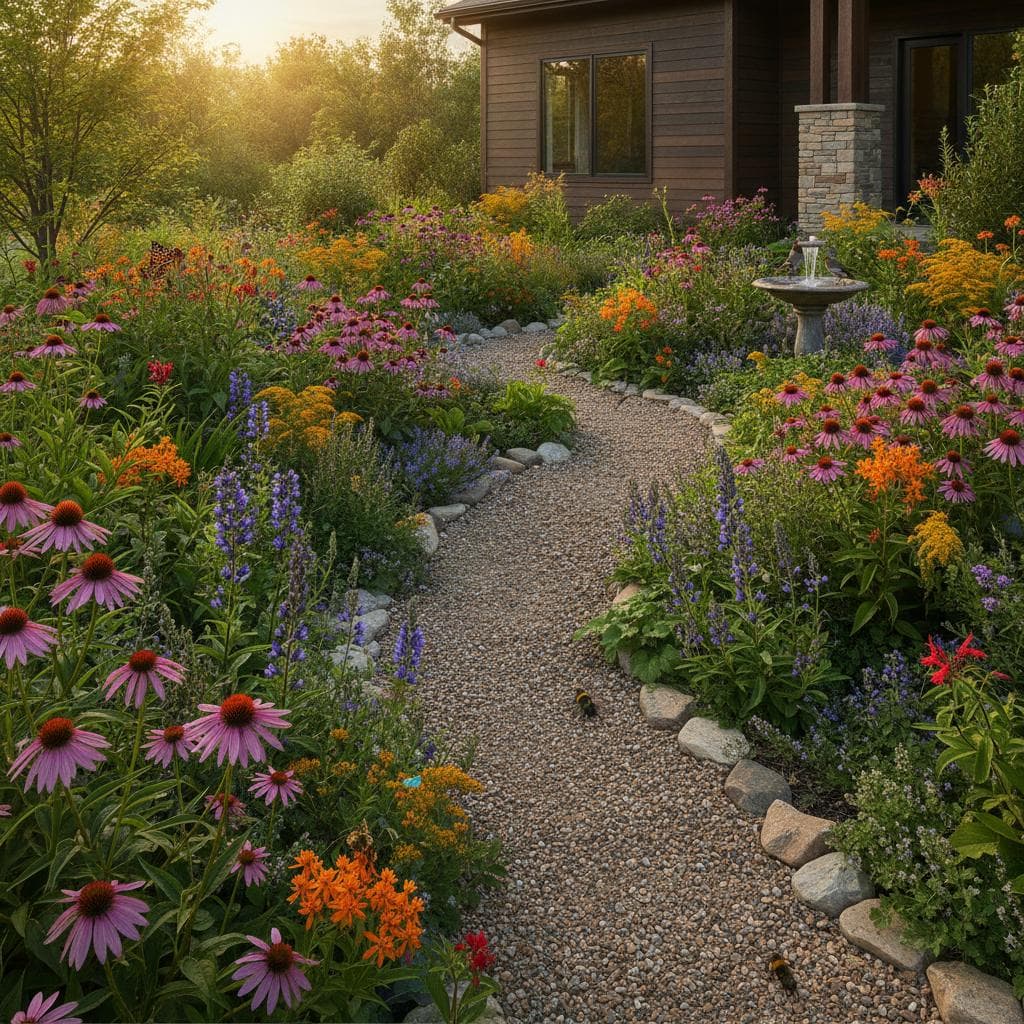
Regenerative lawns show varied color and texture rather than uniform green. Clover flowers and low-growing species add seasonal interest while attracting pollinators. Clean borders or paths give the space a deliberate frame without restricting growth.
Practical Success Strategies
- Begin with one section of the yard to observe results.
- Select native species adapted to local conditions.
- Keep mower blades sharp and leave clippings in place.
- Add compost each year and adjust based on observed growth patterns.
Extending the Approach
Apply the same soil-building principles to garden beds by using native shrubs and mulch layers. Simple water-capture features such as rain barrels complement the lawn and reduce irrigation needs. The yard becomes a self-supporting landscape that improves with time.