Pollinator Lawns Replace Grass with Wildflower Charm
Homeowners often question whether a front lawn must remain a rectangle of thirsty, closely clipped grass. A pollinator lawn presents a practical alternative: a living mix of grasses, low-growing flowers, and native plants that supplies bees, butterflies, and other beneficial insects with food. The result can appear soft, colorful, and intentional rather than neglected.
The transition appeals to homeowners seeking reduced mowing and greater ecological value. However, a pollinator lawn requires deliberate planning. Success depends on selecting appropriate plants, preparing the soil correctly, and establishing a maintenance routine suited to your household.
Understanding Pollinator Lawn Components
A pollinator lawn integrates plants that tolerate foot traffic with species that provide nectar and pollen. In many regions, this means retaining some lawn grass while introducing low-growing clover, self-heal, violets, or native ground covers. In less frequently used areas, taller native wildflowers and ornamental grasses can be incorporated.
Designing Structure Before Planting
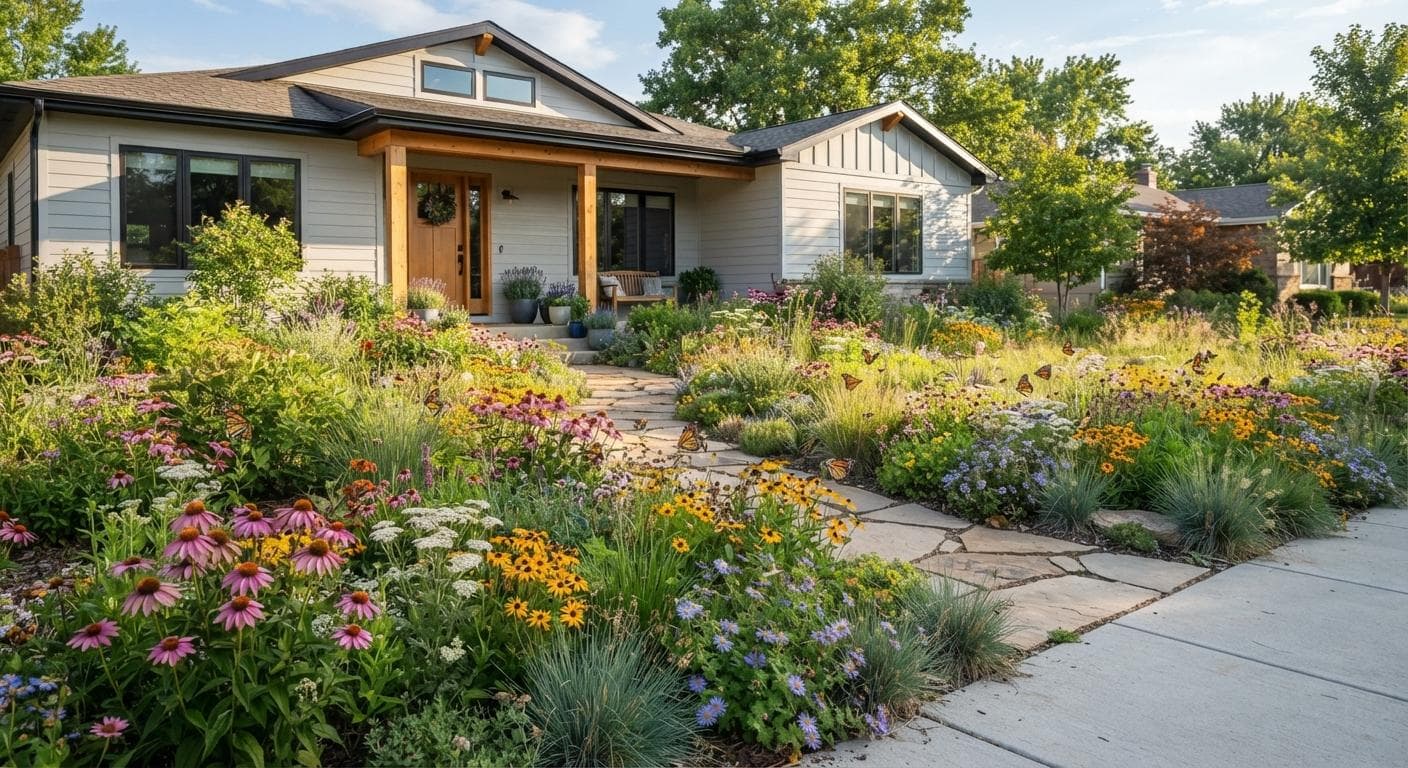
Wildflower areas benefit from clear organization. Without defined edges or repeated plant groupings, a front yard may appear neglected even when supporting pollinators effectively. A tidy border, defined path, and thoughtful plant repetition communicate intentional design.
Begin with these structural elements:
- Maintain a mown strip near sidewalks or driveways for a crisp edge
- Position taller flowers toward the back or in central islands where they will not obstruct sightlines
- Repeat small groups of plants to create visual rhythm rather than scattering individual specimens
- Preserve clear routes to the front door, mailbox, and utility areas
- Select colors that complement your home's exterior, such as white blooms against dark siding or purple flowers beside warm brick
Height considerations matter particularly in front gardens. Verify mature plant sizes before purchasing, and position tall stems away from corners where cars and pedestrians require clear visibility. For a softer appearance with reduced visual height, distribute low-growing flowering plants throughout the main lawn area and reserve taller blooms for beds near the house.
Selecting Plants for Specific Conditions
Sunny lawns can support cheerful combinations of low flowers, while shady areas may require violets or other shade-tolerant ground covers. Soil moisture levels also influence plant selection. Species suited to dry, sandy conditions may struggle in damp clay soil regardless of their visual appeal.
Before purchasing seed or plugs, verify that plants are appropriate for your region and growing conditions. A seed mix labeled as "wildflower" is not automatically suitable for every garden. Some mixes contain species that do not integrate well with local ecosystems, and certain bags include plants that will not thrive in specific soil types.
For low-growing, usable lawn areas, select plants that tolerate occasional foot traffic and mowing. Clover can create a soft green surface with small flowers, though it may attract bees, so consider placement relative to barefoot play areas. For taller pollinator zones, choose species that bloom at different times throughout the growing season to maintain continuous food availability.
Establishing the Lawn Successfully
Preparation determines project outcomes. Scattering seed over existing grass typically produces disappointing results because established turf competes for light, water, and nutrients. Better results come from reducing competition first using methods appropriate to your property and local regulations.
For small areas, remove turf by hand or cover it to weaken the grass, then loosen the soil lightly. Avoid aggressive soil enrichment unless chosen plants specifically require it. Many native wildflowers prefer lean soil, and excessive fertilizer can promote vigorous weed growth.
Follow seed instructions precisely. Some seeds require light for germination, so burying them deeply prevents successful establishment. Water gently while seedlings develop, and expect the area to appear sparse initially. Plugs cost more than seed but provide faster visual impact and allow precise plant placement. A practical approach involves using plugs along the front edge while seeding the larger interior area.
If your lawn is heavily compacted, slopes toward drainage areas, or sits under large trees, consult professionals before making changes. Garden professionals can help select appropriate plants and prevent erosion or drainage issues. For most small, level spaces, careful preparation and patience suffice.
Incorporating Maintenance into Design
Pollinator lawns require ongoing care, though the routine differs from conventional turf maintenance. During establishment, water seedlings as needed and remove invasive weeds before they set seed. Once plants are established, maintenance depends on the plant mix, local rainfall, and desired appearance.
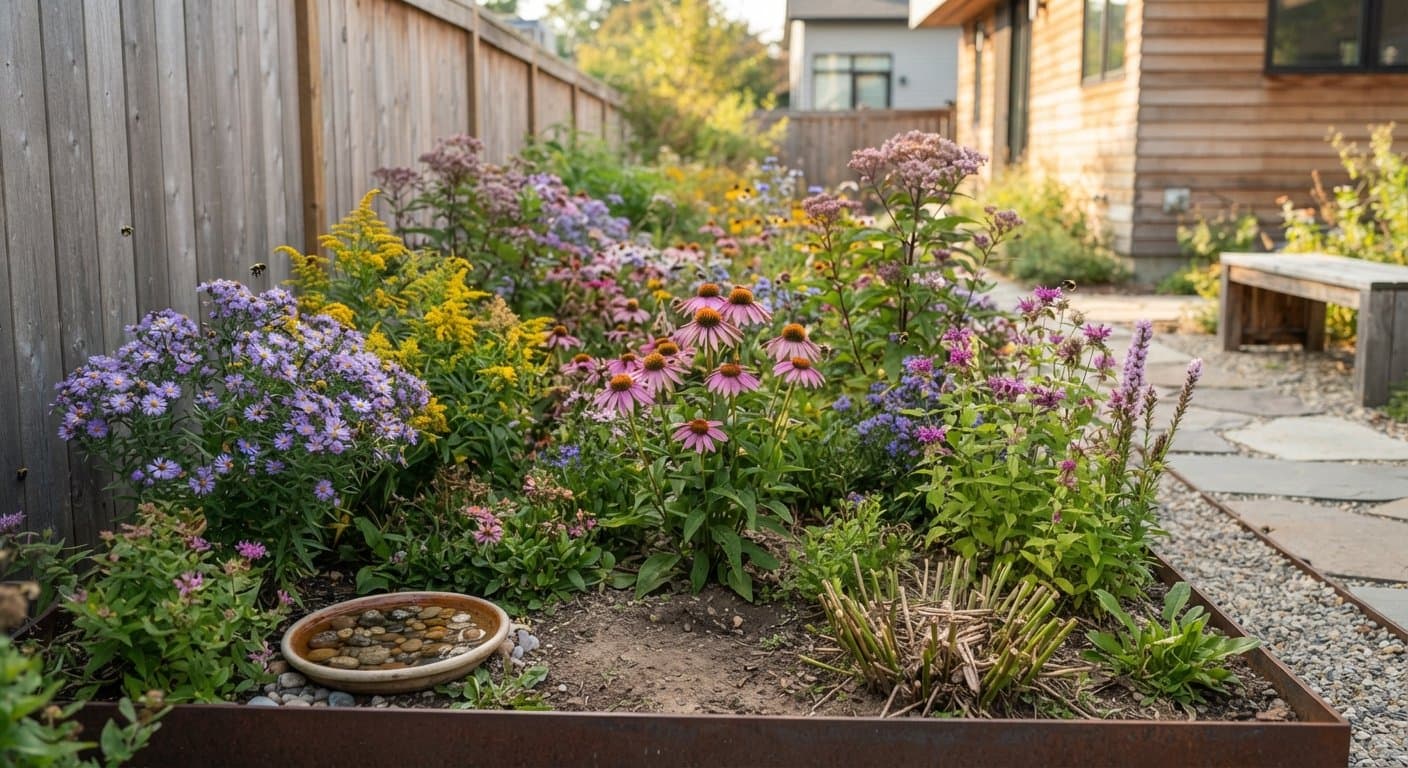
Some flowering lawns can be cut periodically to maintain low, neat growth. Others require seasonal trimming after flowers finish blooming and seeds have matured. Leave cut stems or seed heads in place when practical, as they provide food and shelter. For a sharper appearance, gather clippings after they dry and keep paths and edges trimmed.
A small explanatory sign can help neighbors understand the garden's purpose, but the planting itself should communicate the design intent. A mown border and orderly paths create significant visual improvement. The objective is a landscape that functions for your household while supporting local wildlife.
Adapting the Approach to Your Property
A pollinator lawn can range from colorful and loose to restrained and meadow-like. Begin with one sunny patch, observe what thrives, then expand as you understand maintenance requirements and seasonal changes. Renters can experiment with movable planters or small container groupings of pollinator-friendly plants, while homeowners might convert the full lawn in stages.
Before planting, photograph the yard, identify sunny and shady areas, and determine which sections need to remain walkable. Then select several regionally appropriate plants and allow them space to establish. Your front garden does not need to match any particular style to be effective. Thoughtful structure, appropriate plant selection, and openness to flowering plants can create a space that feels both maintained and vibrant.