Color Blocking: Dopamine Decor for Happier Bedrooms
Imagine sunlight streaming through linen curtains and casting patterns across a wall painted in soft coral and ocean teal. The atmosphere lightens immediately, and your mood elevates before the morning coffee finishes brewing. This effect stems from dopamine decor, a design method centered on color, comfort, and joy. In bedrooms, where personal emotions intersect with the physical space, color blocking serves as a potent method to invigorate mornings and promote restful evenings.
Color blocking extends beyond mere bold patterns. It involves crafting emotional responses within a space through deliberate contrasts and harmonies. The approach applies solid, vibrant colors in defined sections that interact dynamically, fostering balance and visual flow. With a thoughtful color selection, color blocking infuses happiness into every entry to the room.
The Science of Color and Emotion
Selecting the Desired Mood
Determine the emotional tone for the bedroom before selecting paint samples. Consider whether the goal involves serene relaxation or energizing mornings, cozy enclosure or radiant openness. Each desired feeling corresponds to a targeted color range.
- For relaxation, select muted blues, dusty greens, or soft lavenders. These shades quiet the thoughts and support improved sleep quality.
- For energy, choose coral, sunflower yellow, or terracotta. Such tones infuse warmth and lively vibrancy.
- For creativity, explore teal, magenta, or chartreuse. These vivid options spark innovative thinking and concentration.
- For balance, combine complementary shades such as peach and sage or navy and blush. This pairing yields a cohesive, contemporary aesthetic.
With the emotional palette established, proceed to distribute these colors throughout the space.
Mapping the Color Blocks
Color blocking relies on defined structure for impact. Assign each color segment a distinct boundary and functional role, treating the bedroom as a divided canvas of moods and purposes.
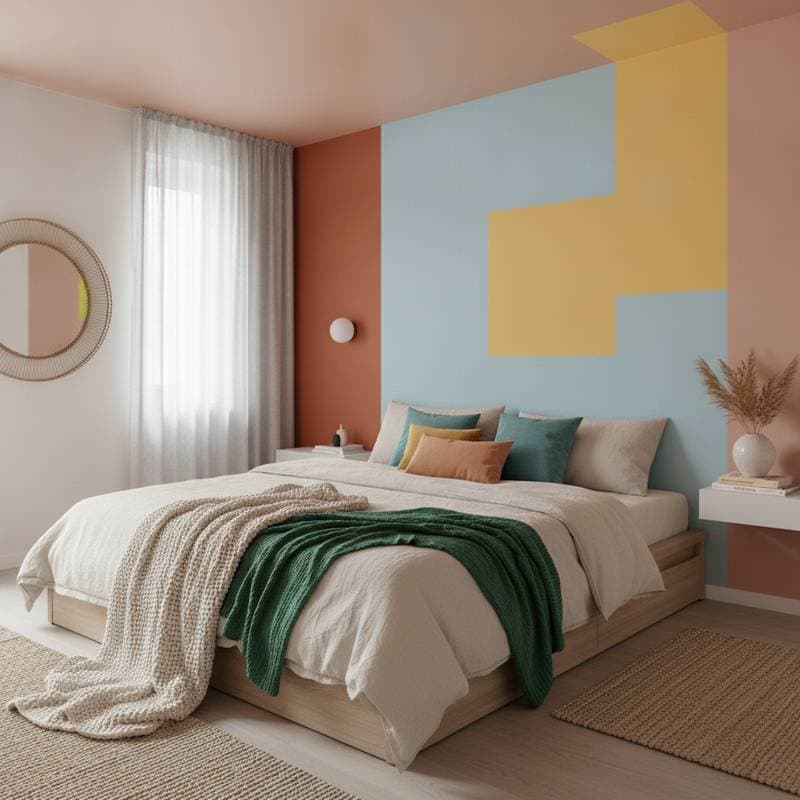
- Walls serve as primary anchors. Designate one or two walls as focal points by applying a bold color, while maintaining neutrality on adjacent surfaces for rhythmic contrast. For instance, a dusty rose accent on the headboard wall alongside creamy ivory on flanking walls creates warmth and openness.
- Ceilings offer unexpected elements. A pale mint ceiling over white walls mimics a expansive sky, delivering freshness.
- Furniture integrates as accents. Transform dressers, nightstands, or bed frames by painting drawer fronts in varied shades or covering a headboard in contrasting upholstery.
- Textiles provide gentle transitions. Use bedding, curtains, and rugs to connect color blocks seamlessly, ensuring cohesion and warmth over stark division.
Maintain equilibrium with three or four primary colors, incorporating one neutral base to stabilize the composition.
Natural Light and Color Harmony
Colors shift based on illumination levels. In well-lit rooms, cool tones gain lightness and intensity. In subdued areas, warm shades deepen for added coziness. Evaluate sunlight patterns in the bedroom prior to finalizing selections. Morning rays enhance yellows to a radiant glow, whereas afternoon shadows intensify blues.
For spaces with limited natural light, incorporate reflective elements to distribute brightness. Position a mirror or metallic lamp base to magnify color blocks. Introduce natural textures like light wood or woven materials to temper bold edges softly.
Eco-Friendly Paints and Materials
Effective dopamine decor benefits both personal well-being and environmental health. Opt for paints with low or zero volatile organic compounds to minimize fumes and improve air quality. Contemporary eco-brands provide high-pigment options that match conventional paints in saturation and longevity.
Select textiles from organic cotton, linen, or bamboo, colored with plant-derived dyes. These choices align with dopamine decor principles by linking the interior to sustainable practices. Apply plant-based finishes to furniture for additional eco-impact.
Creative Techniques to Try
Color blocking encourages varied applications, from geometric precision to organic forms or subtle minimalism. Experiment with these methods to suit individual preferences.
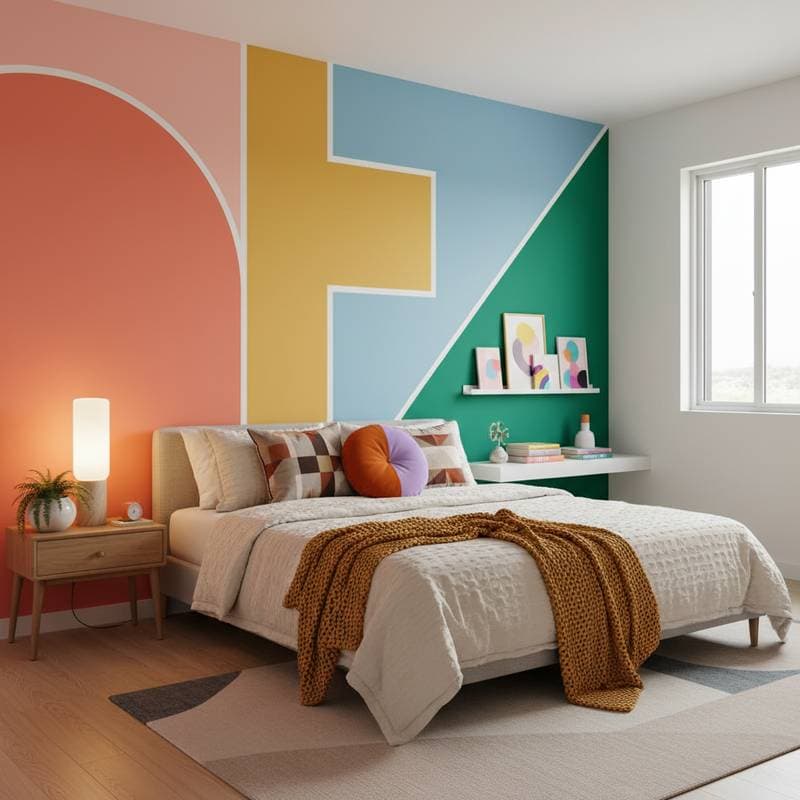
- Diagonal divisions: Apply a diagonal stripe across a wall to separate two contrasting colors. This introduces movement without excess complexity.
- Half walls: Color the bottom portion boldly and the top in white or cream. The technique visually extends wall height and adds intrigue.
- Framed sections: Outline rectangular or circular blocks behind furnishings to function as artistic backdrops or frames.
- Ceiling fades: Transition two colors in a gradient from wall to ceiling, evoking a serene, ethereal quality.
These variations alter light and color interactions, reshaping the bedroom into an evocative setting.
Pairing Patterns and Solids
Concerns about pattern conflicts in color blocking arise often. Limit patterns to subtle echoes of dominant hues for harmony. A pillow with stripes in the wall's golden shade unifies elements. Curtains featuring florals that match an accent color ease geometric sharpness.
For streamlined designs, minimize patterns and emphasize texture. Incorporate woven throws, textured rugs, or matte ceramics to build dimension without interrupting color continuity.
The Psychology of Personal Expression
Color blocking transcends aesthetics to embody self-reflection and emotional alignment. Bedrooms capture private identities, and selected colors can evoke cherished locations, recollections, or sentiments.
An individual favoring ocean blues and sandy neutrals might draw from seaside tranquility. Enthusiasts of citrus tones seek perpetual brightness. When surroundings mirror internal states, recharging and contentment follow naturally.
Combining Function with Feeling
A dopamine decor bedroom balances inspiration with practicality, using color to enhance routines.
- Apply a stimulating shade like coral to the wall behind a desk, sustaining attention for productive tasks.
- Position softer neutrals adjacent to the bed to facilitate pre-sleep unwinding.
- Install bright accents near windows to guide views toward daylight and foster morning vigor.
Lighting influences color perception significantly. Warm bulbs accentuate reds and oranges, while cool sources amplify blues and greens. Dimmable fixtures enable mood-adaptive illumination across the day.
Small Budget, Big Mood Boost
Achieve dopamine decor transformations without extensive overhauls. Targeted modifications yield substantial emotional uplift.
- Paint a single wall as a focal statement to redefine the room's character.
- Update bedding with a duvet in a key block color for quick refreshment.
- Introduce art or custom panels, such as painted canvases mirroring the palette.
- Revamp hardware by coating drawer pulls or lamp bases in matching shades.
These adjustments capture the essence of joyful renewal central to dopamine decor.
Implementing Your Vision
Gather inspirations by clipping magazine images, curating digital palettes, or capturing energizing scenes. Identify recurring colors in these sources as personal joy indicators.
Apply test samples to walls and monitor shifts across lighting conditions. Rely on intuitive responses; a color that consistently elicits smiles merits inclusion.
Upon completion, the bedroom evolves beyond mere repose into a dynamic positivity source, offering morning encouragement and evening solace. Color blocking's accessibility suits all skill levels, while its interpretive nature ensures uniqueness.
Integrating sustainable materials, deliberate selections, and inventive execution, dopamine decor elevates standard spaces to inspiring realms. Joy emerges from purposeful design rather than extravagance, affirming that a simple vision and bold application suffice for vibrant living.