Resin Injection: Discreet and Efficient Crack Repair Techniques
A crack appearing on a basement wall or garage floor often evokes concern for homeowners. Many assume such issues demand costly structural overhauls or disruptive demolition. In reality, not all cracks indicate severe problems, and resin injection offers a subtle solution that addresses the issue with minimal disturbance. This method provides speed, durability, and near-invisibility when executed properly.
Understanding Homeowner Hesitation with Crack Repairs
Cracks alarm individuals because they hint at underlying structural concerns. Homeowners frequently delay action until water infiltration occurs or the crack expands. Some worry about unnecessary upgrades from contractors. The primary barrier for those attempting repairs themselves remains uncertainty: whether the crack is merely aesthetic, load-bearing, or tied to dampness, and which approach ensures permanence.
Overview of the Resin Injection Process
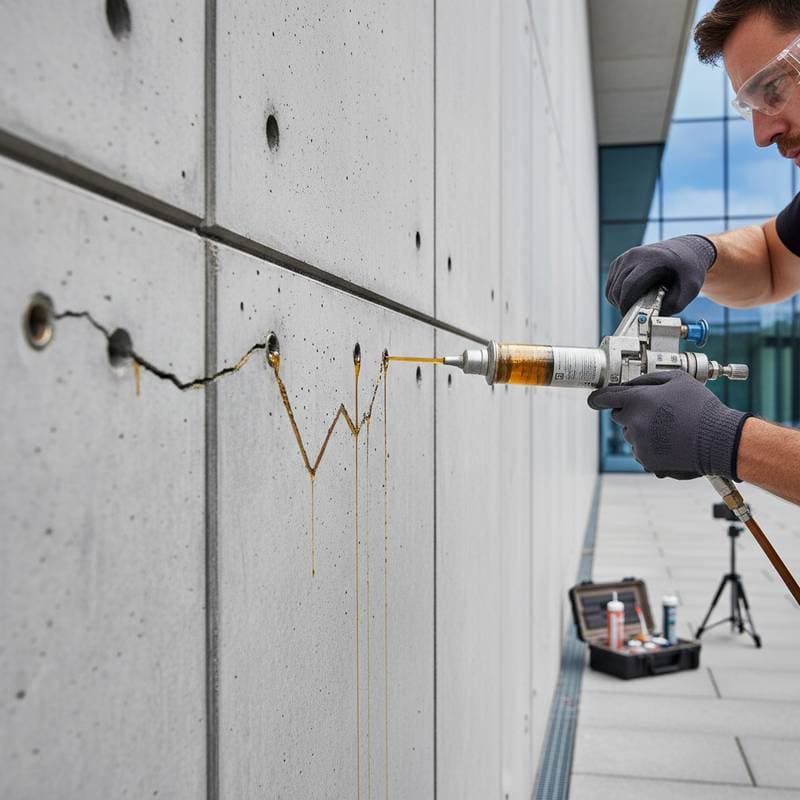
Resin injection employs low-viscosity materials, such as polyurethane or epoxy, delivered into cracks under regulated pressure. The substance permeates the entire depth, filling unseen gaps. Upon curing, it solidifies into a waterproof seal with strength surpassing that of the surrounding concrete.
Epoxy variants suit applications requiring structural reinforcement, like foundations, beams, or load-bearing walls. Polyurethane options provide flexibility for sealing purposes or minor fissures in non-critical areas, such as basement partitions. Selecting the appropriate resin type proves essential for optimal results.
Essential Preparation Steps Before Injection
Evaluate the crack meticulously prior to proceeding. Check for active shifting, damp marks, or efflorescence, the white crystalline deposits signaling moisture migration. Resin will not endure if movement persists, indicating a need for prior stabilization of foundational problems.
Clear the crack using a wire brush followed by vacuuming to eliminate all particles, dust, or fragments. Such residues hinder adhesion. For active leaks, apply a water-reactive polyurethane that expands upon contact to form an initial barrier.
Position injection ports along the crack's path. These fittings, spaced roughly six inches apart, facilitate uniform resin entry. Adjust spacing for broader fissures to ensure comprehensive coverage.
Required Tools and Materials
Assemble these items for typical wall or slab repairs:
- Epoxy or polyurethane resin suited to the repair type
- Injection ports equipped with base flanges
- Epoxy paste for surface sealing
- Dual-cartridge dispenser or pressure pump
- Wire brush, vacuum cleaner, and protective equipment
- Painter's tape to protect adjacent surfaces
Prioritize safety: resins adhere permanently once set. Don protective gloves, eyewear, and disposable attire. Ensure adequate ventilation during application.
Detailed Step-by-Step Injection Procedure
-
Prepare the Surface
Remove paint, soil, or existing sealants from the crack and nearby areas. This allows the sealer to bond effectively.
-
Position Injection Ports
Affix each port's base with epoxy paste directly over the crack. Secure firmly and orient openings for straightforward access.
-
Apply Surface Sealant
Spread epoxy paste along the crack between ports. This barrier directs resin inward, preventing surface escape. Permit full curing per product guidelines.
-
Perform the Injection
Begin at the lowest point for vertical cracks or one endpoint for horizontal ones. Introduce resin gradually until it emerges from the adjacent port. Seal the initial port and proceed sequentially until completion.
-
Facilitate Curing
Allow complete hardening before extracting ports or sealant. Afterward, sand or paint the site for seamless integration.
Troubleshooting Common Injection Challenges
Surface leakage often stems from inadequate sealant thickness or incomplete curing. Reinforce with extra paste around the breach and wait before continuing.
Resistance to flow may indicate blockages or excessive resin viscosity. Gently warm the material or adjust pressure incrementally. Avoid excessive force, which risks enlarging the crack.
If water expels the resin, opt for hydrophobic polyurethane formulated for submerged conditions. It expands upon wetting, creating a robust seal.
Indicators for Professional Intervention
Seek a structural engineer or certified contractor for foundation shifts, extensive cracks spanning walls, or evident misalignment. Resin injection excels on stationary fissures but cannot remedy progressive instability or ground-related causes.
Experts utilize advanced pumps for consistent pressure and distribution. For expansive projects or critical elements like beams, professional involvement justifies the expense through assured reliability.
Expert Recommendations for Optimal Outcomes
Test resin on a minor scale first, as curing rates vary by product.
Store cartridges in stable conditions, since temperature influences flow and setting time.
Mark ports sequentially to track progress amid injection.
Adhere strictly to curing durations, as full chemical bonding determines durability.
Sustaining Repair Effectiveness Over Time
Though resin injection appears technical, determined homeowners with proper equipment can manage modest cracks successfully. Thorough preparation, precise execution, and resin selection form the foundation of success.
Executed well, this technique revives concrete integrity and aesthetics absent replacement hassles. Its discretion, resilience, and efficiency render it a rewarding option for property upkeep.