Hidden Compartments: Declutter Smarter in Modern Homes
Homeowners frequently encounter the challenge of limited space. Clutter accumulates rapidly, overwhelming drawers and shelves regardless of home size. Traditional storage options, such as boxes and cabinets, reach capacity quickly, while extra furniture reduces floor area and creates a sense of confinement. Hidden compartments address these issues effectively. When constructed properly, they offer secure, efficient storage that integrates seamlessly into contemporary interiors.
Why Hidden Storage Outperforms Additional Furniture
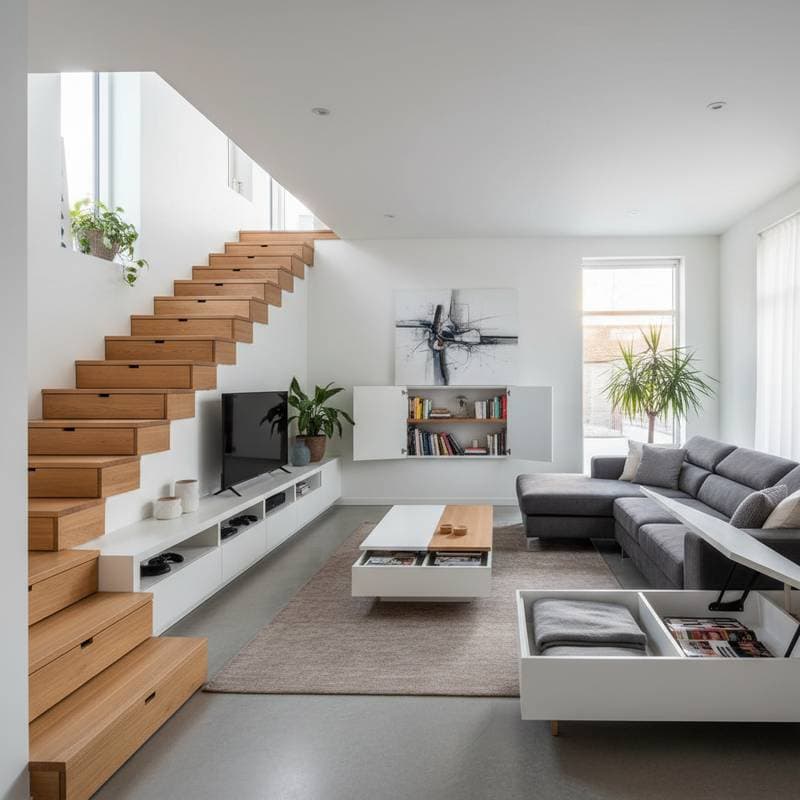
A common error in decluttering efforts involves purchasing more storage units. Additional shelves and cabinets consume precious floor space and contribute to a crowded atmosphere. Hidden compartments utilize existing unused areas, such as spaces within walls, under staircases, or below furniture. This approach enhances organization without introducing unnecessary volume.
Assess Your Space and Capabilities Before Starting
Evaluate your home layout and personal skills prior to installing hidden compartments. Certain projects involve simple furniture modifications, whereas others demand drywall alterations or electrical adjustments. Professionals should handle intricate tasks if carpentry or wiring expertise is lacking.
Essential tools for basic projects include:
- Stud finder
- Tape measure
- Circular saw or jigsaw
- Drill and driver set
- Level and square
- Paint and touch-up materials
Initiate with straightforward options, such as a drawer beneath a bed or a coffee table with a lift-top. Confidence builds through these experiences, allowing progression to advanced installations like wall panels or stair compartments.
Effective Hidden Compartment Concepts
1. Under-Stair Storage
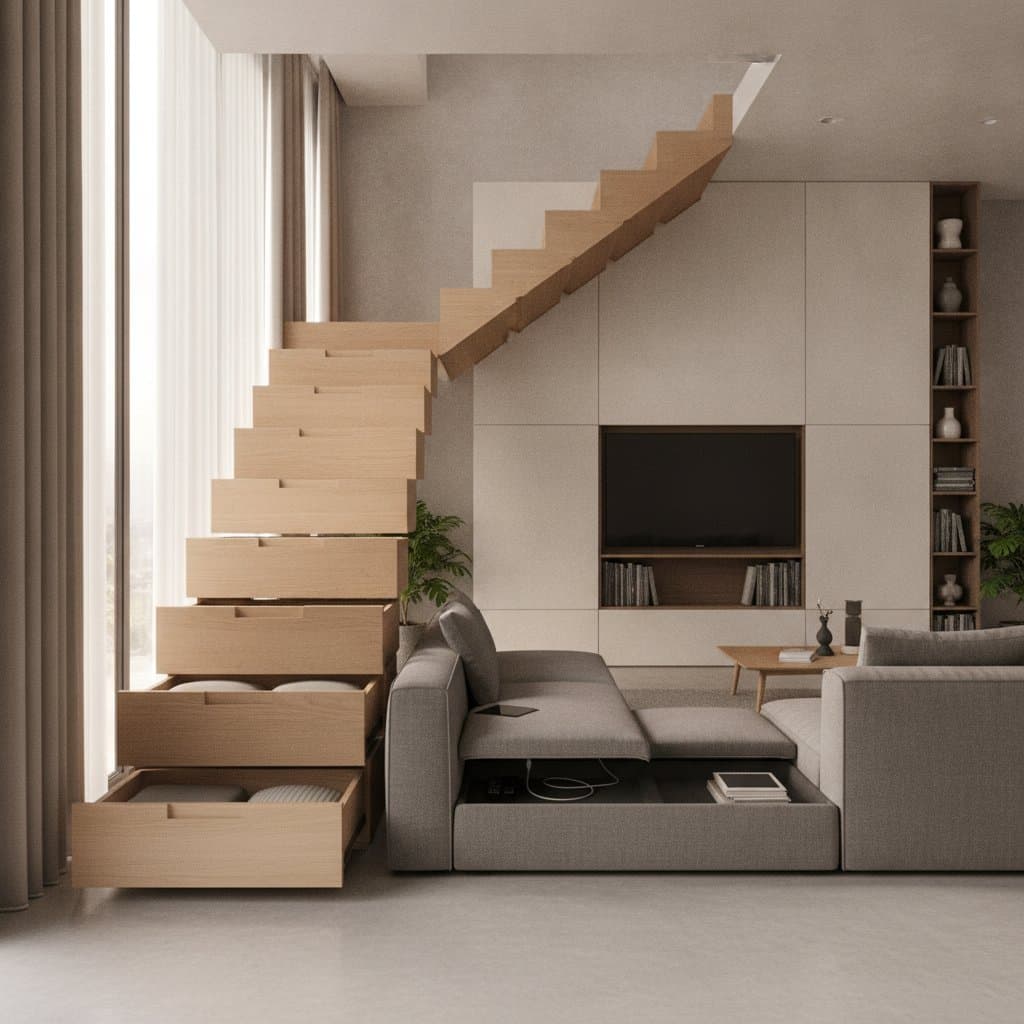
Staircases often contain substantial untapped space underneath. Transform side panels into pull-out drawers or doors with hinges to accommodate shoes, seasonal equipment, or cleaning tools. Verify structural elements before removing materials to prevent weakening the framework.
2. Built-in Wall Niches
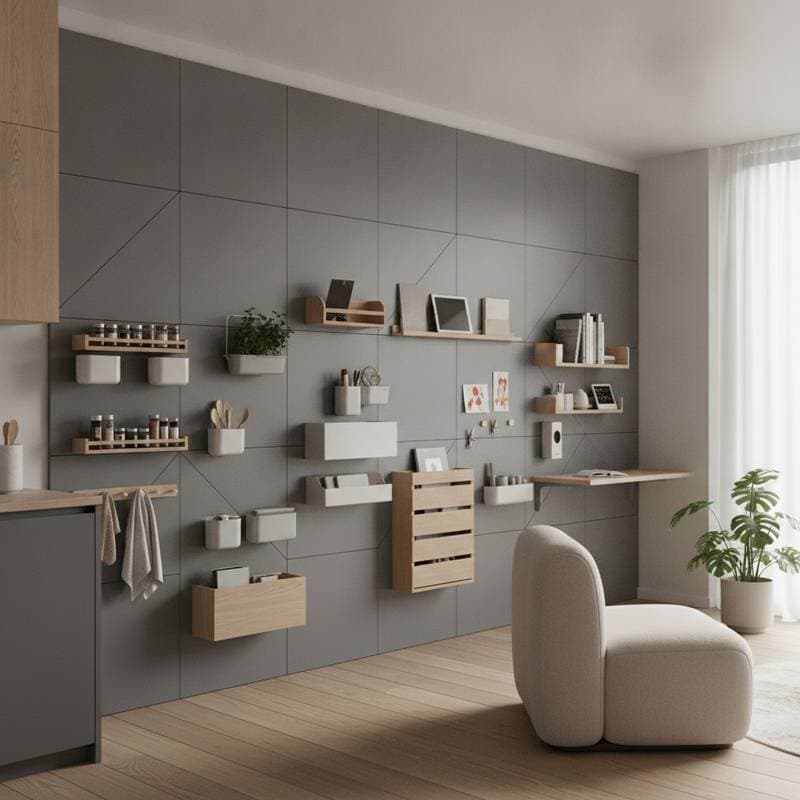
Spaces between wall studs suit narrow compartments. Install recessed units with magnetic closures or hidden hinges, positioned behind artwork or mirrors. Employ a stud finder to sidestep electrical lines or pipes during installation.
3. Dual-Function Furniture
Incorporate storage into beds, benches, or ottomans through lift mechanisms or concealed drawers. These designs exploit internal voids while preserving a minimalist appearance. Custom benches with drawers behind trim provide discreet access that remains unnoticed by visitors.
4. Kitchen Kickboard Drawers
The narrow gap under base cabinets typically goes unused. Fit shallow drawers into kickboards to organize baking sheets, trays, or cloths. Precise measurements ensure smooth integration and functionality.
5. Ceiling or Floor Recesses
Advanced setups include compartments in ceilings or under floorboards for securing valuables or supplies. Proper framing and sealing preserve insulation and safety. Consult experts for these installations to avoid complications.
Ensure Safety and Durability in Construction
Hidden storage must uphold structural stability and fire codes. Steer clear of areas adjacent to electrical panels, ventilation systems, or load-bearing elements. Select materials consistent with original builds, including fire-resistant drywall or treated wood in damp locations. For movable components, install robust hinges and full-extension glides to resist sagging.
Secure valuables with locks or combination mechanisms. Regularly inspect hidden areas for moisture accumulation, pest activity, or deterioration, as items may remain out of sight for extended periods.
Pitfalls to Sidestep in Hidden Storage Projects
Experience from renovations highlights frequent errors in DIY efforts. Consider these to achieve reliable results:
- Excessive Complexity in Mechanisms. Simplicity prevails; opt for magnetic latches or push-open systems over elaborate designs.
- Neglecting Airflow. Enclosed spaces risk moisture buildup, particularly in humid areas. Incorporate vents when storing fabrics or documents.
- Premature Cutting. Walls may conceal utilities; conduct thorough scans with detection tools beforehand.
- Substandard Hardware Selection. Inferior hinges or slides lead to early failure and visibility. Invest in durable components for longevity.
Situations Requiring Professional Assistance
Delegate projects involving these elements to qualified experts:
- Alterations to load-bearing walls
- Proximity to electrical systems
- Integration behind tiles
- Modifications to exterior surfaces
Contractors ensure safe, polished outcomes. Interventions often resolve issues from incomplete DIY attempts, ultimately conserving resources.
Strategies for Optimal Implementation
Effective hidden compartments prioritize utility, resilience, and subtlety. Align designs with surrounding aesthetics through matching finishes and colors. Disguise entries with common elements like frames or grilles. Focus on ease of use to maintain practicality.
These solutions emphasize efficient decluttering over elaborate concealment. Thoughtful construction yields storage that enhances both form and function without compromise.
Preserve and Evolve Your Hidden Storage
Inspect compartments seasonally for dampness, loose fittings, or material expansion. Apply fresh paint or sealants to sustain appearance. As familiarity grows, identify further opportunities in overlooked areas. This mindset reveals potential in every surface.
Creative execution elevates disorganized zones into refined, efficient spaces. Hidden compartments demonstrate that superior design roots in functional innovation.