Key Points
- Artistic acoustic panels improve sound quality in dining rooms while serving as decorative elements that enhance visual appeal.
- Homeowners with limited budgets can replicate professional outcomes through DIY methods and strategic material choices.
- Accurate placement and robust mounting techniques ensure safety alongside optimal acoustic benefits.
- Thoughtful design selections allow acoustic panels to integrate smoothly into traditional or contemporary dining environments.
Project Overview
Working Time: 4 to 6 hours for a medium-sized dining room
Total Time: 1 to 2 days, accounting for preparation and adhesive curing
Skill Level: Intermediate
Estimated Cost: $200 to $800, based on material selections and finish options
Acoustic panels typically appear in recording studios or office spaces, yet they prove equally beneficial in residential areas, particularly dining rooms alive with conversations, music, and laughter. A thoughtfully designed dining space must deliver auditory comfort to match its visual elegance. Excessive echoes or abrasive noises can undermine even the most attractive setting, rendering it less inviting. The installation of artistic acoustic panels offers a functional and visually pleasing remedy that elevates the room's ambiance and refines the overall dining encounter.
When to DIY vs Hire a Professional
Materials and Tools
Materials
- Pre-fabricated acoustic panels or custom versions crafted from acoustic foam or mineral wool
- Fabric coverings such as linen, burlap, or patterned upholstery
- Wood or medium-density fiberboard (MDF) frames for backing
- Mounting hardware including brackets or French cleats
- Spray or construction-grade adhesive
- Screws paired with appropriate wall anchors
- Optional elements: decorative trim or molding to achieve a framed effect
Tools
- Tape measure and spirit level
- Power drill and manual screwdriver
- Utility knife or heavy-duty scissors
- Staple gun for securing fabric
- Electronic stud finder
- Paintbrush for applying finishes to trim or custom elements
Step-by-Step Process
1. Plan Your Layout
Identify primary sound reflection points within the dining room. Surfaces such as tile flooring, glass windows, and bare walls amplify echoes by redirecting sound waves. Prioritize panel placement on expansive, flat walls facing key noise origins, including the dining table or entryways. Develop a preliminary sketch that harmonizes aesthetic symmetry with acoustic efficacy.
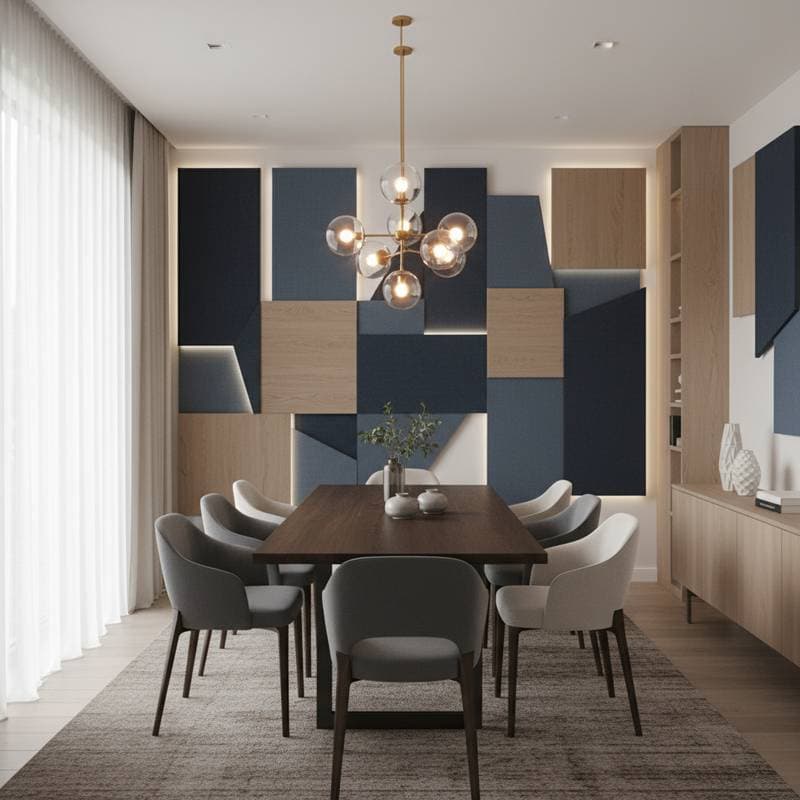
Strive for balanced arrangements. Grid or patterned configurations yield a structured, artistic presentation. For a casual vibe, incorporate varied panel dimensions and hues to evoke a gallery wall.
2. Construct or Prepare Panels
For custom panels, measure and cut backing materials to desired specifications, favoring common sizes like 2 feet by 4 feet for manageable transport. Encase the acoustic core in selected fabric, ensuring taut application and backend stapling for a wrinkle-free finish. Select fabrics with patterns or textures that align with the room's decorative motif to infuse artistic character.
Pre-fabricated panels require gentle unwrapping and thorough inspection for imperfections prior to mounting. Numerous suppliers provide personalization through printed designs or bespoke colors, transforming panels into functional artwork.
3. Mark and Mount
Employ a level and tape measure to designate precise wall positions. Seek out wall studs for enhanced stability wherever feasible. In drywall applications, select anchors capable of supporting the panels' weight. Secure mounting components firmly before affixing panels sequentially. Pause to assess alignment and spacing from a distance.
Maintain a minimum one-inch separation between panels to optimize sound absorption and introduce dynamic visual spacing.
4. Add Finishing Details
After securing panels, incorporate wood trim framing for refined elegance. Apply paint or stain to trim elements that complement existing furniture or architectural details. In modern contexts, opt for unframed edges to convey sleek minimalism.
Integrate accent illumination, such as sconces or LED strips, to accentuate panel textures and tones. Ensure all wiring remains isolated from panel components to uphold safety standards.
Quality Control
Prior to finalizing the project, evaluate acoustic improvements by playing subdued music or engaging in typical dialogue. Expect discernible reductions in echo and a more even tonal quality. Should residual reflections persist, introduce supplementary smaller panels or textile hangings in auxiliary areas.
Verify mounting integrity by applying gentle pressure; panels must remain firm without shifting. Permit full adhesive curing before subjecting the setup to load. Conduct periodic inspections over the initial weeks to confirm stability.
Balancing Quality and Budget
Professional-grade acoustic results remain attainable without excessive expenditure. Economical assemblies featuring standard foam cores and simple cotton wraps perform comparably to luxury alternatives when executed with care. Commence with coverage on the dominant wall, expanding incrementally as resources permit. Superior craftsmanship outweighs material expense in securing enduring outcomes.
For elevated durability, choose resilient fabrics like linen or wool blends. These selections withstand color degradation and impart a soft, inviting texture that pairs well with wooden accents and organic palettes prevalent in classic dining settings.
Maintaining Your Panels
Acoustic panels demand little routine attention, though consistent care preserves their appearance and efficacy. Remove dust using a soft-bristled brush or vacuum accessory biweekly. Steer clear of liquid-based cleaners on fabric exteriors. Address stains promptly with a diluted mild detergent applied via damp cloth, followed by thorough air drying.
Monitor attachment points periodically, especially in moisture-prone regions where bonds may weaken. Adjust fasteners or substitute anchors as necessary. With diligent upkeep, panels endure for years, sustaining enhancements to both auditory clarity and stylistic harmony.
Pro Tips for Success
- Test placements provisionally. Lean panels against walls temporarily and assess sound variations prior to permanent fixation.
- Diversify textures. Pair fabric panels with slatted wood or stretched canvas for enhanced diffusion and tactile variety.
- Coordinate with surroundings. Select hues and motifs that echo table settings or flooring for unified cohesion.
- Optimize vertical positioning. Align panels at seated ear height to target conversational acoustics most effectively.
- Leverage illumination. Direct lighting angles to emphasize fabric nuances and foster an inviting glow.
Enhancing Long-Term Enjoyment
Integrating acoustic panels not only refines immediate sound dynamics but also fosters a versatile dining space adaptable to gatherings of any scale. As family meals evolve into lively discussions or intimate dinners, these elements ensure every moment resonates with clarity and warmth. Regular refinements, informed by usage patterns, allow the setup to mature alongside your home's character, delivering sustained value through improved comfort and elegance.