Secret Compartments That Transform Dining Storage
Every homeowner understands the frustration of maintaining a dining room that balances style and function. The china cabinet overflows with items, the sideboard accumulates miscellaneous objects, and the table serves as a temporary resting place for belongings without designated storage. The primary reason many dining rooms appear disorganized stems from storage solutions that do not align with modern lifestyles. Secret compartments address this issue by converting standard furniture into efficient units that conceal unnecessary items while ensuring accessibility.
With two decades of experience in constructing, repairing, and customizing home storage systems, the author has discovered that strategic concealment proves more effective than introducing additional furniture. Optimal storage integrates seamlessly into daily-use pieces, remaining unobtrusive yet readily available.
Limitations of Conventional Dining Storage
Benefits of Concealed Storage Solutions
Concealed storage extends beyond mere appearance; it enhances practicality and reduces mental load. During gatherings, hosts prefer that guests do not notice piles of additional placemats or cords from warming devices. Secret compartments enable proximity to such items without public display.
This approach offers further utility in multifunctional spaces. Dining rooms frequently serve as workspaces, creative areas, or study zones. Discreet compartments within dining furniture accommodate laptops, documents, or craft materials, allowing seamless transitions without ongoing tidying.
Prime Locations for Secret Compartments
Individuals who believe their dining room lacks storage space likely overlook integrated opportunities. The following areas prove ideal for incorporating hidden features:
-
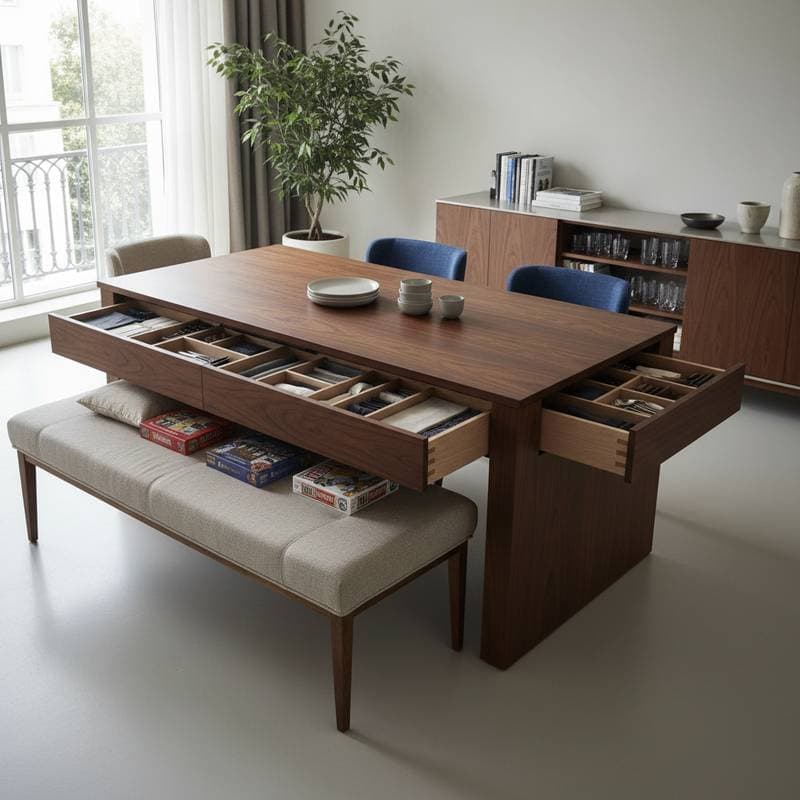
Table Aprons and Extensions
Dining tables with substantial aprons can accommodate shallow drawers or lift-up sections. These suit flat objects such as placemats, table runners, or coasters. For those skilled in woodworking, retrofitting an existing table involves installing a slide-out drawer directly under the surface.
-
Bench Seating
Wall-mounted or window-adjacent benches can function as storage units. Incorporate a hinged lid with soft-close mechanisms to avoid abrupt closure. The interior space holds seasonal dishware, spare candles, or compact appliances unsuitable for kitchen cabinets.
-
Buffets and Sideboards
The base kick plate on many buffets conceals a slim pull-out drawer, a technique favored by contractors. This addition provides room for flat items like table extensions or serving platters. Magnetic latches maintain a seamless front appearance until activation.
-
Chair Backs and Seats
Custom dining chairs may feature small lift-out sections under the seat cushion. These compartments store napkin rings, additional utensils, or a compact repair kit for on-site adjustments.
-
Wall Niches and False Panels
In rooms adjacent to other areas, install a recessed niche behind artwork or a sliding panel. This setup secures valuables or functions as a hidden charging point for devices.
Essential Tools and Preparations
Prior to commencing modifications, evaluate available tools and personal expertise. Typical projects require:
- A circular saw or jigsaw for precise panel cuts
- A drill equipped with assorted bits for installing hinges and latches
- Wood glue, screws, and finishing nails for secure assembly
- Hinges, magnetic catches, or push-to-open mechanisms for functionality
- Paint or stain compatible with current finishes
When modifying built-in elements or walls, inspect for hidden electrical lines or plumbing. For load-bearing alterations or intricate designs, engage a professional carpenter to safeguard structural integrity and visual harmony.
Step-by-Step Guide: Installing a Hidden Drawer in a Dining Table
This weekend-friendly project demonstrates adding a concealed drawer under a dining table, keeping essentials accessible without surface intrusion.
- Measure the clearance between the apron and tabletop underside; ensure at least two inches for drawer depth.
- Construct the drawer box from half-inch plywood, sizing it marginally narrower than the apron's interior.
- Mount drawer slides on both sides, aligning them for fluid motion.
- Fabricate a front panel from coordinating wood, securing it with concealed hinges or a magnetic latch to align flush when closed.
- Apply matching stain or paint to the panel; after drying, verify smooth operation through repeated tests.
The completed drawer accommodates napkins, matches, or minor dining tools, delivering instant utility through this straightforward enhancement.
Resolving Frequent Challenges
Concealed features may encounter operational hurdles if not executed meticulously. Address these common concerns:
- Sticking or Rubbing Drawers: Verify alignment and smooth rough edges with sandpaper prior to final finishing.
- Non-Flush Panels: Fine-tune hinges or incorporate felt pads for improved closure.
- Rattling Hardware: Apply adhesive cushions or thread sealant to fasteners.
- Inconsistent Finishes: Test stains or paints on sample wood; minor discrepancies become prominent on integrated pieces.
Methodical execution prevents most complications. Measure components twice and perform dry assemblies before committing to permanent joins.
Engaging Professional Assistance
For projects involving custom cabinetry, wall integrations, or significant furniture alterations, consult a skilled carpenter or cabinetmaker. These endeavors demand accurate measurements and specialized hardware installation. Experts ensure compatibility with existing aesthetics and promote enduring performance.
Professional intervention becomes essential for incorporating electrical elements like outlets or illumination within compartments. Such modifications adhere to safety codes and require official inspections.
Expert Recommendations for Optimal Results
- Prioritize user-friendly access; concealment should not hinder retrieval.
- Select materials that mirror original textures and finishes precisely.
- Account for ventilation; add subtle openings to avert dampness in stored textiles or devices.
- Embrace simplicity; effective compartments emphasize reliability and ease of use.
Achieve a Streamlined Dining Experience
Integrating secret compartments elevates dining functionality without sacrificing elegance. These adaptations foster organized spaces that adapt to daily needs, enhancing both convenience and visual appeal. Begin with a single modification to experience the transformative impact on your home.