Color-Blocking: Dopamine Decor for Joyful Bedrooms
Your bedroom deserves vitality and purpose. Color-blocking introduces bold, contrasting colors to craft spaces that uplift emotions and reflect personal style. This approach anchors the dopamine decor movement, which prioritizes colors that spark joy in daily routines.
Color-blocking emphasizes intentional joy over rigid rules. Select hues that resonate and create balance, ensuring the room invites positivity with every glance.
Define Your Desired Mood First
Determine the emotional tone for your bedroom before selecting colors. Consider whether the space should invigorate mornings or promote evening relaxation. Designer Emily Vargas of Studio Evla notes, “Effective color-blocked designs align with the occupant’s emotional intentions, beyond mere color preferences.”
Treat Walls as the Primary Canvas
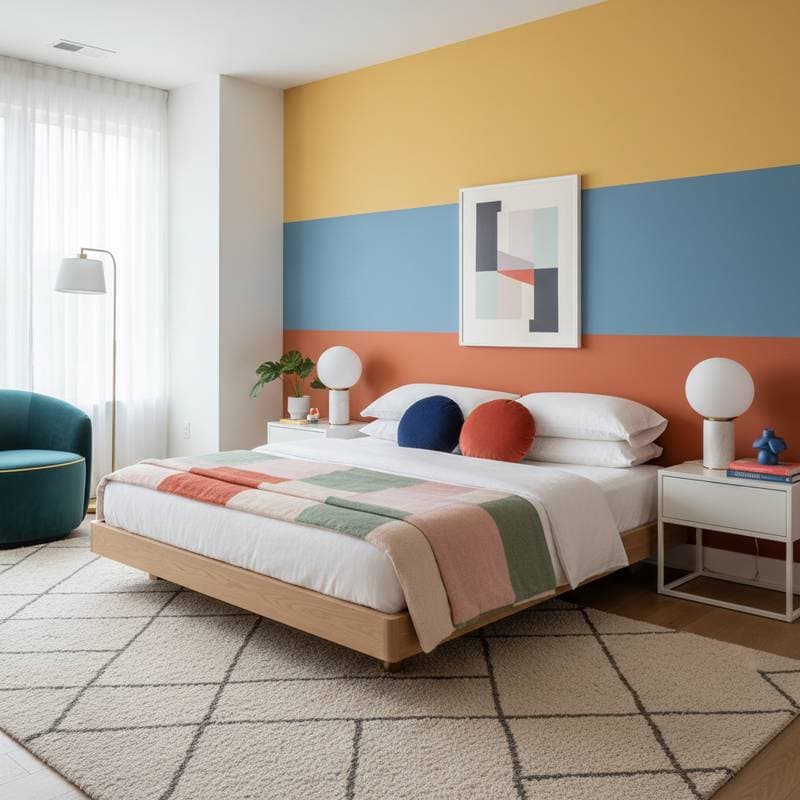
Begin color-blocking with walls to establish a strong foundation. Divide surfaces strategically rather than applying uniform coats. Paint the lower half of a wall in a rich color while leaving the upper portion neutral; this method anchors the room and enhances perceived height.
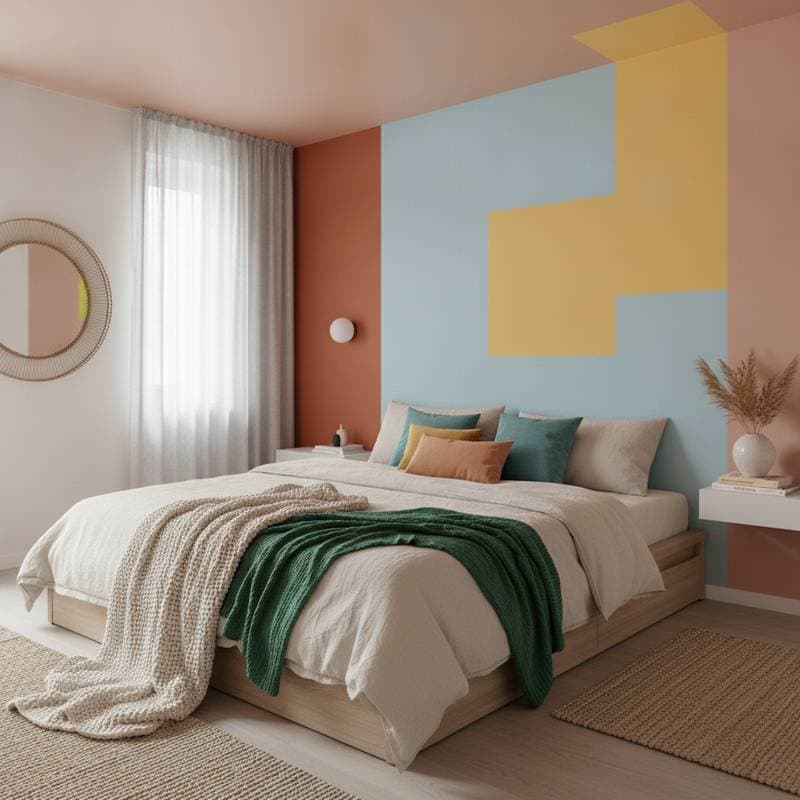
Create a geometric panel behind the bed to serve as a prominent feature. Designer Mark Leary from The Color Edit observes, “Such a painted accent immediately establishes a centerpiece, ideal for sparsely furnished areas.” Apply painter’s tape for precise lines and measure sections to ensure deliberate proportions.
Incorporate Color Through Textiles
Textiles offer a reversible way to introduce color-blocking without altering walls. Select bedding, drapes, and rugs in solid, complementary tones to maintain unity. Avoid busy patterns to preserve focus on color interactions.
Assemble a jade green duvet cover with plum-hued pillows and a rust-toned throw. Vary textures to temper bold contrasts and sustain energetic appeal. Replace standard curtains with teal or ochre panels to shift the room’s atmosphere effortlessly.
Integrate Neutrals for Equilibrium
Neutrals provide essential pauses amid vibrant blocks. Use white, cream, or light gray as bases to highlight colored elements. Designer Sofia Reyes of Color House Interiors advises, “Embrace color fully, yet allocate areas for visual relief.”
Neutral flooring or linens counteract existing colorful fixtures. If furniture introduces hues, pair it with unpainted wood or soft fabrics. This strategy fosters purposeful tension rather than visual rivalry.
Implement Temporary Solutions for Renters
Renters can embrace color-blocking through non-permanent methods. Apply removable wallpaper, adhesive films, or fabric screens to simulate painted blocks. Select vibrant, peelable options that allow future adjustments.
Position furniture to form color zones, such as a vivid dresser against a plain wall or matching colorful bedside tables. Echo one color throughout the space for cohesion; this approach delivers dynamic impact without lease violations.
Harmonize Colors with Lighting
Lighting profoundly influences color perception. Warm bulbs amplify pinks, oranges, and yellows, while cool tones suit blues and greens. Experiment with fixtures to preview effects under various conditions.
Apply sample swatches across times of day to assess true appearances. Adjust bulb types or add dimmers to fine-tune the mood as needed.
Evolve Your Space Over Time
Color-blocking adapts to changing preferences. Refresh elements periodically to align with new emotional needs, embodying the adaptable nature of dopamine decor. Begin modestly with a single accent to build confidence.
Introduce a painted nook, a striking artwork, or vibrant lamp shades. The result transcends magazine ideals; it centers on personal fulfillment. Bold color choices ultimately infuse everyday life with sustained delight.