Why Vintage China Defines Grandmillennial Style
Vintage china serves as a foundation for grandmillennial dining. This approach emphasizes layered patterns, rich textures, and items with personal stories instead of minimal designs. Ordinary meals gain a sense of occasion that feels both comfortable and polished.
Core Appeal of Vintage China
Hand-painted details and gilded rims display craftsmanship rarely found in modern tableware. Older porcelain often features subtle translucency achieved through traditional firing techniques. These elements provide a sense of lasting quality that matches the grandmillennial focus on sentiment and substance.
Initial Assessment
Review existing tableware before introducing new items. Identify colors or motifs that repeat and can tie selections together. Measure the dining table to ensure proper scale, and check inherited pieces for damage such as chips or cracks. Determine if items suit everyday meals or special occasions only.
Planning Essentials
Sourcing Authentic Items
Examine the base of each plate or cup for legible maker marks. English bone china, French Limoges, and American ironstone blend effectively with grandmillennial settings. Confirm consistent glaze color and intact gilding. Minor surface wear adds character, yet structural cracks reduce practical longevity.
Layering Patterns
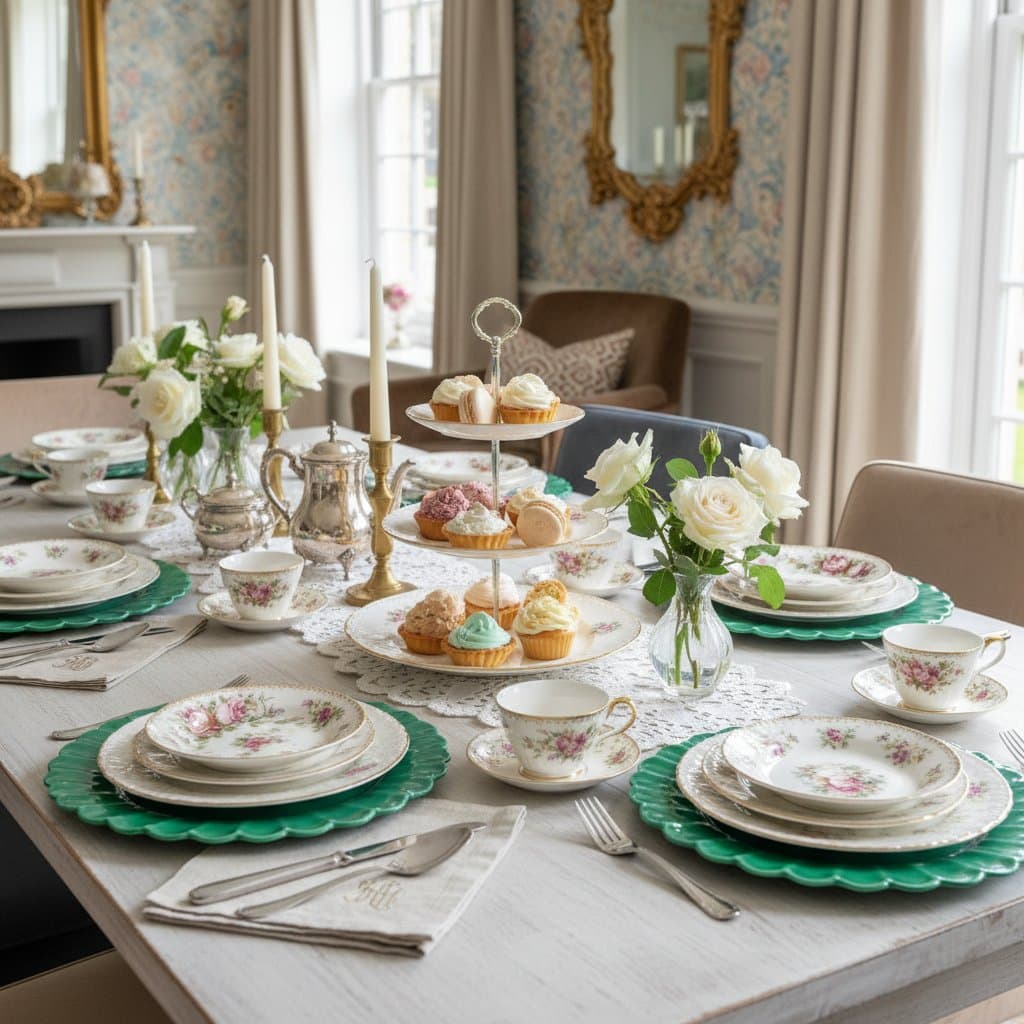
Choose one dominant pattern as the base layer. Introduce secondary designs that share a color or motif with the foundation set. Alternate rimmed and smooth plates to prevent visual overload. Place neutral linens underneath so the china stays central.
Arrange the setting in sequence from charger to dinner plate, salad plate, and accent dish. Each level frames the next and directs attention toward the table center.
Building the Tablescape
Pair floral china with cut crystal, silver flatware, and embroidered napkins. Add candleholders, small vases, or vintage salt cellars to create depth. Repeat colors and textures instead of enforcing strict symmetry. Incorporate fresh greenery or fruit to reduce formality.
Warm lighting highlights aged glaze and gold detailing. Low ambient light combined with candles produces an intimate atmosphere that underscores the nostalgic quality of the pieces.
Blending Periods
Combine older pieces with contemporary glassware or matte chargers to maintain a current feel. Clean-lined modern flatware balances ornate patterns without clashing. This contrast keeps the arrangement from appearing excessively historical.
Ongoing Care
Wash pieces by hand in lukewarm water with mild detergent. Skip dishwashers that risk damage to metallic trim. Inspect each item periodically under light for new hairline fractures. Store stacked plates with felt or paper separators and rotate displayed pieces to reduce dust and sun exposure.
Long Term Preservation
Keep storage areas at stable temperature and low humidity. Record maker details, purchase dates, and any restoration work for insurance purposes. Professional conservators can repair cracks or restore lost gilding using reversible methods when required.
Enjoying the Collection Over Time
Start with a small number of pieces from family or secondhand sources. Expand slowly while embracing minor flaws that add personality. The resulting table reflects both skilled workmanship and individual memories.