Hidden Compartments Unlock Dining Room Magic
The dining room often serves as a multifunctional space in many homes. In my Staten Island residence, the dining table once functioned as a desk, a mail sorting area, and a storage spot for toys. Preparing for dinner involved clearing stacks of papers, art supplies, and incomplete jigsaw puzzles. This disarray masqueraded as creative living.
The core issue lay not in personal discipline but in inadequate storage solutions. Dining rooms rarely feature built-in options for concealing clutter, unlike kitchens or bedrooms. Experimentation with hidden compartments began as a necessity to create space for meals and evolved into a key home organization strategy.
The Hidden Storage Revelation
Consider the satisfaction of discovering an unexpected drawer. This sensation now accompanies every use of the dining room bench. The bench appears unremarkable, yet lifting the seat reveals ample space for linens, placemats, and awkwardly shaped serving dishes.
Where to Hide the Magic
Effective hidden storage integrates seamlessly into existing spaces and routines. The following ideas draw from practical applications in diverse homes, including my own.
1. Benches That Double as Storage Chests
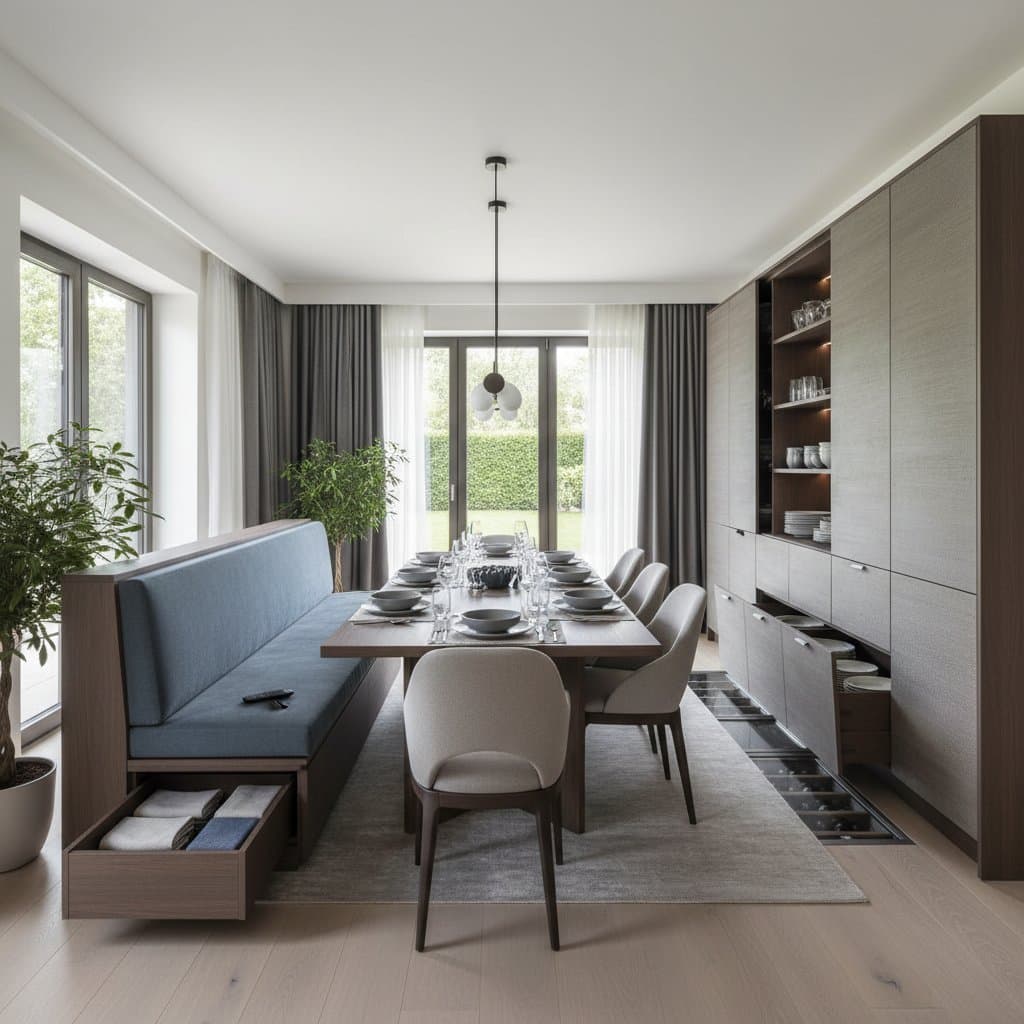
Position a storage bench along one side of the dining table, particularly near a wall or window. This replaces chairs and provides internal space for tablecloths, candles, cloth napkins, and seasonal decorations. In my setup, it accommodates mismatched napkin rings and fabric runners, functioning like a discreet linen closet.
2. Hidden Drawers in Sideboards
Vintage sideboards frequently conceal secret drawers within the top panel. One such piece, acquired from a Brooklyn flea market, revealed its hidden compartment after weeks of exploration. This space now organizes family recipes, spare wine accessories, and cherished postcards.
Contemporary sideboards incorporate pull-out trays or false panels that mask shallow drawers. These suit small items, preventing visual disorder while preserving neatness.
3. Convertible Dining Tables
For compact living areas, select a dining table with integrated storage. Extendable models often include compartments for leaves or folding sections. Others feature drawers positioned subtly under the surface. One version stored coasters and placemats efficiently, enabling rapid table setup without cabinet searches.
4. Concealed Cabinets Behind Artwork
Install shallow cabinets behind framed artwork or decorative panels for a discreet solution. These areas hold infrequently used items, such as fine china or holiday ornaments. This method eliminates hazards from loose serving trays, adding practicality without compromising design.
5. Built-In Banquettes with Secret Compartments
During renovations, incorporate banquettes with lift-up seats or under-seat drawers. This maximizes underutilized space effectively. Even modest dimensions in hidden storage significantly enhance room tidiness.
Lessons from Implementation
Initial efforts at incorporating hidden storage presented challenges. A do-it-yourself false drawer on a buffet, secured with double-sided tape, failed during a dinner gathering. Cutlery scattered, though guests responded graciously. This incident underscored the importance of durable hardware.
Simpler solutions prove equally effective. A basket within a cabinet can serve as a concealed organizer for miscellaneous items. Intentional placement ensures sustained organization within these spaces.
The Emotional Perk of Hidden Storage
Concealed storage fosters tranquility by maintaining a serene appearance while accommodating entertaining essentials. Unexpected visitors once prompted frantic concealment efforts under tablecloths. Designated, disguised locations now eliminate this stress.
This system preserves a welcoming, personalized atmosphere. Clutter remains invisible, rendering meal preparation straightforward and enjoyable.
Getting Started Without a Full Makeover
Incorporate hidden storage through incremental changes rather than extensive renovations. Begin with existing furnishings and adapt them for utility.
- Modify current pieces by adding lift-top hinges to benches or drawer slides to cabinets.
- Select decorative boxes that match the room's style to conceal remotes or minor tools.
- Repurpose trunks as dual-purpose tables with internal storage.
- Choose dining furniture sets, buffets, or consoles featuring built-in compartments.
An antique cigar box, placed on the buffet as an accent, discreetly holds matches and tea lights, proving highly practical.
Maintaining Hidden Storage for Lasting Benefits
Regular upkeep prevents hidden areas from accumulating disarray. Schedule quarterly reviews to reorganize contents and discard unnecessary items. A concealed disorder remains problematic, regardless of visibility.
Accessing these compartments delivers consistent satisfaction. This demonstrates that effective organization operates subtly yet powerfully, enhancing daily living with minimal effort.