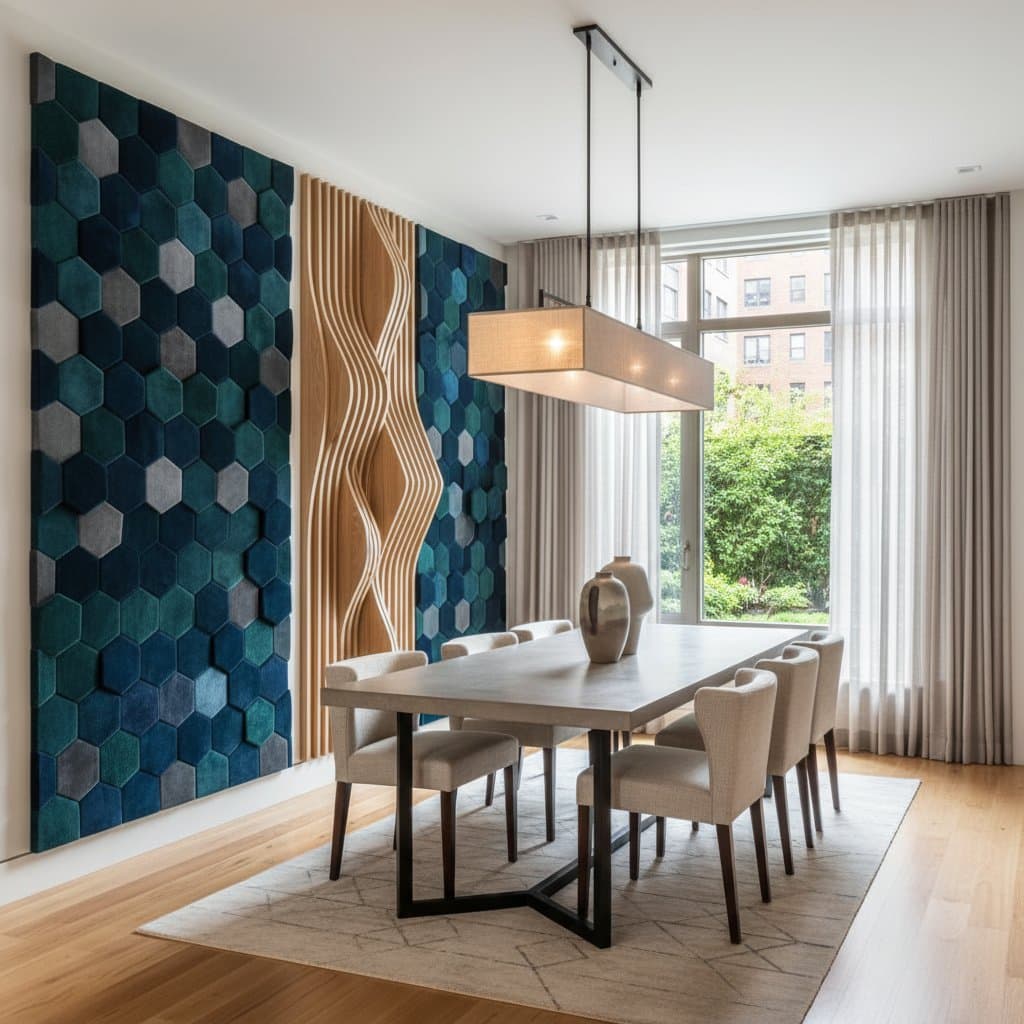
Acoustic Panels Serve as Dining Room Art
Key Points:
- Acoustic panels now function as statement art pieces for dining spaces.
- Designers select sound-dampening materials that combine visual texture with functional calm.
- Homeowners apply panels to shape mood and intimacy during meals.
- The trend aligns with a broader movement toward wellness-driven interior design.
Picture a dinner party where laughter flows easily, music hums softly in the background, and every word registers clearly without echo or strain. The solution lies in a new dining room essential that merges design and acoustics into one form of art.
Transition from Utility to Refined Interiors
Acoustic panels once appeared only in recording studios and corporate boardrooms. Interior designers now treat them as large-scale canvases that become textured art installations. The change started in creative workspaces that required calm environments without loss of style. It has since entered private homes, especially dining rooms where conversation and aesthetics hold equal weight.
Importance of Sound Control in Social Spaces
Dining rooms often serve as social hubs, and sound quality can determine the success of gatherings. Hard surfaces such as glass tables, hardwood floors, and minimalist walls bounce sound in multiple directions and create echo. Acoustic panels absorb those reflections, reduce noise fatigue, and allow conversation to proceed without effort.
Design experts refer to this effect as emotional acoustics because sound influences how people connect. Lower noise levels increase attention. Meals last longer. Guests interact more naturally. The result creates comfort similar to that found in high-end restaurants.
Evolution of Panels into Artistic Elements
Manufacturers respond to demand for panels that read as décor rather than equipment. Collaborations between textile artists and acoustical engineers produce new options. Some panels offer interchangeable covers for seasonal changes. Others integrate LED backlighting to resemble gallery displays.
This combination of art and function suits homeowners who expect every design choice to serve several purposes. One wall can act as both visual centerpiece and acoustic anchor. The approach matches the preference for functional décor that values practicality alongside beauty.
Steps to Add Acoustic Art to a Dining Room
- Begin with placement on walls opposite major sound sources such as speakers or open kitchens.
- Select fabrics that match existing furniture, lighting, and flooring for balanced texture and tone.
- Combine panel sizes and shapes in a modular layout that maintains effective sound absorption.
- Arrange panels in clusters or linear patterns to resemble framed artwork.
- Add soft illumination to highlight texture and enhance mood.
Daily Experience with Acoustic Design
Installed panels influence every meal by supporting focus, ease, and warmth. The dining room becomes a setting where design and acoustics shape the overall experience. This direction reflects a cultural interest in spaces that feel both beautiful and attentive to sensory detail. Walls that manage sound as effectively as they present visual interest make each dinner feel more connected and refined.