Key Points
- Gen Z homeowners and renters revive traditional dining rooms through grandmillennial style that blends vintage charm with modern needs.
- The approach emphasizes maximalist decor, pattern layering, antique furniture, and sentimental choices that feel both nostalgic and personal.
- This trend supports comfort, authenticity, and sustainability through emotional connections and environmental awareness.
- Effective grandmillennial rooms balance vintage textures with modern function by following structured principles that avoid clutter.
- Core priorities include layout planning, color coordination, furniture restoration, and careful material sourcing.
Why Nostalgia Aligns with Practical Design
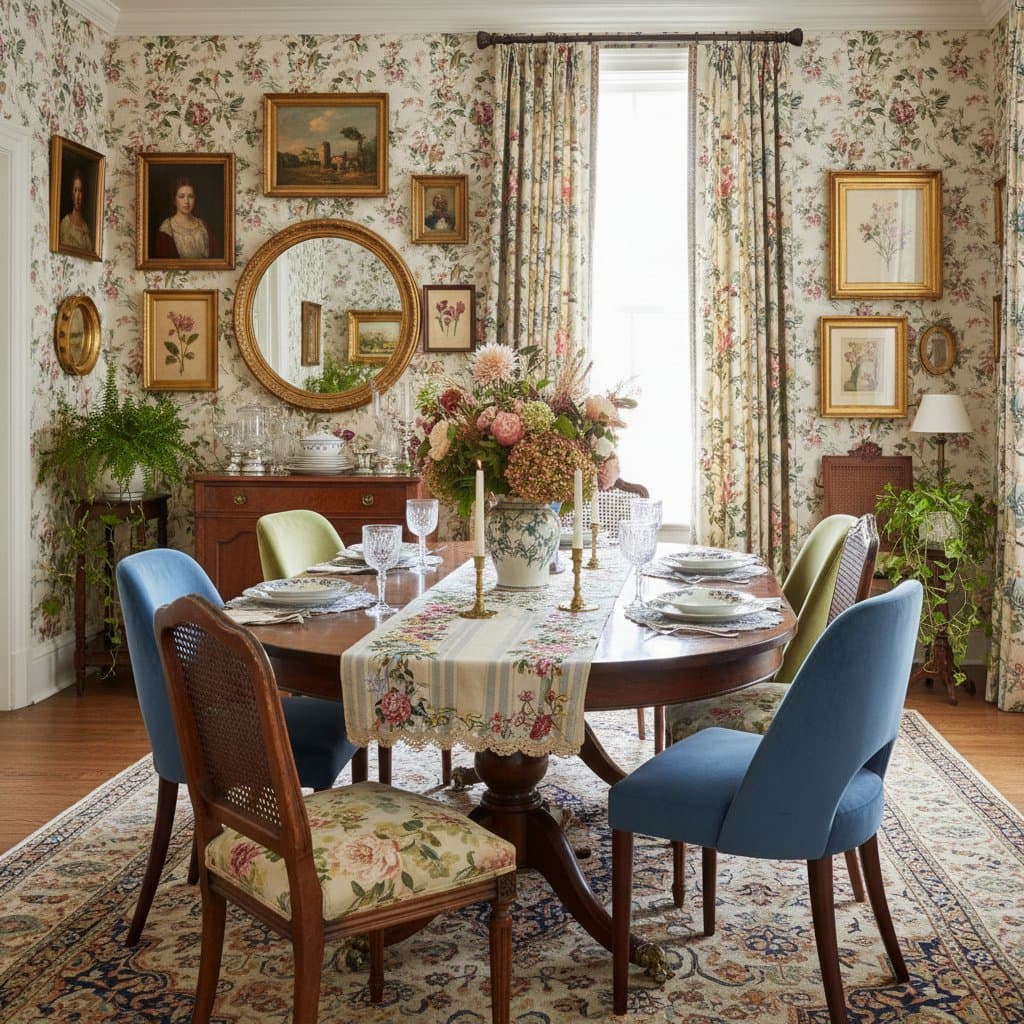
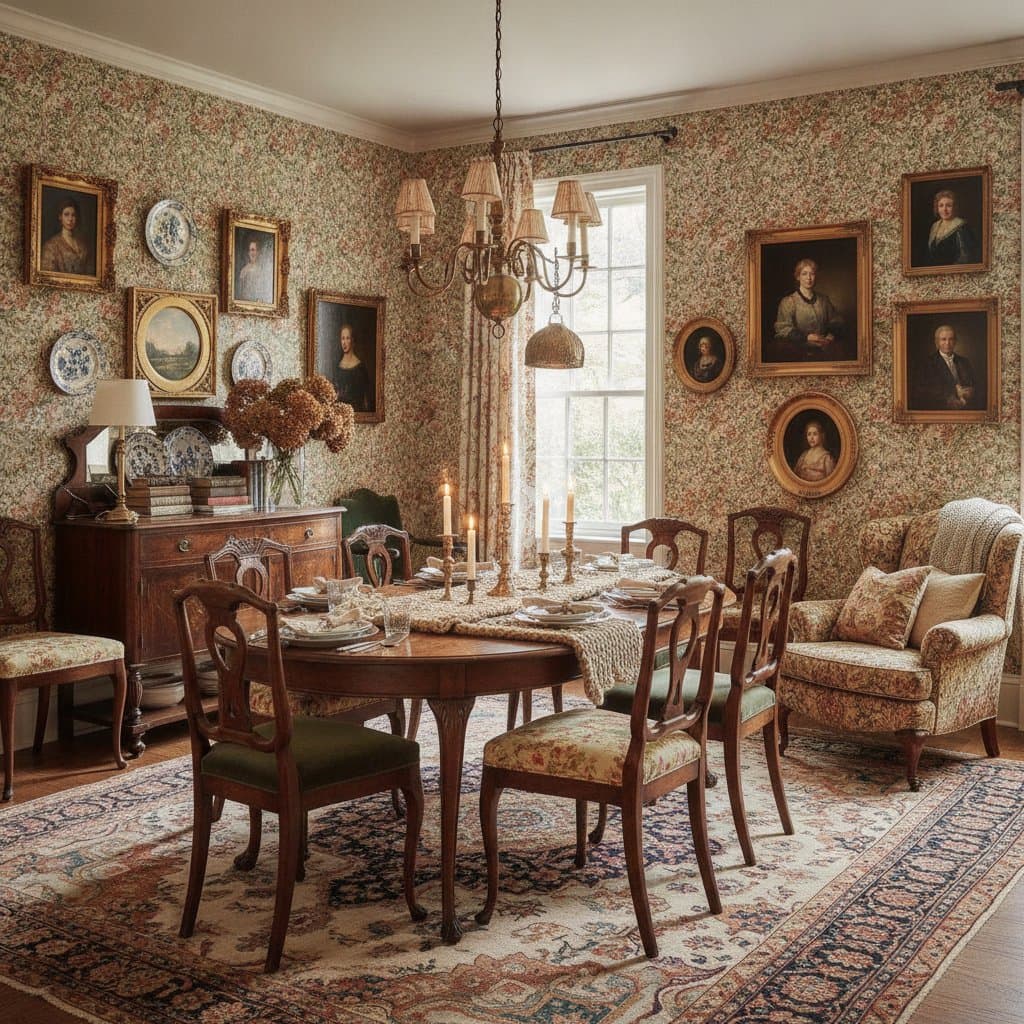
Interior styles shift with cultural and generational values. Grandmillennial dining rooms respond to earlier minimalist trends by favoring patterned wallpaper, ornate table settings, pleated lampshades, and heirloom furniture that highlight history and skill.
Assess the Existing Space
Evaluate room structure, lighting, and proportions before changes. This step prevents overcrowding and matches every choice to physical and functional needs.
- Measure room size, wall space, ceiling height, and clearances around the table.
- Note natural light patterns and plan accent lighting for evening use.
- Record wall texture, flooring, and trim to check harmony with new patterns.
- List current furniture and test compatibility with vintage additions.
- Inspect floors and walls for repairs before wallpaper or heavy fixtures.
Organize findings to set clear priorities for layering.
Prepare Tools, Materials, and Strategy
Success depends on deliberate preparation. Gather tools, coordinate resources, and address safety before starting.
Essential tools include a measuring tape, level, paint supplies, wallpaper tools, screwdrivers, an upholstery stapler, and gentle cleaning products.
Select wallpaper or paint in floral, chinoiserie, or toile patterns. Choose chandeliers or sconces for warm light. Mix cotton, linen, and silk fabrics. Favor solid wood furniture with carved details. Collect porcelain, embroidered linens, and botanical prints.
Confirm wall anchors for heavy items. Stay within safe electrical limits. Use low-VOC products for better air quality.
Build the Look Step by Step
Follow a clear sequence that pairs creativity with order.
Apply wallpaper or paint first in soft blues, creams, or muted greens. Balance patterns with solid drapery or neutral floors.
Refinish existing furniture instead of buying new. Sand and stain wood pieces, then reupholster cushions with coordinating fabrics. This preserves authenticity and supports sustainability.
Layer textiles using the 60-30-10 color rule for balance. Introduce curtains, runners, and cushions that echo traditional prints without excess.
Curate objects in organized groupings on sideboards. Leave negative space to highlight craftsmanship. Vary heights of candlesticks and vases for depth.
Install a dimmable chandelier above the table. Add wall sconces with pleated shades and warm white bulbs.
Display family photos, inherited linens, or handmade items. Personal elements turn the room into a lived space rather than a copy.
Verify the Finished Result
Review the room for visual harmony and function.
Check that colors complement each other. Adjust lighting to remove shadows or glare. Confirm walking paths remain clear. Inspect surfaces for secure fixtures. Ventilate after painting or refinishing.
Small shifts, such as moving a sideboard a few inches, often improve flow.
Maintain the Atmosphere
Vintage materials last longer with steady care.
Dust wood weekly with microfiber cloths. Vacuum upholstery and rotate cushions. Wipe lampshades regularly. Control humidity to protect wood and wallpaper. Refresh flowers or linens seasonally.
Economic and Environmental Benefits
The style often costs less because it relies on repurposed and thrifted items. Restoration reduces waste and aligns with mindful spending.
Focus first on lighting and textiles. Source pieces from estate sales. Combine professional help for complex work with DIY for simpler tasks.
The Deeper Appeal for Gen Z
Traditional dining rooms offer psychological comfort and sensory richness. Setting a table with cloth napkins encourages slower, intentional meals. Social platforms spread the trend through shared restoration stories and sourcing tips.
Practical Advice for Lasting Results
Anchor the room with one strong vintage piece. Blend periods carefully to add depth. Limit small objects so focal points stay clear. Photograph progress to track proportion. Let the space grow through new finds over time.